Schlagwort: EU/Europe

  • „Euro-Rettungsschirm reicht nicht aus“

    Bild: SWP Berlin
    Bild: SWP Berlin

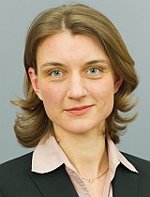
    Blick auf die EZB in Frankfurt am Main. (Bild: dpa)Kaum war der europäische Rettungsschirm ESM im Bundestag beschlossen, kamen aus Deutschland die ersten Klagen. Dabei sind die 700 Milliarden Euro, die der ESM gewährleistet, für eine weitere Stabilisierung der Währung nicht einmal genug, sagt Daniela Schwarzer von der Stiftung Wissenschaft und Politik in Berlin. Eigentlich müsse Europa noch viel weiter zusammenwachsen, wenn es seine Gemeinschaftswährung retten möchte. Auch die umstrittenen Eurobonds hält die Expertin für den richtigen Weg.

    Yahoo! Nachrichten: Gegen die Entscheidung zum europäischen Rettungsschirm ESM vom vergangenen Freitag gibt es bereits sechs Klagen. Bringen die den Euro in Gefahr?

    Bei allen Schritten zum Rettungsschirm ESM und zu dessen Vorgänger EFSF wurde in Deutschland geklagt. Klar, dass es da Unsicherheiten gibt – das Bundesverfassungsgericht könnte Auflagen definieren, etwa eine stärkere Einbindung des Parlaments. Sollte das Bundesverfasssungsgericht gegen den ESM entscheiden, springen vermutlich andere in die Bresche um die von der Krise betroffenen Staaten zu unterstützen. Das dürfte – wie zuvor – die Europäische Zentralbank sein.

    Wieso die EZB?

    Die Staaten haben die EZB nicht als Instrument zur Bekämpfung einer Schulden- und Bankenkrise geschaffen. Trotzdem war sie seit 2010 der schnellste und wirksamste Krisenmanager. Die EZB ist bei den Treffen der Eurogruppe und auf Krisengipfeln vertreten und hat in der Vergangenheit durch Bonds-Aufkaufprogramme und Bereitstellung von Liquidität für die Banken eine Eskalation der Krise vermieden. Ihre Aufgabe ist allerdings nicht, in erster Linie Fiskal- oder Krisenpolitik zu machen, sondern sie möchte ihre geldpolitischen Ziele verfolgen. Es wird aber bereits diskutiert, ob und wann sie ihr Mandat überschreitet und wie es um ihre politische Unabhängigkeit steht.

    Was wurde auf dem Gipfel in Brüssel eigentlich beschlossen?

    Erstens ein Wachstumspaket von 120 Milliarden €, vor allem um in den überschuldeten Staaten Wirtschaftswachstum zu generieren. Das Geld kommt von der europäischen Investitionsbank, teilweise aus den Strukturfonds und über Projekt-Bonds. Zweitens wurde beschlossen, dass der ESM direkt Banken kapitalisieren können soll, sofern eine Europäische Bankenaufsicht eingerichtet wird. Bisher hat der ESM den Regierungen Geld zur Verfügung gestellt, damit sie ihre Banken kapitalisieren, was bedeutet dass dieser Posten die Staatshaushalte belastet. Jetzt geht der ESM direkt mit einzelnen Banken in Beziehung, den Einzelstaaten kann er daher keine Auflagen machen.

    Kriegen die Banken dann nicht einen gewaltigen Zuwachs an Macht?

    Die Vorrausetzung dazu ist eine europäische Bankenaufsicht, die Teil einer breiter aufgestellten „Banken-Union“ werden könnte. Als Antwort auf die europäische Finanzkrise 2008 wurde bereits eine Europäische Bankenaufsicht als Teil einer viergliedrigen Europäischen Finanzaufsicht beschlossen. Diese hat allerdings keine Zugriffsrechte auf nationale Kreditinstitute. Jetzt steht eine weitere Europäisierung an. Das Argument: Ein europäischer Finanzmarkt braucht eine europäische Bankenaufsicht.

    Was ist die „Banken-Union“?

    Eine „Banken-Union“ wäre ein Integrationsschritt, der Überwachungs- und Stabilisierungsinstrumente vereint. Neben einer Europäischen Bankenaufsicht und einem Bankenrettungsfonds wird zum Beispiel eine „Einlagensicherung“ diskutiert, die gewährleistet, dass die Sparer das Geld auf ihren Konten auch in Krisenzeiten zurückbekommen. Sobald in einem EU-Land ein sogenannter „Bank-Run“ passiert – die Sparer heben panisch ihr Geld vom Konto ab und legen es sich unters Kopfkissen – könnte so ein Schritt erfolgen. Sinnvoll ist sie in jedem Fall.

    Ist der ESM dann letztlich nur die nächste Bankenrettung?

    Nun ja, die wichtigsten Maßnahmen zum ESM, die beim vergangenen Gipfel beschlossen wurden, beziehen sich auf den Bankensektor. Grundsätzlich hat er beides zur Aufgabe: Staaten zu helfen und Banken zu rekapitalisieren. Aber in der Tat, in letzterem Bereich musste noch nachgebessert werden.

    Wer entscheidet dann, wohin die Gelder gehen? Ist das überhaupt demokratisch legitimiert?

    Wohin die Gelder des ESM gehen, wird vom Gouverneursrat des ESM, in dem die Finanzminister sitzen, und einem nachgeordneten Gremium entschieden. Hilfsmaßnahmen des ESM muss in Deutschland der Bundestag zustimmen.

    Und gegen was richten sich die sechs Klagen? Von der Linkspartei über den Bund der Steuerzahler und Peter Gauweiler klagt ja ein buntes Trüppchen.

    Es gibt Klagen gegen die Haftung, da ja der deutsche Steuerzahler einstehen müsste, im Fall dass ein verschuldeter Staat seine Kredite nicht mehr bedienen kann und ein Kredit mal ausfällt. Dann gibt es Klagen gegen das Verfahren und die Beteiligung des Bundestags. Beim Vorgängerprogramm EFSF gab es vergleichbare Klagen.

    Wie hoch ist denn der Anteil der Deutschen am ESM?

    Der liegt bei 27 Prozent von 700 Milliarden Euro gezeichnetem Stammkapital und einem Ausleihvolumen von 500 Mrd. €. – also etwa 190 Milliarden Euro.

    Aber in Bürgschaften – das Geld wird nur ausgeschüttet, wenn ein Mitgliedsland nicht zahlen kann.

    Ganz genau. Der deutsche Anteil am eingezahlten Kapital beträgt knapp 22 Milliarden Euro. Darüber hinaus geben die Regierungen Gewährleistungen – im deutschen Fall 168 Milliarden Euro. Der ESM holt sich dann am Markt Geld, das von den Anteilseignern abgesichert ist. Mit dem Geld werden Hilfskredite vergeben, und sollte ein Kredit mal nicht zurückbezahlt werden kann, dann müssen die Garanten einspringen.

    Sind die Schritte richtig?

    Ja, aber sie sind zu wenig. Die verschuldeten Staaten wie Spanien werden langfristig mehr Hilfe brauchen. Wenn die Rahmenbedingungen stimmen, sind langfristig Eurobonds eine sinnvolle Ergänzung für die Eurozone. Kurzfristig könnte ein europäischer Schuldentilgungsfonds helfen. Im Bereich der politischen Integration und der Haushaltspolitik muss die Union weiter integriert werden. Denn die Auswirkungen der Krise teilen die Staaten ja de facto jetzt schon. Wenn es eine sinnvolle Rahmengebung und die Kontrolle gibt, dann sind die Eurobonds der richtige Weg.

    Sie plädieren also für ein Mehr an Europa? Nicht sehr populär momentan.

    Ja. Wir können den Euro nur erhalten wenn wir diesen Schritt zu mehr Integration machen. Aber er ist es wert, denn Deutschland und die anderen EU-Länder stünden ohne den Euro viel schlechter da. Gerade uns als Exportnation würde ein Rückfall in nationale Währungen hart treffen.

    Die Politökonomin Daniela Schwarzer arbeitet in der Forschungsgruppe „EU-Integration“ der Stiftung Wissenschaft und Politik und unterrichtet an der Hertie School of Governance.

    Erschienen auf Yahoo! Nachrichten am 3. Juli 2012

  • EU conference speaks up for kids online rights

    ‘Building a child-friendly Europe: Turning a vision into reality’ – this was the objective the Council of Europe discussed with its partners at a conference in Monaco in late November 2011. Chaired by Princess Caroline of Monaco, around 200 representatives from governments and civil organisations debated topics such as justice, migration and violence against children. One special focus this year was on children and new media.

    „It is vital that children and youths are involved on all levels in the consultation about their rights“ said Janice Richardson, coordinator of the Insafe network, in the workshop titled ‘Making children the masters of the game: data protection and the new media environment’. To further boost youth participation in online matters, she added, European Schoolnet has developed the Pan-EU Youth project and will soon be appointing youth ambassadors so that young people can report about their experiences on the internet and can be sure that policy makers listen.

    Further objectives of the workshop included a discussion on children’s rights on data protection (that is, for example, the minimum age requirement in online environments), data conservation of children’s online activities, data abuse and the general need to remove children’s traces on the internet. Some speakers emphasised the need for privacy options by default for children.

    Other topics on the conference agenda included ‘Empowering children through learning: democratic citizenship and human rights education’ and ‘Children’s rights start at home: strong families for strong children’. The conference was a follow-up to a 2006 conference in which the Council of Europe programme ‘Building a Europe for and with children’ was launched.

    The delegates assessed where progress has been made on the issues identified earlier. The overall feedback was positive: „The protection of children’s rights has been improved in important policy areas,“ a speaker of the Council of Europe stated, however adding: „Despite the progress achieved, many challenges remain, while new threats to children’s rights have emerged.“

    Further information is available from the conference website.


    Article from saferinternet.org

  • Filtering Tools do not live up to their promise

    The most filtering tools for harmful online content on the market have a very low effectiveness – given five pages of harmful content, most tools block less than four. This is the key result of a study called SIP Bench II – „Benchmarking of parental control tools for the online protection of children“. Among the 31 tested programs – 26 for PC, 2 for mobile phones and 3 for game consoles – there was no tool that achieved the overall top score of 4 points. The test results have been made available in an online database.

    httpv://www.youtube.com/watch?v=p-52IB9Ilfg

    „I would only use the tools as additional means, but not completely rely on them“, says Jérôme Valette, a scientist who works for the SIP-Bench study. His team has examined filtering tools since 2009 and has now published the first results. Besides the effectiveness of the tools, the researchers checked their functionality, their usability and their security – that is, if a youth can easily undo or get around the online barriers erected by the tools.

    There are several factors that boost or reduce the impact of the tools. For instance, the language used by the system – the English spoken tools are more effective than those that are run on Polish, German, French, Italian or Spanish machines. Also the type of content and its form has an effect: Porn and adult content are filtered more effectively than racist content or pages related to self damage, anorexism or mutilation. „Traditional“ websites are more likely to be found and blocked accordingly than web 2.0 content such as blogs or Facebook posts.

    For the other categories, the programs achieved better marks than for their effectiveness. As to their functionality, the report states, all the tools allowed for blocking content according to categories and setting up profiles for users with different needs. As to their usability, most tools seemed to be either to complicated to configure or very reduced, which partly has an impact on the success of the filtering. The report points out that the configuration „is key to the product“.

    „Tools are ok, raising awareness is better“, reports Jérôme Valette. „Still, parents need to negotiate with their children what is harmful content and how they treat it“. For those who think a tool might be useful, more results are yet to come: SIP-Bench 2 will be finalised in 2012 and further findings will be published in six months-intervals. The study was commissioned by the European Commission, DG Information Society and Media, in the framework of the Safer Internet Programme, to Cybion Srl and Stiftung Digitale Chancen, under the coordination of INNOVA Europe S.à.r.l.

    The database of the project can be found HERE

    More information on SIP-Bench is available HERE

  • What Teenagers think of Social Networks

    „Privacy and social networks do not sit easily together“: this was an opinion expressed in a series of video interviews with young people at the Safer Internet Forum 2010 in Luxembourg. The youngsters questioned, Europeans aged between 14 and 17, reported that they use different social networks for various purposes. They are also aware of possible problems arising from their usage. //blog article on saferinternet.org

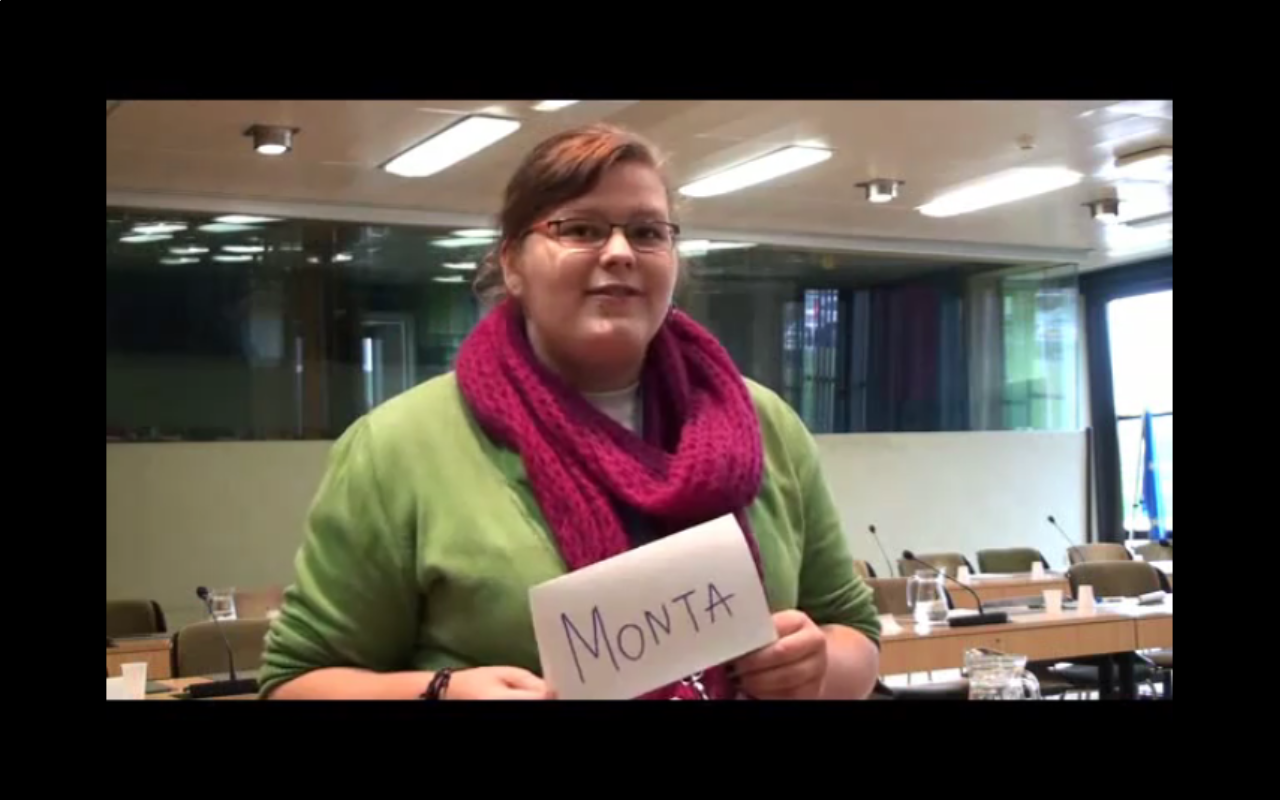
    An insight into how teenagers use SNS – Monta from Latvia

    “Messaging, emails, it takes a pretty long time”, says Monta from Latvia. Using nine different social network sites however, she is rather an exception. Most youngsters name Facebook as their favorite social network, being the platform with the most users worldwide. But also networks with strong national penetration are popular with young people, such as HI5 in Portugal. “Everybody in Portugal has an account there”, reports Francisca.

    httpv://www.youtube.com/watch?v=xcKyFQS_8vA&feature=player_embedded

    Most of the youths use social networks to keep in touch with their friends. But social networks also serve other purposes – Monta for example uses them for school and education, Konstantinos from Greece for online gaming. When it comes to the topic of privacy, the youngsters close in on a definition: “privacy is something that is only mine, it is something that nobody else can touch”, states Petr from Czech Republic.

    But is it possible to have privacy in social networks? When you’re smart, you can use them and still keep your privacy, suggests Petr. Linus from Sweden, however, is more skeptical. “When you really want something to be private, you shouldn’t post it online”, he suggests.

  • EU ringt um Agrartreibstoffe

    Verschiedene Dokumente haben die EU wachgerüttelt: „Bio“treibstoffe zerstören die Lebensmittelproduktion und die Regenwälder – die Wirtschaft macht derweil Stimmung gegen die Erkenntnisse //
    Agrardiesel und andere „grüne“ Treibstoffe, die von Europäern getankt werden, können unbeabsichtigte Konsequenzen für tropische Regenwälder und Feuchtgebiete haben, räumt die EU nun in einer Reihe von Berichten ein. Dies berichtete die Nachrichtenagentur Reuters am Donnerstag. Die EU hegt offenbar Zweifel an der bisherigen Subventionspolitik. Artikel im News-Bereich von BOS Deutschland vom 5. März 2010 von Lars Dittmer

    „Die simulierten Effekte der EU-Agrartreibstoffpolitik lösen Eruptionen auf den Agrarmärkten aus,“ warnt ein Vorabbericht die EU-Politiker. Bislang war das angepeilte Ziel der EU, bis 2020 zehn Prozent der Treibstoffversorgung aus erneuerbaren Energien zu beziehen. In der EU gibt es nun Stimmen, die dieses Ziel binnen einer Vier-Jahres-Frist erneut prüfen wollen.

    „Falls der Anbau von Agrargütern für Biodiesel weiter in dieser Form von der EU unterstützt wird, wird massenweise Land in Lateinamerika und Asien in Agrarflächen konvertiert,“ warnt ein weiterer Bericht. „Die möglichen Umweltschäden, die daraus erwachsen sind massiv und kaum reversibel.“ Die Warnungen sind nicht neu – Umweltschutzaktivisten weisen schon seit Jahren auf die Probleme hin. Etwa 116 Dokumente, die mit dem Thema befasst sind werden derzeit diskutiert, weitere werden erwartet.

    Die EU scheint aufgerüttelt – wenn sie auch im Moment noch versucht, intern die möglichen Schäden zu quantifizieren. „Offizielle Angaben gibt es noch nicht,“ sagte eine Sprecherin des europäischen Energieministers Günther Öttinger. „Die große Menge an Papieren zeigt allerdings, dass die Kommission die Problematik sehr ernst nimmt.“

    Der Kampf innerhalb der Kommission hat auch ganz klar einen wirtschaftlichen Hintergrund. Ein interner Brief eines Agrarexperten warnt, dass eine 5-Milliarden-Euro-Industrie „sterben“ würde, käme der volle Kohlendioxid-Fußabdruck der Branche zum tragen. Auch Lobbyisten der Bioethanol-Industriegruppe Ebio, haben die derzeit unübersichtliche Faktenlage genutzt um bei den Politikern gegen die Mahner Stimmung zu machen.

    Die indirekte Landumwidmung in Agrarplantagen hat speziell die Palmölindustrie frühzeitig ins Visier von Umweltschützern gebracht. „Bio“-Treibstoffe stehen in Konkurrenz zur Lebensmittelproduktion und werden heutzutage nicht selten an Orten angepflanzt, wo früher intakte Regenwälder standen. Wollte man den Durst der EU nach Agrarteibstoffen befriedigen, müsste man zusätzliche 5,2 Millionen Hektar Land bis 2020 finden, bescheinigt eine Studie. Das ist eine Fläche, größer als die Niederlande. Woher nehmen und nicht stehlen, sagt man sich nun in der EU.

    Die Wälder werden oft brandgerodet und stoßen immense Mengen an Treibhausgasen in die Atmosphäre – nicht einmal theoretisch könnte ein so produzierter Treibstoff klimafreundlich sein. Experten gehen davon aus, dass, falls gerade einmal 2,4 Prozent des europäischen Agrarsprits aus Palmöl gewonnen würde, das auf früheren Torfböden gezogen würde, wäre jeder Gewinn fürs Klima null und nichtig.

  • The United Kingdom as an outsider to the EU

    term paper abstract, winter semester 2007/2007, Potsdam University by Lisanne Dorn and Lars Dittmer

    „Britain has had the same foreign policy objective for at least five hundred years – to create a disunited Europe. (…)It was necessary for us to break up the EEC,(…) now that we’re in, we were able to make a pig’s breakfast out of it.“ (The Complete Yes Minister, qtd. In Otte 1)

    The essence that this sarcastic quotation transports, brushing away all party politics, great leaders and platform commitments, suggests that Euro-scepticism has always been in Great Britain’s political culture and it is here to stay. Intrinsic motifs and reasons for the British Euroscepticism will be dealt with in part I of this paper and indeed, they constitute strong evidence that the rejection of Europe – not only of the EU as a political instrument – is firmly entrenched in major parts of the UK’s society. To assume however that this sentiment has been equally present in all the political phases and parties in post WWII Great Britain is scientifically unsustainable. It becomes obvious especially if one considers the pro-European mood in the devolved Scottish Parliament and the parties represented in it, eg. The Scottish National Party and the Liberal Democrats (Watts/Pilkington 222, 243).

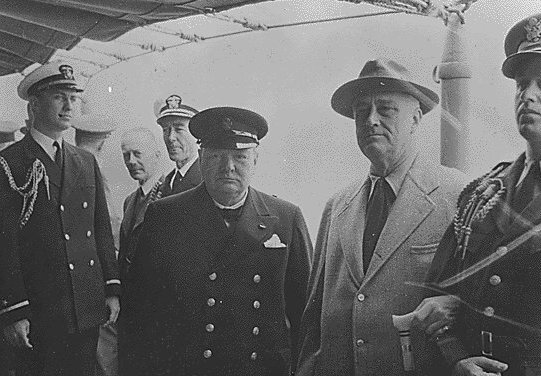
    Roosevelt and Churchill aboard the U.S. S. Augusta, off the coast of Newfoundland, August 1941

    Also on UK level the political approach towards the EU and its institutions has changed with the political personal in charge, intergovernmental relations and constellations; it is true especially in regard of the UK that the lines of approval and rejection of the EU are not congruent with party loyalities. t is therefore the task of this paper to distil ideological determinants and mind-sets and the crucial phases in British policies towards the European Union after World War II. Focus in part one lies on Britishness and its surrounding ideological patterns; part two at its core examines the last three governments of the United Kingdom, that is the administrations of Margaret Thatcher, John Major and Tony Blair.

    It will be one of the statements of this work that both of the subsequent governments in many respects can be seen in the tradition of the first mentioned, although it was then indicated in another way and hoped by many pro-Europeans that this would not be the case. Furthermore one aim will be to isolate a tendency that enables the percipients of this academic work to venture an outlook on the future relations between Europe and the UK, which is especially vital in regard of the sustainability of the Union: It has now enlarged to 27 members with some more countries in the waiting loop and its constitution is still on hold. It must be emphasized that the UK is a major player in European politics and by no means just a by-stander.

    2
    Table of Contents
    1
    General Introduction………………………………………………………………………………………………….. 3
    1.1
    Introduction and approach of this paper………………………………………………………….. 3
    2
    Britishness …………………………………………………………………………………………………………………….. 4
    2.1
    Cultural identity…………………………………………………………………………………………….. 4
    2.2
    Britain and the EMU ……………………………………………………………………………………… 5
    2.3
    Britain and the European Constitution ……………………………………………………………. 6
    3
    Special Relationship………………………………………………………………………………………………….. 7
    4
    The Euro-sceptic Press in Great Britain …………………………………………………………. 10
    5
    The „Awkward Partner“ enters the union ……………………………………………………….. 12
    6
    Margaret Thatcher: Alone against the Superstate ……………………………………………. 15
    6.1
    Margaret Thatcher and the BBQ ……………………………………………………………………. 15
    6.2
    The Late 1980s ­ Struggle Over Europe …………………………………………………………….. 17
    7
    John Major: A phase of transition …………………………………………………………………………………………………………………… 18
    8
    New Labour: Old Wine in New Bottles? …………………………………………………………………………………………………………………… 21
    8.1
    Hopes for a pro-European approach………………………………………………………………. 21
    8.2
    New Labour and the Euro…………………………………………………………………………….. 22
    9
    Evaluation and outlook………………………………………………………………………………………………………… 24
    10
    Works Cited…………………………………………………………………………………………………………….26

    To support the above-mentioned

    tendency this paper will repeatedly recur on figures of surveys among the UK’s people and

    Seite 5

    4
    examine if Euroscepticism was shared on both levels, in the governments and in the population or if classical patterns of bottom up or top down politics can be established. As Julie Smith and Mariana Tsatsas in their work The New Bilateralism point out,
    there are many factors that determine bilateral relations (5). This term paper is incorporating the points that are important in the examination of the topic; it names the treaties that shape
    the European interactions on a transnational level and provides the necessary terminology in the respective historical contexts. It is however also determined to not neglect the relations
    between the people who govern the countries; it is thus not only party platforms, bi- and multilateral treaties and assumed political alliances within the political left/right pattern that
    shape European relations, but also the chemistry between the leaders: „…good personal relations are extremely important in building effective bilateral relations between states
    (Smith/Tsatsas 7).
    These relations often do not adjust to political affiliations; for example although Tony Blair was usually associated with a „catch-all“ politics slightly tending to the left, however
    with the former conservative Prime Minister of Spain, Jose Maria Aznar, he got warmer than with many of „his fellow European Social Democrats“ (Smith/Tsatsas 31). Margaret Thatcher
    however could not conceal her disliking for her conservative counterpart in Germany: „she thought (Helmut) Kohl boring, clumsy and provincial…: „My God, that man is so German“
    (Campbell 304). It has become common to declare Margaret Thatcher the greatest anti-European in British history after WWII – it is however necessary to take a look back into the early years of the community to understand that also the Iron Lady’s policies were in some measure in line with those of her predecessors.
    2 Britishness
    2.1 Cultural identity
    Britain’s sense of itself is a strongly encouraged self-perception by its imperial past and its geographical and linguistic isolation of the rest of Europe. As in most western democracies, a strong sense of cultural identity and a concept of what Britain means is deeply rooted in Great Britain. Here Robbins offers a traditional view of cultural identification:“ identification is constructed on the back of a recognition of some common origin or shared characteristic with
    another person or group, or with an ideal, and with a natural closure of solidarity and allegiance established on this foundation“ (Robbins 282). Thus there are two factors: identification – here clearly seen as a construct – is based on either some common origin
    and/or shared characteristics; this could be historical events from the shared imperial past or, as stated above, the geographical and linguistic isolation from continental Europe.
    The second and most likely more vital factor stated by Robbins is „the natural closure of solidarity“. This concept of closure is strongly associated with the topic of cultural/group identity by many
    socialists. It describes the unconscious intention of a specific social group to not only form this group for reasons of shared origins and characteristics, but to then defend it and its perceived status from an external threat. This external threat is often referred to as „the
    Other“, which shows that it can appear in various forms and always starts as an imagined or at least perceived threat, long before it can be grasped and named factually. In the beginning the only thing that the specific social group might be certain of, is that there is a difference between their supposedly homogenous group and the external other. The manifestation of this difference rapidly turns „the Other“ into an external threat against which the shared traditions and values of the group have to be defended. Thus according to contemporary social theory, it could be plausibly argued, that one element at least of recent expressions of Euro-scepticism in Britain „stems from the presence of and perceived threat from an external „Other“, namely continental Europe“ (Robbins 285).
    Continue readin on hausarbeiten.de or contact me