Schlagwort: Film

  • Erschütterung der Macht in Hollywood: Disney schluckt Lucasfilm

    George Lucas hat seine Ankündigung wahr gemacht – er tritt ab als alleiniger Herrscher über die „Star Wars“-Galaxie. Seine Firma Lucasfilm verkaufte er nun für über vier Milliarden US-Dollar an den Unterhaltungsgiganten Disney. Der Micky-Maus-Multi kündigte auch gleich an: Star Wars geht schon ab 2015 in die nächste Runde – und wird als Marke gnadenlos ausgeschlachtet.


    Horrorvision aller eingefleischten Star Wars-Fans. (Bild: UGC)
    Horrorvision aller eingefleischten Star Wars-Fans. (Bild: UGC)

    Das Imperium hat wieder einmal zugeschlagen. Nach dem Animationsstudio Pixar ( „Findet Nemo“) und dem Comic-Konzern Marvel („Iron Man“) hat Unterhaltungsmulti Disney seinen Einkaufszug durch die Medienwelt fortgesetzt. Das Objekt der Begierde hieß diesmal Lucasfilm – über vier Milliarden US-Dollar (rund drei Milliarden Euro) bezahlte Disney für die Firma des kalifornischen Filmemachers George Lucas – inklusive Spezialeffekte- und Sound-Studios sowie der Computerspiele-Schmiede LucasArts. George Lucas wird als alleiniger Eigentümer des Unternehmens bar und in frisch herausgegebenen Aktien ausbezahlt.

    Schon bei der Übernahme kündigte Disney an, das Weltraumdrama fortschreiben zu wollen. „Der letzte Star Wars-Film war ‚die Rache der Sith‘ im Jahre 2005. Wir glauben, dass erhebliche Nachfrage für neue Folgen besteht“, sagte Disney-Chef Bob Iger in Burbank bei Los Angeles. Laut Iger soll schon 2015 Star Wars-Episode 7 in die Kinos kommen, die Folgen acht und neun sind bereits in Planung. Alle zwei bis drei Jahre, versprach Iger, werde ab dann ein neues Abenteuer aus der Reihe – aller Voraussicht nach in 3D – über die Leinwände flimmern.

    Die bisherigen sechs Episoden der Reihe kamen in den Jahren 1977 bis 1983 sowie 1999 bis 2005 in die Kinos und waren ausnahmslos Kassenschlager. Rechnet man Einspielergebnisse mit Merchandise-Einnahmen zusammen, hat Lucasfilm laut eigenen Angaben insgesamt rund 20 Milliarden US-Dollar an der Reihe verdient. Damit wäre die Geschichte um Luke Skywalker, Prinzessin Leia und Darth Vader das erfolgreichste Kino-Epos aller Zeiten. An den anderen Produkten der Firma, etwa dem „Indiana Jones“-Franchise, bekundete Iger allerdings kein Interesse.

    George Lucas erklärte, dass er sich bereits auf die neuen Episoden freue und sich künftig als Fan der Reihe sehe. Bereits zu Beginn dieses Jahres hatte der 68-Jährige seinen Ausstieg aus Hollywood angekündigt: „Ich ziehe mich zurück“, hatte er der New York Times verraten. „Ich steige aus der Industrie und meinem Geschäft aus.“ Disney hatte ihm offenbar bereits im Laufe des Jahres 2011 ein Angebot für eine Übernahme gemacht, doch erst im Zuge seines Rückzuges aus der Arbeitswelt kam ein Deal mit dem Micky-Maus-Imperium zustande.

    Mit der Übernahme führt Disney laut dem „Handelsblatt“ seine über die vergangenen Jahre angewandte Geschäftsstrategie gekonnt fort: Bewährte, gut verkäufliche Marken werden aufgekauft und umfassend kommerzialisiert. So auch geschehen bei Marvel. Für die Comicschmiede bezahlte Disney 2009 rund  4,3 Milliarden US-Dollar. Auch hier baut der Konzern auf Altbewährtes statt auf eigene Ideen. Mit vertrauten Figuren und einer verstärkten Konzentration auf 3D, Spezialeffekte, Merchandise und Weiterverwertung in Themenparks möchte Disney familienfreundliches „Event-Kino“ bieten. Gelungen ist dem Megakonzern dies bei dem Animationsspektakel „The Avengers“, das im Frühjahr 2012 weltweit 1,5 Milliarden US-Dollar (rund 1,15 Milliarden Euro) einstreichen konnte und damit Skeptiker der Marvel-Übernahme besänftigte.

    Ähnliches wird wohl auch dem Weltraumdrama Star Wars verstärkt widerfahren. Der 1977 gedrehte erste Teil der Saga hatte Lucasfilm – damals eine unbekannte Independent-Klitsche aus San Franciso – gerade mal elf Millionen US-Dollar gekostet. Das ist nicht viel mehr als Ewan McGregors Gage für die Rolle des Obi-Wan Kenobi in „die Rache der Sith“. Doch für die immer weitergedrehte Kommerzialisierungsschraube hatte George Lucas viel Fanschelte bezogen. 

So hatten Fans schon in den späten Neunziger Jahren Lucas‘ überarbeitete Fassungen der ursprünglichen drei Star Wars-Filme kritisiert. Sie seien nicht nur digitalisiert, sondern auch inhaltlich nachträglich verändert worden, lautete das Urteil. Ähnlich durchwachsen waren die Reaktionen auf die drei neuen Filme, die zwischen 1999 und 2005 in den Kinos liefen. Erkennbar familienfreundliche Figuren wie Jar Jar Binks, der bei Episode 1: „Die dunkle Bedrohung“ erstmalig die Star Wars-Welt betrat, fielen bei eingefleischten Fans durch.

    Lucas selbst ließ das nicht kalt. „Warum sollte ich noch mehr Teile machen, wenn man ständig von allen Leuten angeschrien wird, was für eine schlimme Person man doch sei“, schmollte er gegenüber der New York Times Anfang 2012. Dies war wohl auch ein Grund für ihn, das Geschäft zu verkaufen. Er selbst werde allenfalls noch Independent-Filme machen, kündigte er an – wie damals als Film-Student in den Sechziger-Jahren. Ob dies angesichts des Disney-Deals die Fans beruhigen wird, darf jedoch bezweifelt werden.

    Erschienen auf Yahoo! Finance am 31. Oktober 2012


  • Spencer & Hill – Zwei Höllenhunde auf dem Weg zum Olymp

    Die Generation der 1970er und 1980er erinnert sich mit einem wohligen Schauer: Ein Bud-Spencer- und Terrence-Hill-Film im Programm versprach unterhaltsames wie leicht unterbelichtetes Prügelvergnügen. Ein cooler Spruch ist das Zeichen – dann springt die Dudelmusik des Kultduos „Oliver Onions“ an, der dunkelbärtige Bär Spencer rammt den immer gleichen Gegnern seine überdimensionierten Fäuste in die Mägen während Hill alias Mario Girotti geräuschintensiv mit einer Bratpfanne assistiert. Es dauert nicht lange und beim Zuschauer stellt sich ein regressiver Zustand  ein, gepaart mit leicht nostalgischen Gefühlen.

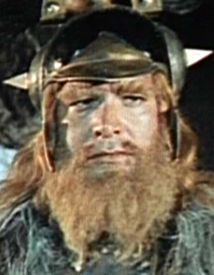
    Tatsächlich sind nicht nur die heutigen Twens bis Mittdreißiger mit dem knochenbrecherischem Duo groß geworden – auch die Generation davor kannte sie bereits. Schließlich ist Spencer, der mit bürgerlichem Namen Carlo Pedersoli heißt und in Neapel geboren wurde, vergangenes Jahr 80 geworden, der Venezianer Terence Hill wurde kürzlich 70. Das erste Mal gemeinsam vor der Kamera standen sie für den Sandalenfilm „Hannibal“ von Carlo Ludovico Bragaglia von 1959 – ohne sich zu kennen. Oliver Onions waren zu der Zeit allerdings noch weit weg, vielmehr begleiteten Bombastklänge von Carlo Rustichelli  die Schlachtszenen. Jene wurden übrigens damals von den kampferprobten Italienern nicht in gewohnter Manier dominiert, Terrence Hill spielte den Quintilius, der im Laufe des Filmes stirbt, Bud Spencer den Rutario, eine Nebenrolle.

    Noch unter Zwanzig – Girotti in „Hannibal“

    Obwohl das Niveau spätestens seit „Zwei Himmelhunde auf dem Weg zur Hölle“ von 1972 auf das notorische Niveau abgesunken war – wo es Gott sei Dank auch verharren sollte – kreuzten noch einige interessante Film-Persönlichkeiten speziell den Weg Terrence Hills. Anfang der Siebziger schlugen ihm Tonino Valerii und Sergio Leone, der legendäre Westernregisseur (u.a. die „Dollar-Trilogie“ und die „Amerika-Trilogie“)  ein gemeinsames Projekt vor. 1973 kam „Mein Name ist Nobody“ in die Kinos – Terrence Hill und Henry Fonda(!) in einer der Spagetti-Western-Persiflagen überhaupt. Und so ging es weiter: Schon kurz darauf drehte er mit Miou-Miou („Eine Komödie im Mai“) und Klaus Kinski. Die beiden konnten am Set Deutsch reden – Hills Mutter ist Dresdnerin, die ersten sechs Jahre seins Leben sprach er ausschliesslich seine Muttersprache. Der Film kam unter dem Namen „Nobody ist der Größte“ 1975 in die deutschen Kinos. Die allseits bekannten Klamaukszenen hatten sich zu diesem Zeitpunkt bereits durchgesetzt – höchst amüsanter Streifen.

    Hätten Sie ihn erkannt? Bud Spencer in „Hannibal“

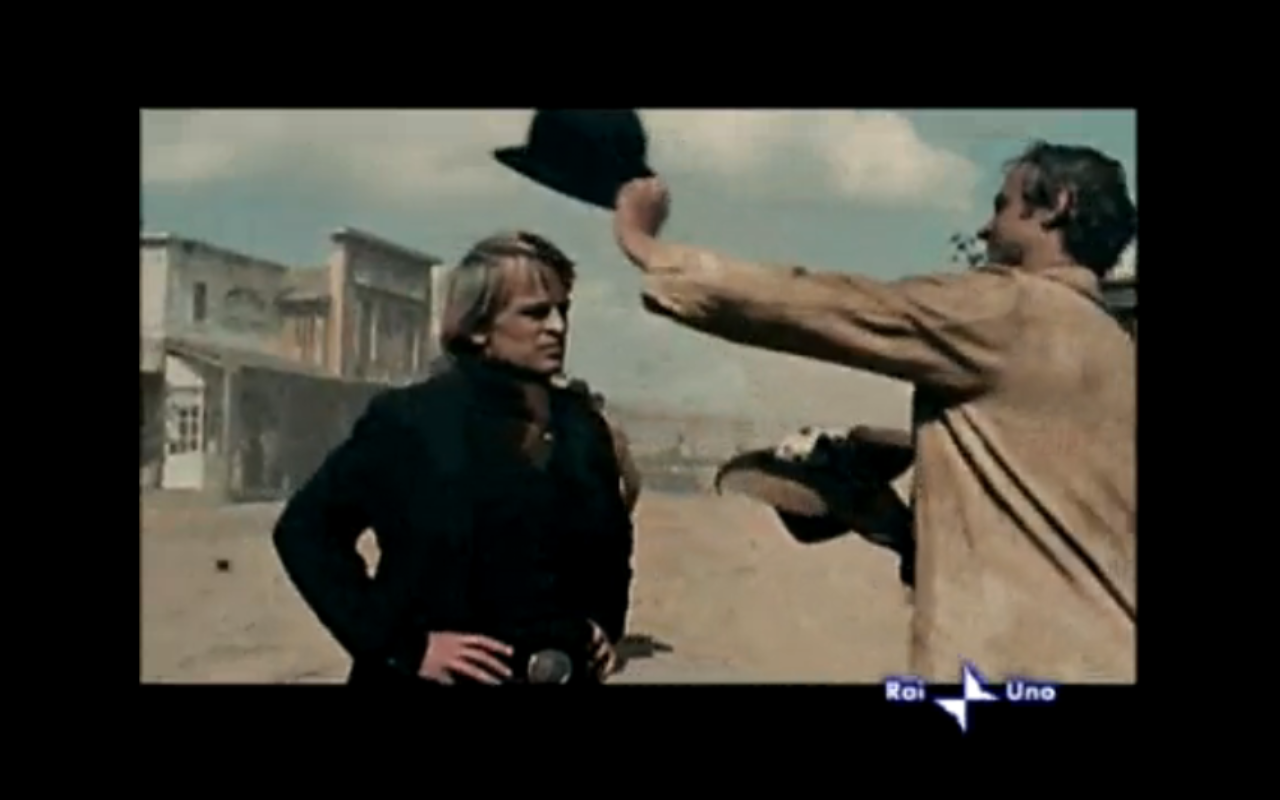
    Hatte nicht Kinski später einmal bekannt, sich für viele seiner frühen Schinken zu schämen? Nun, sich von „Nobody“ beim Kartenspiel vorführen zu lassen („Das waren vier Asse…verflucht selten…“) und sich später von ihm die Melone vom Kopf ballern zu lassen mag nicht ganz so monumental sein wie der Auftritt von Aguirre, dem Zorn Gottes. Könnte er dennoch seine Kollabo mit Hill gemeint haben? Man weiß es nicht – zumindest wäre es kein Zeichen von Größe. Hill drehte übrigens munter weiter mit den Filmkoryphäen seiner Zeit: In March or Die („Marschier oder Stirb“) spielte er Ende der 1970er mit Gene Hackman und Catherine Deneuve.

    Pech im Spiel – Klaus Kinski als Doc Foster versus Nobody

    Die Meriten von Bud Spencer sind etwas anderer Natur. In den 1950er Jahren war er Schwimmer – sieben Mal in Folge wurde er italienischer Meister in Brust- und 100-Meter-Freistil. Er war der erste Italiener, der in dieser Disziplin die Minute unterschritt. 1952 nahm Pedersoli sogar an den Olympischen Spielen in Helsinki teil. Ein Dokument dieser Aktivitäten findet sich sogar bei Youtube:

    httpv://www.youtube.com/watch?v=Mpnj_SoDaaw

    Lange Zeit verbrachte Pedersoli auch in Argentinien, in der italienischen Diaspora. In den frühen 1960er Jahren, Pedersoli war nach Italien zurückgekehrt, machte sich seine kreative Ader bemerkbar. Denn alle, die immer glaubten, die einzige Musik die so einen Brutalo stimulieren kann, ist das peitschende Geräusch der von ihm ausgeteilten Gesichtswatschen, müssen umdenken: Denn Bud Spencer war Komponist – er schrieb neapolitanische Volkslieder und Schlager. Und als sei dies an künstlerischer Zerbrechlichkeit nicht genug – er gründete 1965 eine Produktionsfirma, die Tierdokus drehte. Tierdokus von Bud Spencer…? Wilde Szenen, in denen sich Pedersoli mit einem Silberrückengorilla im Schwitzkasten in einer Schlammpfütze windet, auf einem Nashorn durch die Savanne reitet und rückenschwimmend den Piranha-verseuchten Amazonas überquert, schiessen einem unwillkürlich durch den Kopf. Das macht die Sozialisation, denn so war es aller Wahrscheinlichkeit nach nicht. Denn Pedersoli ist eigentlich ein Kreativer, der alles Rohe ablehnt – mit der Rolle von Bud Spencer hat er eigentlich nichts gemein. So sagte er der Neon im Interview:

    Heute mag ich Bud, auch wenn wir wirklich nichts gemeinsam haben. Er ist nicht besonders schlau – aber ich bin mächtig stolz darauf, dass Kinder ihn so lieben.

    Kurios auch seine düsentriebsche Ader: Zwar ist er qua Studium kein Ingenieur, sondern (promovierter) Jurist, hat aber dennoch einige Patente angemeldet. Darunter: Das dreiläufige Jagdgewehr und der Spazierstock mit integriertem Sitz. Die Patente verfielen leider – so mancher schlecht gelaunte Rentner hätte sich mit diesen Erfindungen gehörig Respekt in seinem Lieblingspark verschaffen können. Sein Erfindungsreichtum floss übrigens auch in seine Rolle als Bud Spencer ein. So spricht er im Neon-Interview über unterschiedliche Prügeltechniken aus seiner Feder. Darunter ein Klassiker: Am Schluss einer Rauferei stürzen sich seine Gegner auf ihn, 20, 25 Figuren und dann, mit einem großen Schlag:

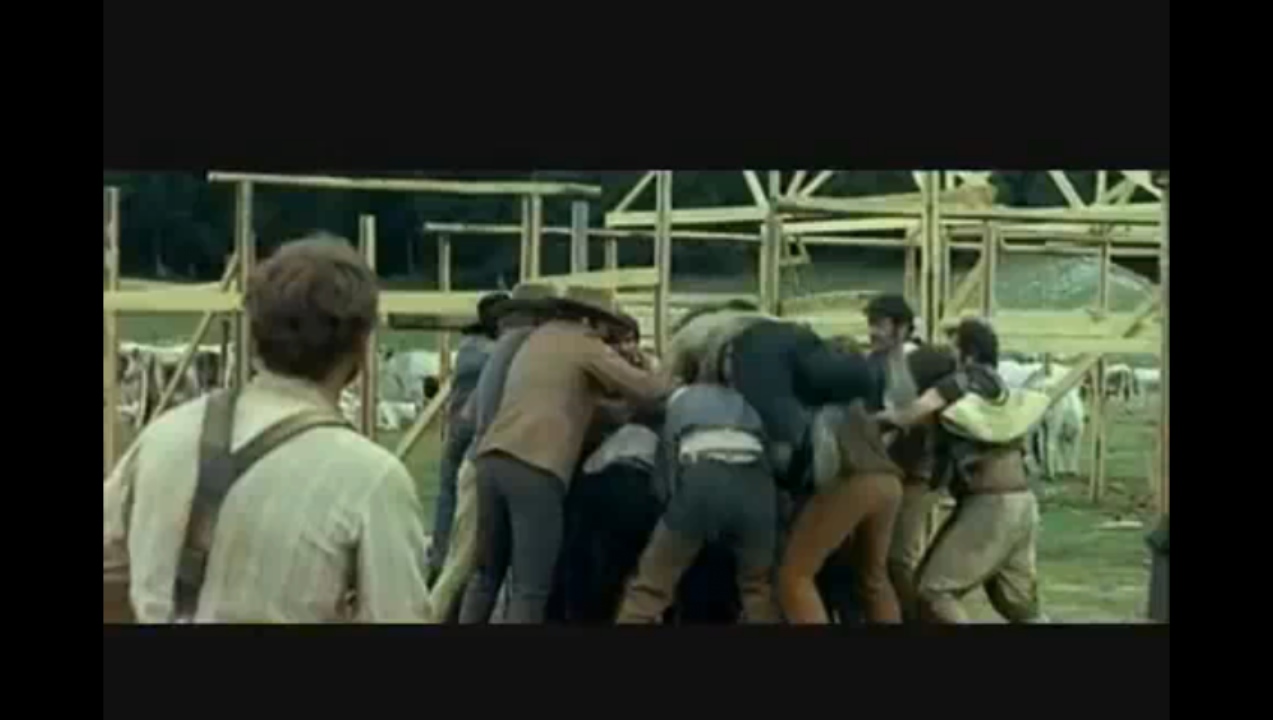
    … Wooom! La Bomba! Ja, das ist die Bombe! Ich hau’ alle auf einmal weg! Das habe ich erfunden.

    Wo rohe Kräfte sinnlos walten. „La Bomba“.

    Den leicht untersetzten Gegnern pflegte er zumeist mit seiner Faust auf den Kopf zu schlagen, oder wahlweise, in einer Dreier-Combo, zunächst auf die linke, dann die rechte Schulter, bevor er mit ihnen mit einem horizontalen Gesichtsschlag die Lichter auspustet. Dazu Pedersoli:

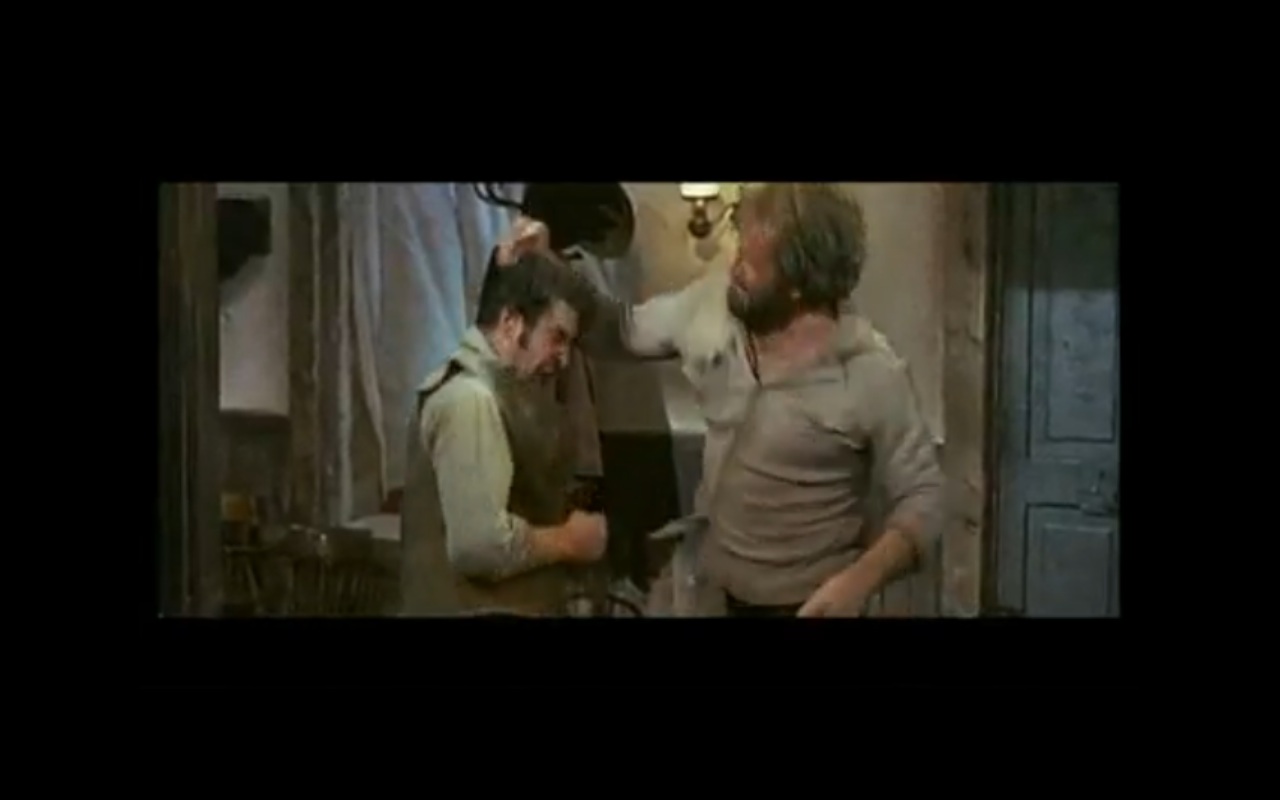
    Die Kopfnuss! Auch meine Erfindung.

    Ob sie auch das Denkvermögen erhöht? Spencers Kopfnuß

    Politisch durchlebte er so manche Irrungen. 2005 kandidierte er für Forza Italia, die Partei Silvio Berlusconis – gruselig. Er scheiterte und gab die Politik auf, über die er  auch sagt:

    Politik ist etwas Scheußliches. Immerzu muss man Kompromisse schließen. Als junger Mann habe ich an den Kommunismus geglaubt – bis ich1952 mit meiner Schwimmmannschaft ins stalinistische Moskau geflogen bin. Ich dachte, mich würde das Paradies erwarten. Stattdessen fehlten gleich im Flugzeug die Fenster.

    Auch wenn natürlich keine großen Filmprojekte von Pedersoli und Girotti mehr zu erwarten sind – der letzte gemeinsame Film liegt immerhin 16 Jahre zurück („Die Troublemaker“) – die Klassiker der beiden haben an ihrer zeitlosen Schlagkraft nichts eingebüßt.  Kabel 1 bringt sie zur Zeit wieder jeden Samstag. Heute Abend: „Zwei Asse trumpfen auf“.

    Ein kleines Kuriosum noch zum Schluss:

    httpv://www.youtube.com/watch?v=r0lnXcIGbyM

  • Singen ist Silber

    Culture Clash im Kino macht meistens Spaß. Schließlich öffnet das Zusammentreffen möglichst verschiedener Lebensweisen reichlich Raum für Überspitzungen. Bollywood in den Berner Alpen: „Tandoori Love“. Artikel im Tagesspiegel vom 27. Mai 2010 von Lars Dittmer

    Regisseur Oliver Paulus etwa wollte immer schon mal Schweizer und Inder aufeinander loslassen. In „Tandoori Love“ ist erst mal alles wunderbar: Ein Bollywood-Team eine Schmonzette vor malerischem Berner Alpenpanorama. Nur Koch Rajah (Vijay Raaz) schiebt Frust – er fühlt seine Leistungen vom Team nicht ausreichend gewürdigt und wird zudem von der Diva (Shweta Argawal) tyrannisiert. Da macht es sich gut, dass er einer rotblonden Schönheit namens Sonja (Lavinia Wilson) auf den ersten Blick verfällt. In einem Supermarkt – begleitet von einem Chor anderer Kunden – bringt er ihr ein bollywoodeskes Liebesständchen.

    Was fürs Auge – schöne Landschaftsschwenks durch die Berner Alpen (hier der Finsteraarhorn bei Wikipedia)

    Sonja ist allerdings mit Markus (Martin Schick) verlobt, der mit seiner Mutter das rustikale Restaurant „Zum Hirschen“ betreibt. In dem dringenden Wunsch, bei Sonja zu landen, heuert Rajah im „Hirschen“ an und verwandelt das Lokal in eine feurige indische Spezialitätenhölle. Langsam erobert er damit Sonjas Herz – aber was wird dann aus Markus?

    Berge, Seen, Heidi: Schon in den Sechziger Jahren entdeckte die indische Filmindustrie die Schweiz und stilisierte sie zum Paradies. Seitdem sind Urlaubsorte wie Interlaken Ziel zahlloser asiatischer Gäste. Bollywood-Filmproduktionen lassen hier ihre Stars lieben, singen, leiden. Leider trägt zum Leiden der Zuschauer auch Regisseur Oliver Paulus bei.

    Das Problem: Dem Kitsch, den er tapfer als Kitsch stigmatisiert, verfällt er am Ende selber. So wirken seine Bemühungen, die Bollywood-Konventionen zu veralbern, rückwirkend arg unglaubwürdig. Etwa die Szene, in der die nörgelnde Diva mit ihrem Lover in bester „Titanic“-Manier über den Brienzer See schippert – zu herzzerreißender Musik. Regieanweisung: „We need more tears!“ Was aber, wenn bald alle – ganz unironisch leidenschaftlich – drauflossingen?

    Am schönsten in „Tandoori Love“ ist nicht die Story, die bald reichlich zerfasert. Auch nicht die Gesangsnummern, bei denen sich schließlich das gesamte Personal in die Arme fällt. Sondern die Schwenks übers Gebirge.

    Sputnik am Südstern

  • Lügen für die Liebe

    Im Kino: die Komödie „I love you Phillip Morris“//Im Jahr 1998 war Steven Jay Russell tot, eine Zeitlang. Aids. Über Monate war der Häftling des Houstoner County Jail immer schwächer geworden, und dann teilt der Gefängnisarzt den Behörden sein Ableben mit. Der Clou: Der Doktor, der die ganze Zeit die Krankenakte fütterte, ist Russel selbst – kerngesund, bloß liebeskrank. Raus aus dem Knast will er, um seinen Zellengenossen Phillip Morris wiederzusehen, in den er sich unsterblich verliebt hat. Artikel im Tagesspiegel vom 3. Mai 2010

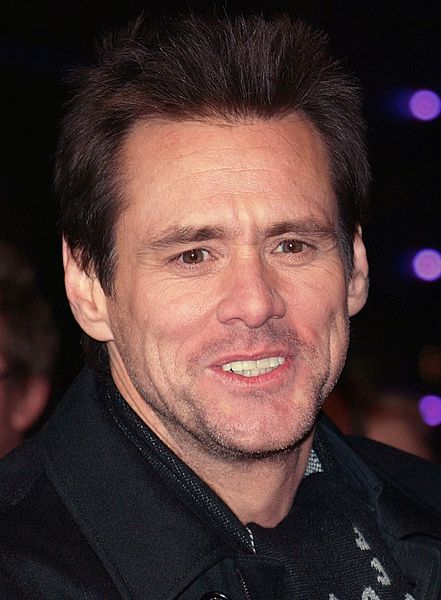
    „I love you Phillip Morris“ beginnt mit Russell (Jim Carrey) auf dem „Totenbett“: Er will sein Hochstaplerleben erzählen, eine Summe von Lügen. Früher hat er es mal bürgerlich versucht, lebte in Georgia als Ehemann, Vater, guter Amerikaner. Doch er ist schwul – und verlässt seine Frau für einen Freund (Rodrigo Santoro), und seine Accessoires heißen fortan Hawaiihemd, Hündchen und Rolex. Das Leben in Miamis Schwulen-Schickeria ist allerdings teuer: Nach Versicherungsbetrügereien landet Russell im Gefängnis, wo er den schüchternen Phillip Morris (Ewan McGregor) kennenlernt.

    Schwer verliebt: Carrey ist Steven Jay Russel in "I love you Phillip Morris"
    Schwer verliebt: Carrey ist Steven Jay Russel in „I love you Phillip Morris“

    Als die Regisseure John Requa und Glenn Ficarra sich an das Buch wagten, waren die Probleme absehbar. Ein Homosexueller, der aus Liebe zum Betrugs- und Ausbruchskünstler wird? Das gruselt die Konservativen in den USA. Pikant obendrein: Der Film beruht auf einer realen Geschichte. Der echte Russel sitzt derzeit eine Strafe von 144 Jahren ab, in Texas.

    „I love you Phillip Morris“ nimmt die Sache demonstrativ von der leichten Seite. Russel ist ein charmanter, zudem gewaltlos operierender Gauner – tragisch bloß, dass er sich an gesellschaftlichen Konventionen aufreiben muss. Wobei die Homosexualität der Protagonisten kaum eine Rolle spielt. Anders als etwa in „Milk“ oder „Brokeback Mountain“ bleibt dem Zuschauer der Kraftakt erspart, sich für die Intoleranz der Gesellschaft fremdzuschämen. Es wird ganz einfach geliebt: so entzückend wie verzückend.

  • Das Wunder der Stereoskopie

    „Avatar“, „Alice“ und die Folgen: Die Berliner Kinos rüsten auf 3 D um. Auch die Produktionsfirmen hoffen auf einen neuen Markt.

    Marianne Peinert, Rentnerin aus Hohenschönhausen, schaut sich „Avatar“ wegen 3 D an. Dafür lohnt sich, sagt sie, der Weg in die UCI-Kinowelt in Berlin-Friedrichshain an der Landsberger Allee. Rund 40 Zuschauer haben an diesem Mittwochnachmittag im 3-D-Saal Platz genommen, um sich das Weltraumindianer-Epos anzusehen. Mehr als 9,6 Millionen haben den Film in ganz Deutschland gesehen. Artikel im Tagesspiegel vom 9. März 2010 von Lars Dittmer

    Zwar ist „Avatar“ mit nur drei Auszeichnungen der Verlierer der Oscar-Nacht. Aber er hat einen Trend losgetreten, von dem nun auch seine Nachfolger profitieren. Tim Burtons 3-D-Märchen „Alice im Wunderland“ hat am ersten Wochenende 116 Millionen Euro eingespielt, Avatar spielte seinerzeit „nur“ 77 Millionen Euro ein. Der Erfolg von „Alice“ hat jedoch auch damit zu tun, dass immer mehr Kinos umgerüstet werden und so neue Zuschauer erreicht werden.

    „Viele ältere Leute schauen Avatar“, sagt UCI-Mitarbeiter Johannes Wagner. Dem letzten Herbst auf 3D umgerüsteten Kinosaal mit 298 Sitzplätzen soll daher ein zweiter folgen. Die Technik ist teuer: 120 000 Euro kosten Abspieltechnologie plus Silberleinwand, erfährt man beim Hauptverband Deutscher Filmtheater.

    Rund 20 derart ausgestattete Kinos gibt es in Berlin und Brandenburg, Tendenz steigend. Für die Betreiber können sich die Kosten schnell amortisieren – siehe „Avatar“ und „Alice“. Außerdem nimmt etwa die UCI-Kette für 3-D-Filme einen Aufpreis von 3 Euro. Zwar führen derzeit primär die großen Kinoketten die neue Technik ein, doch kleinere Kinobetreiber ziehen nach.

    Was die Produktion von 3-D-Filmen in Deutschland angeht, ist man allerdings zurückhaltend. „Deutschlandweit dürfte es rund hundert schwer Interessierte geben“, schätzt Wolf Bosse von der Berliner Postproduktionsfirma Pictorion/Das Werk. Dazu gehört auch die kleine Produktionsfirma Movie Brats in Friedrichshain, die im Frühjahr den 3-D-Animationsfilm „Water Soul“ herausbringt. Für 2012 avisiert man einen 3-D-Dokumentarfilm an: „Außerhalb der Imax-Kinos gab es bisher keine 3-D-Dokus“, sagt Alex Weimer, einer der drei Independentfilmer von Movie Brats. „Man fühlt sich wie ein Pionier.“

    3 D ermöglicht eine besondere Art des visuellen Erzählens mit langen Schnitten und imposanten Landschaftsaufnahmen. Für ihr Projekt mit dem Titel „American Backroom“ wollen die drei alle 50 US-Bundesstaaten bereisen, um eine Momentaufnahme von Amerika, rechtzeitig zu den nächsten Präsidentenwahlen, zu machen.

    Warum man in Deutschland bislang eher vorsichtig mit 3-D-Filmen ist, erklären sich die drei auch anhand der Sujets. Bislang ist der Sektor dominiert von Tier- und Landschaftsdokus sowie von Animationsfilmen wie „Ice Age 3“ und „Oben“, etwas Horror á la „Resident Evil“, und Action wie bei „Final Destination 4“. „Stoffe, die in Deutschland nur wenig produziert werden“, sagt Esther Friedrich von Movie Brats. „Man müsste hierzulande erst merken, dass auch Drama auf 3D geht.“

    Primär ist es aber natürlich die Geldfrage, die Filmemacher und Investoren abwarten lässt. Rund 1,8 Millionen Euro Kosten kalkulieren die Movie-Brat-Produzenten für „American Backroom“. Das ist zwar für Deutschland eine hohe Summe, aber Camerons „Avatar“ kostete 175 Millionen Euro.

    Rund ein Viertel teurer wird ein Film, wenn er stereoskopisch, sprich in 3D, gefilmt wird. Man benötigt zwei Kameras, für jedes Auge eine, so dass die Illusion von Räumlichkeit entsteht. Die zwei Linsen müssen während der Dreharbeiten konstant in zwei Zentimetern Abstand geführt werden (das ist der Augenabstand), was aufgrund der Breite der Geräte eigentlich unmöglich ist. Deshalb drapiert man die Kameras fast aufeinander und arbeitet mit Spiegeln. Während der Dreharbeiten justieren Spezialisten ständig nach. Die „Stereographer“ sind zumeist gelernte Ingenieure, die sich ihr Spezialwissen derzeit mit Gold aufwiegen lassen.

    „Für unser Projekt mussten wir zwei Jahre Investoren abklappern“, sagt Holger Hage, Filmproduzent und Regisseur von European Motion Pictures. Sein Mistery-Thriller „The Forbidden Girl“, ein von Edgar Wallace inspirierter 3-D-Film, soll in Berlin und Umgebung gedreht werden. Weitere „Berliner“ Projekte: Wim Wenders arbeitet derzeit an „Pina“, einem 3-D-Film über die 2009 gestorbene Wuppertaler Choreografin Pina Bausch. Gedreht wird in Wuppertal in Kooperation mit dem Berliner Büro von Das Werk und finanziell unterstützt vom Medienboard Berlin-Brandenburg. Und auch die Potsdamer Filmhochschule HFF stürzt sich mit dem Film-Projekt „Topper gibt nicht auf“ ins stereoskopische Getümmel.

    Neben Berlin mischen auch Städte wie Köln und München bei 3 D ganz vorne mit. So wird mit „Konferenz der Tiere“ in diesem Herbst ein Animationsfilm der Münchner Constantin in die Kinos kommen, 2011 legt Michael „Bully“ Herbig mit „Wickie 2“ nach. Von dem Boom kann Berlin nur profitieren, sagt Hage: „Hier gibt es viele Kreative, man bekommt leicht Drehgenehmigungen. Auch die Industrie könnte das auf kurz oder lang hierherlocken.“

    Die Kinoleinwand ist nur das erste Kapitel. An Weihnachten könnte 3 D verstärkt in Privathaushalte Einzug halten – durch neuartige Fernsehgeräte. Auch im Videospielbereich deutet sich 3 D als Trend bereits an. Das dürfte den Boom füttern, steigert aber auch die Gefahr illegaler Downloads. Unschön für Hollywood: Nach Jahren der Verluste durch Raubkopierer sorgen „Avatar“ und „Alice“ dank des 3-D-Alleinstellungsmerkmals weltweit für steigende Umsätze. Damit ist womöglich schon bald wieder Schluss.

  • Als Brad Pitt gegen den Klimawandel

    Wer schon immer den Wunsch hatte, sich als Brad Pitt im Kampf gegen den Klimawandel zu engagieren, kann dies auf dem Kongens Nytorf, den neuen Markt in Kopenhagen derzeit tun. Abseits des „Hopenhagen“-Jahrhmarkts castet und kostümiert eine Künstlergruppe Passanten für das Filmprojekt „Brad Pitt is saving Planet Earth in Copenhagen“. Während der UN-Verhandlungen wird jeden Tag eine neue Episode abgedreht. Artikel bei Klimaretter.info vom 10. Dezember 2009

    Fightclub in Grün: Brad Pitt kämpft gegen den Klimawandel (Foto: Lars Dittmer)

    „Wir wollen das Recht demokratisieren, Brad Pitt zu sein“, erklärt Projektleiter Christian Lollike. In dem Kurzstreifen dreht Brad Pitt einen Katastrophenfilm, der die Menschen zu einem Ändern ihrer Lebensgewohnheiten bewegen möchte. Mit wenig Erfolg: kaum jemand schert sich um Pitts Ökoerziehung, was ihn zunehmend wahnsinnig macht.

    Warum Brad Pitt? Der Schauspieler sei einer der bekanntesten Stars Hollywoods und sei bekannt für sein ökologisches Engagement, sagt Lollike. Bisher laufe das Projekt sehr gut: “In zwei Tagen haben wir 65 Brad Pitts gecastet.” Entstanden ist das vom dänischen Kunst bezuschusste Projekt als Zusammenarbeit verschiedener Theaterleute aus Kopenhagen. Der Leidensweg Brad Pitts wird online veröffentlich, sobald das Projekt abgeschlossen ist.

  • New Evil – The Joker in „The Dark Knight“ as a Prototype of the Post-September 11-Villain

    Thesis, Wintersemester 2008/2009, grade 1,3 („very good“), Potsdam University by Lars Dittmer

    … some men aren’t looking for anything logical, like money…they can’t be bought, bullied, reasoned or negotiated with. Some men just want to watch the world burn. (Alfred Pennyworth, Butler of Bruce Wayne, assessing the Joker)

    All you care about is money. This town deserves a better class of criminals. I m going to give it to them. Tell your men they work for me now. This is my city. (The Joker to the Chechen, a Gotham city gangster boss)

    Why so serious? (The Joker to Rachel Dawes, telling the assumed story of his scarred face)

    My thesis „New Evil. The Joker in The Dark Knight as a Post-September 11-Villain“ establishes a picture of Gotham City that is more „realistic“ than in previous Batman films. The population of this city is realised in three parts: the mob consists of African Americans and other „Ethnic“-Americans, the Jetset is almost completely light-skinned. In between one finds Gotham’s police, mixed Ethnic/black and white, but also known to be corrupt. Indeed, the film follows subtle anti-state-sentiments in making the three highest officers in Gotham „Ethnic“-Americans: Garcia, Loeb and Surrillo. Only a disfunctional state makes the nightly operations of a vigilante like Batman – a person, who decides for himself what is good and what is bad – necessary.

    The predecessors of the Joker are the great villains of film- and culture history, starting with Shakespeares Iago up to slashers like Freddy Krueger. The Joker clearly does not fit into the three-part pattern in the first part of my paper. His malice is sourced by four different strands: references to Satan references to femininity references to disability and references to a terrorism clearly related to the one of Al-Qaeda and its supporter groups. In establishing a villain along these lines, the producers of the film address a mainstream which is in their view reactionary, latently racist and anti-emancipatory. Though the film makes exceptional statements (eg. Morgan Freeman), evil in their eyes is either black, disabled or feminin. In its displayed reaction to the new threat of the Joker – Batman sets up a surveillance systems that monitors all citizens of Gotham – the film can be interpreted as a defense of the Bush policies after 9/11.


    Table of Contents

    1. General Introduction 1

    1.1 Introduction: A Diabolic Laughter

    1.2 Some facts about The Dark Knight

    1.3 Changing Concepts of Evil ­ Problem Identification and Approach

    1.4 Otherness Constructions ­ a Short How-To

    1.5 How Does Hollywood Deliver to New Trends?

    1.6 Central Assumption of My Paper and Preview

    1.7 Synopsis of the Film

    2. Setting and Framework of the Film ­ A Structural Analysis 18

    2.1 Gotham City ­ Between Postmodernity and Grand Narrative

    2.2 Identity and the Mirroring of Images in Postmodern Spaces

    2.3 Is There Anybody Here We Can Trust?

    2.4 Law-Abiding Citizens Versus Scum

    2.5 Hollywood and Representations of Minorities

    2.6 Mobs, Cops, Money ­ The Racialised Hierarchy in The Dark Knight

    2.7 Interlinkage of Race and Other Dimensions in the Film

    3. The Joker and His Otherness 38

    3.1 From the Bank-Robbing Harlequin to the Psychopathic Terrorist

    3.2 Influences and Lines of Tradition

    3.3 A State Inside the State ­ the Jokers Terrorist Organisation

    3.4 Scope and Means of Killing

    4. References to the Satan 47

    4.1 Evil and Its Personifications

    4.2 The Joker as a Satanically-Coded Being

    4.3 And Lead Us Not Into Temptation ­ the Role as Seducer and Accuser

    4.4 Pan and Beelzebub ­ Figures from the Underworld

    5. References to Femininity 57

    5.1 Misfit to the System: ­ the Joker

    5.2 The „Vamp“ ­ a Cross-Gender Threat


    5.3 Male Order Versus Female Chaos

    5.4 Mulveys Gaze Revisited ­ the Interrogation of the Joker

    5.5 Restoring the Order ­ Batman and His High-Tech Equipment

    6. References to Sickness, Disability and Further „Otherness“-Determinants 66

    6.1 Physical Deformity ­ Visible Evil(?)

    6.2 This City Needs a Hero With a Face

    6.3 Both Clown and Monster: ­ Gotham’s Chief Evildoer

    7. References to an Al-Qaeda Version of Terrorism 72

    7.1 The Joker as an Islamist Terrorist? Obvious Differences and Subtle Similarities

    7.2 The Joker’s Men and Al Qaeda: Myth or Truth?

    7.3 New Aims, New Cruelty

    7.4 The Forces of Reaction and the Response

    8. In Lieu of a Conclusion 80

    8.1 A Great Need for Scapegoating

    8.2 The Role of Batman ­ Allusions and References

    8.3 The Dark Knight and Its Stance

    9. Works Cited 89

    Annex 94/95

    If there ever was a stylistic element determining the evildoer in fiction that featured in Hollywood fiction with a relative constancy over the years, it was his/her proverbial diabolic laughter. It gives the person who laughs the air of a lunatic but at the same time often raises the audiences` awareness to a possible mono-dimensional or burlesque figural profile. It is an indicator that good and evil are clearly allocated within the story and is therefore often found in the realms of science fiction, fantasy or comic adaptations. For the audience it is then obvious that this villain has fun in doing wrong; the character is not robbing a bank out of financial problems or is killing as a last resort but because he/she enjoys it. This dislocates the character from a complicated reality in which an infinite number of reasons and contexts exist that could lead to a criminal “career” – it seems that pure evil steers him/her. Criminal acts here become an activity that determines the very essence of the character in question.

    These characters tend to have a restricted functional profile in the story line, i.e. they tend to be what German literary scholar Manfred Pfister calls abstract personifications (244), usually defined by a a small set of information. It may also imply that they are not going to evolve or change for better. This begins with Disney’s harmless Beagle Boys with their seemingly endless grinning, who try to become law-abiding citizens every now and then but constantly fail. It is simply not in their nature. It is much more subtle in the self-righteous smiles of James Bond’s adversaries, who in the final part of the story traditionally get hold of 007 and before they announce they are going to kill him in a complicated, nonetheless cruel way, they explain every detail of their genius plans and why it was vital to get rid of him now.

    The laughter in its mad form could be heard in several fantasy and science- fiction stories within the last ten years as well. It echoes through the hall of the intergalactic parliament where the disfigured Emperor fights the Jedi Master Yoda in Star Wars episode III. Formerly a corrupt Senator with a slight tendency to the Dark Side, the evil force now has completely infested the Emperor and destroyed his face, and at the same time, his soul. Again much more moderate the laughter figures in the Tolkien Adaptation The Lord of the Rings. Here it comes in the form of an arrogant sneer by the evil wizard Saruman, who shares the Emperor’s fate in so far, that he used to be good but has been conquered by an evil force that now determines his actions.

    This kind of laughter figures prominently especially in comic adaptations, of which several have been brought into cinema during the last decade by Hollywood. So it was the case in the latest Spiderman films, which were released during the first five years of the 00-decade. In the first episode (Spiderman, 2002) the supervillain was the terrorist-like Green Goblin, the father of Peter Parker (Spidermans real ego) best friend. In an experiment tested on himself, Mr. Osborn becomes this Devilish creature, who combines the scientific abilities of his real ego with superhuman strength – there is hardly a moment this Dr. Jekyll-and-Mr.Hyde-inspired character does not openly show his pleasure in destruction. And the diabolic laughter of course came back in 2008. In Christopher Nolan’s Batman adaptation The Dark Knight, Heath Ledger in his final role, fills the figure of the Joker with an unprecedented nihilistic morbidity. The majority of commentators agreed that ledger in The Dark Knight is not only the best Joker there ever was, but also one of the gloomiest villains in the history of film. It will be my task in this paper to address how this evil Otherness is constructed and embed this structure in a contemporary cultural context.

    The Joker’s laughter in this context is not a trivial extra feature but one of his essential characteristics. After all it is inscribed in his face and thereby contributes to a full-fledged deconstruction of the classic clown image, a figure that is generically a “comic figure that induces laughter” (Tobias 37) and is meant to give people pleasure (especially if it is called “Joker”), but never to inflict death and destruction. In one of his early scenes the Joker meets Gotham City’s underworld, i.e. two of the most dangerous gangs of criminals which hold a meeting in a secret place. The mobsters, momentarily engaged in conversation, listen up as this shabby clown-like appearance enters the room with a laugh. But it is no diabolic laughter let alone a hearty one, it is a bored and mechanistic laughter, almost spoken: “Ha, ha, ha, he, ho, haaa.” The Joker then slowly approaches, looking at the mobsters and says: “I thought my jokes were bad” (23min). In this early scene the figure establishes that he is not going to fulfil prefigured expectations. Though it is clear to the audience that the Joker is supposed to be the bad guy – and he has killed in the opening scene – here the possibility of an ironic twist or an untypical negotiation – a possible re-negotiation – of good and evil is indicated. His laughter is the caricature of a laughter; one that comes because he knows people expect him to laugh.

    1.2 Some Facts About The Dark Knight

    The Dark Knight has been one of the major box office successes in years. Images and iconographics of the film were dispersed in a unique viral marketing strategy all over the United States. Image teasers and trailers were made accessible on the internet months before the film was released. Efforts to keep its shooting secret – major parts of The Dark Knight are set in Chicago – failed. The sad news of the death of Heath Ledger in January 2008 as a result of a overdose of sleeping pills provided a further boost to the commercial machinery of The Dark Knight. Some critics suggested that the death of one of the most talented Hollywood young stars, having starred in films such as „I’m Not There“ and „Brokeback Mountain“, was not only one but the factor that had the box office figures skyrocketing – the film was legendary before it was even released. According to the Internet Movie Database (IMDb) the Dark Knight grossed US$158,41 million during its first weekend, the highest result in the history of US cinema (Box Office Mojo 2009). While film scholar Neil Bather reports that “US$100 million at the North American domestic box office… roughly delineates success from failure in the marketplace” (38), it is probably important to know that The Dark Knight hit the US$500 million margin within 45 days; 53 days faster than James Cameron’s 1997 major success Titanic (Box Office Mojo 2009).

    Reception of the film was overwhelmingly positive (Metacritic 2009). Most commentators highlighted fast and ambitious action scenes and the performance of ledger, which in the opinion of many writers not only dwarfed Christian Bale as Batman, but also all other actors – nonetheless the film boasted a first-class Hollywood ensemble including Aaron Eckhart, Maggie Gyllenhaal, Gary Oldman, Morgan Freeman, and Michael Caine. A negative point for many commentators were the story, which, though in its basic structures rather shallow, to many viewers was hard to follow
    due to very condensed dialogues and rapid sequencing. As Dirk Honeycutt writes for the Hollywood Reporter: “That adrenaline rush comes at a cost: With the film’s race-car pace, noise levels, throbbing music and density of stratagems, no one will follow all the plot points at first glance” (2008).

    Opinions on the acting were ambivalent. Some commentators opined that most figures were kept flat and therefore visibly did not present great challenges to the actors; so, aside from the Joker, brilliant acting simply did not follow from the screenplay. Richard Corliss notes, on www.time.com, with regards to the other actors: “Actually, they’re just diversions from the epochal face-off of Bruce and the Joker” (2008). Author opinions were also divided on the film’s discussion of its central topic as well: morality. Indeed, the film leaves the watcher with ambiguous and contestable messages about why Batman and the Joker fight at all. Is it necessary to follow laws? Is it good to follow laws which are after all, man-made and therefore error-prone? Equals democracy goodness or is there a superior goodness or morality? The film disperses some rather small nuggets into these discourses; to be a real contribution in these fundamental conflicts, however, cannot be the task of a Hollywood blockbuster.

    1.3 Changing Concepts of Evil – Problem Identification and Approach

    Open questions and contestable meanings are no accidents in modern Hollywood cinema, as Neil Bather reports, rather they are mere intention. Basing his observation on Tom Gunning’s 1990 essay “cinema of attractions”, he states: “Through the 1970s on, spectacle has emerged from a mere excessive visual to a conflation of image, ideological function and contestable meaning” (41). Though Gunning in his essay elaborates on films before 1906, a phase in the history of cinema he calls “cinema of attractions”, many of his statements hold true for modern blockbusters:

    It is the direct address of the audience, in which attraction is offered to the spectator by a cinema showman, that defines this approach to film making. Theatrical display dominates over narrative absorption, emphasising the direct stimulation of shock or surprise at the expense of unfolding a story or creating a diegetic universe.The cinema of attractions expends little energy creating characters with psychological motivations or individual personality. (59) Though films like The Dark Knight also of course base themselves on a narrative editing style, the intricacy of the film’s structuredness – as mentioned – allow for the statement that spectators cannot be expected to follow the plot at once. They are expected to follow the action, that is, the “attractions”.

    The Trend to ever increasing amounts of “attractions” certainly continued during the 1990s, during which many of the blockbuster action films were produced that form major part of today’s cultural knowledge. In other words, meaning that is produced in Hollywood cinema is not based on narration but largely emerges within often fast and breathtaking action scenes – character treats such as intelligence, wit, fairness, etc. as well as story lines are now completely constructed through mimetic display. This observation builds up on Julia Kristeva’s theory of intertextuality that decentres the author of a story and transfers the process of producing meaning to the recipient.

    New here is the extent of intentionality – Hollywood blockbusters are, as Bather describes in a different context (53), designed to reach large audiences. One of their foremost aims, after all, is making money. Thus they are designed to attract a diverse audience with an almost endless variety of different experiences and expectations – what is therefore needed is the broadest ideological catch-all approach conceivable to not alienate parts of the potential customer base.

    Nevertheless it is my contention that interpretations of Hollywood blockbusters are possible and important. The most successful Hollywood producers and playwrights are often quite sensitive and sophisticated observers of current societal trends and developments. The above mentioned catch-all approach is therefore capable of giving a vital picture of US society and delineates a broad set of current common attitudes, ideological mind-sets, and fears. An assumed mutual reflexivity between societal trends and cinema has been the topic of scholarly work since the beginnings of silent cinema. Especially after September 11 the dividing line of Hollywood and Washington – entertainment and politics – has been blurred again.

    After all, the United States is at war. New enemy images inform politics and film. Martin Norden reports:
    Though it might be tempting to regard national political rhetoric and film/TV entertainment as mutually exclusive areas, the construct of good and evil – or, more accurately, good v. evil – clearly undergirds both. In the public’s mind, they cannot help but be linked. (xii) Hollywood on its part has no other option but to adapt to these new circumstances. A possible analysis is capable of carving out what might be called the mainstream attitude – in the case of The Dark Knight, the film’s amazing monetary success has the potential to deliver a vital confirmation to such a claim.

    Yet the concept of mainstream in this context should not be understood as a generalisation or even the effort of a stereotypical characterisation. There is no such thing as a fixed national character – nevertheless the examination of Hollywood blockbusters allows for certain movements and tendencies within the society with the potential to have influence on other Western countries. Also the monetary aspect of delivering to the needs of the US- society by Hollywood is addressed by Neil Bather very bluntly: “The Lords of Kitsch, in short, exploit the cultural needs of the masses in order to make a profit and/or to maintain their class rule” (41). Naturally, a medium confirming long-held biases and beliefs is more comfortably consumable than a piece that challenges and contests one’s attitudes and taste. Even if the story of a film is long-forgotten there will be a pleasant aftertaste felt by most of the spectators – an advantage the sequel of a film makes use of. As mentioned above, the success of The Dark Knight is also consequence of Ledger’s early decease – to which degree however cannot be satisfactorily clarified and could only be speculated on.

    It is especially on current societal fears that I will concentrate on in this paper as they most vocally address the current state of a society; the United States are here, as in other fields, the spearhead and avant-garde in the countries of the “West”. As a matter of fact, Hollywood does not only pick up on these trends, it shapes fear discourses and contributes to them as well. In the case of larger-than-life villains such as Heath Ledger’s Joker, there are grounds to believe that their public “success” – the term here is based on box office figures and euphoric critical reception – is a product of the thorough and exact societal analysis of a playwright and the respective producer of the film project. Such a figure therefore has the potential to be the filmic incarnation of the fears of a society.

    Continue reading on Hausarbeiten.de or contact me (there are many typos online which are not in the original paper)


  • Living in Dsytopa? Digital (non-) places in postmodern films and in the internet

    term paper abstract, Wintersemester 2006/2007, Potsdam University by Lars Dittmer

    online gaming has become a standard feature of most games that are put on the market. As a result, online communities and new „social relations“ – the phrase is put in quotation marks with a clear intent here – are established on a permanent basis in these realms with after-effects that seem to be barely controllable by the societies. The people who participate in such games, mostly boys and men between 13 and 25, are confronted with a completely new type of social pressure – online obligations. They are grouped in online „guilds“ that meet and play at certain times of the day, there are special events in which they are expected to join, and if they are not investing a certain span of time daily into their online-characters – which need to be advanced – they are outdone by other guilds or members of their own groups.

    Indeed they are spending days of their lives in these realms, which allows for the statement that these places have become anthropospheres, spaces that are filled with human life and everything it entails. The potential to lose contact with real life (rl as it is called among players) is massive. Early the culture industry has been fascinated with living in alternative or simulated realities and its „perpetual oscillation between utopia and dystopia“ (Durham 5). Many visions, as I shall point out in this term paper, presage today’s developments to an astonishing degree – sure enough the ones I deal with are rather dystopian. Notably, the most prominent in recent years has been the 1999 film „Matrix“ by the Wachowski brothers, which has been extended to a trilogy. Also science has come up with certain models that can be employed to conceptualize these spaces – I will outline some of these and try to put them in the context that serves my problem.

    It is, in my view, necessary to view today’s colonisation of and living in these spaces that I have outlined above and will further detail in the course of this paper, in front of a background of media production of the period since WWII. The idea that informs this undertaking is, that there have been numerous accounts who predict what is being made accessible to computer users at the moment – Cyberspace is no longer a room that can be inhabited in the future, but it is right now open to everyone; the Cyborg has come into existence.

    Table of Contents

    1. Introduction and problem identification. 3

    2. approach of this term paper 6

    3. Welt am Draht and its derivates. 7

    4. Stephen Lisbergers „Tron“. 10

    5.  Peter Weirs „The Truman Show“. 12

    6. Early cyberspaces and their spatiality. 14

    7. Entering cyberspaces by avatars. 16

    8. Structures in cyberspaces – non-places or simulacra. 19

    9. Power in imaginary spaces. 22

    10. Second Life et alie: my personal Dystopia?. 24

    Works Cited. 27

    1. Introduction and problem identification

    After a relatively noiseless online-launch in 2003, the computer Game Second Life has seen an incredible increase in users within the last few months and therefore has attracted the attention of international media. The game provides for an online-world in which numerous activities –chatting, flirting, shopping etc. are being made possible to the users. The players take part in the form of  avatars, pixel-figures that can be created and designed according to the wishes of the members.

    While in October 2006 the one millionth avatar has seen the light of the virtual world, by now (early April 2007) more than 5 million users roam the places and spaces of the alternative realm of Second Life. The idea behind the game is by no means new and merely marks the latest step in a development that can be traced back to early primitive computer games like flight and sports simulators.

    Whereas in most simulation games however only parts of „reality“ where isolated and converted into programs that were mostly played alone, in the late 1990s and the early years of the first decade after 2000 a whole new generation of games flooded the shelves of the games retailers which came as a result of spreading fast broadband internet connections and the possibility of real-time chatting. In Massive Multiplayer Online (Role-Playing) Games (MMO(RP)Gs) like World of Warcraft (WOW), in some aspects a predecessor to Second Life, a confined fantasy realm which is permanently online waits for the young players to be liberated of evil or good forces – depending on the side one aligns with.

    Here it becomes real what many authors tend to call „the end of geography“  and „the triumph of technology over space“ (Mosco 38). Heros from all countries in these games are thanks to the internet able to team up in Guilds and Clans and share „valuable“ items like swords and armours that can be found throughout these worlds and thereby improve their avatars. They are of course able to choose their identity – inter alia dwarves, humans, night elves and other races and classes can be deployed in the online-battles that are waged in the game twenty four hours a day.

    Second Life is not informed by a fantasy story like WOW –  it however addressed itself to the task to deliver its users a complete living space with a broad variety of possible actions and, what is even more important, social interactions designed to attract more and more users. Both games – Second Life will be dealt with in detail later in this term paper – are just the most successful top of the iceberg; online gaming has become a standard feature of most games that are put on the market. As a result, online communities  and new „social relations“ – the phrase is put in quotation marks with a clear intent here – are established on a permanent basis in these realms with after-effects that seem to be barely controllable by the societies.

    The people who participate in such games, mostly boys and men between 13 and 25, are confronted with a completely new type of social pressure – online obligations. They are grouped in online „guilds“ that meet and play at certain times of the day, there are special events in which they are expected to join, and if they are not investing a certain span of time daily into their online-characters – which need to be advanced – they are outdone by other guilds or members of their own groups.  Indeed they are spending days of their lives in these realms, which allows for the statement that these places have become anthropospheres, spaces that are filled with human life and everything it entails.  The potential to lose contact with real life (rl as it is called among players) is massive; China has due the rising amount of highly addicted young players reduced the runtime of the servers, there have been even reports about deaths in front of the screen due to dehydration and lack of nutrition (Wikipedia, the free Encyclopaedia). If actually true, online worlds are not only places to live, but also to die.

    Continue reading on Hausarbeiten.de

  • Studio 54: Admission policies as a form of individualism in New York seventies’ most famous disco and its display in film and literature

    term paper abstract, Winter Semester 2005/2006, Potsdam University by Lars Dittmer

    „…and for three years it was the most talked-about, written-about and shocked-about venue in the universe. Everyone wanted to go to Studio 54 (Jones/ Kantonen 1999: 246)”. “A lot of people thought that at the door was a better show than inside…people would try anything to get in (“Shane” in Studio 54)”. When Steve Rubell and Ian Schrager in the late April 1976 started their nightclub Studio 54, a legend came to life. On the floors of this unique party shangri-la, celebrities like Andy Warhol, Liza Minelli, Bianca and Mick Jagger, Brooke Shields and Truman Capote mingled with business people, politicians, soap opera starlets, drag queens and chosen few from the “grey people”, as nightlife guru Rubell called the normal people.

    Never before, a discothèque had caused such a public stir. Paparazzi jostled beyond the velvet ropes to illustrate their gossip columns with pictures of the socialites – it was the “first time ever that celebrity photos would appear on the front page of the tabloids for no other reasons than they were there (Jones/ Kantonen 1999: 249)”. But by far not everybody came to know the true promise of the club – door policy at Studio 54 was probably one of the toughest in the history of nightlife. Rubell himself was eager to make sure that of the many different groups that made up the audience of 54, none should dominate the other, a type of “social engineering he called “tossing the salad”” (Shapiro 2005: 201). He himself supported his doorman Marc Benecke selecting the people who could pass the velvet ropes, whilst scores of people shouted Rubell’s name begging him to be admitted into the club. On one hand, there were certain criteria, but on the other hand, there was enough leeway for arbitrariness, indeed, it was a highly undemocratic procedure that precisely reflected its place, its period and social circumstances.

    Disco in the ‚uncanny 1970s‘ not only served to escape reality but also epitomised an increasing drive towards individualism that replaced the ideas of participation and community of the sixties. The doors at 54 were instruments to form a new world with new social ladders and in their radicalism marked a peak in this development.

    Table of Contents

    1. General Introduction 3

    1.1 Introduction and problem identification
    1.2 Approach of this term paper

    2. The Seventies – need to escape? 5

    2.1 The faceless decade
    2.2 The economic downturn – stagflation and unemployment
    2.3 Repercussions of Vietnam

    3. Disco – feared and sneered at 9

    3.1 Countercultural phenomenon or foofaraw?
    3.2 Home of the Disenfranchised

    4. Studio 54 – Queen of Manhattan 12

    4.1 Steve Rubell, Ian Schrager and their dream
    4.2 Drug supply at 54

    5. Escaping the “grey people”: door policy at Studio 54 14

    5.1 The “right mix”
    5.2 Tossing the salad
    5.3 The inner-sanctum

    6. Conclusion 18

    7. Bibliography 20

    1. General Introduction

    1.1 Introduction and problem identification

    „…and for three years it was the most talked-about, written-about and shocked-about venue in the universe. Everyone wanted to go to Studio 54 (Jones/ Kantonen 1999: 246)”.

    “A lot of people thought that at the door was a better show than inside…people would try anything to get in (“Shane” in Studio 54)”.

    When Steve Rubell and Ian Schrager in the late April 1976 started their nightclub Studio 54, a legend came to life. On the floors of this unique party shangri-la, celebrities like Andy Warhol, Liza Minelli, Bianca and Mick Jagger, Brooke Shields and Truman Capote mingled with business people, politicians, soap opera starlets, drag queens and chosen few from the “grey people”, as nightlife guru Rubell called the normal people. Never before, a discothèque caused such a public stir. Paparazzi jostled beyond the velvet ropes to illustrate their gossip columns with pictures of the socialites – it was the “first time ever that celebrity photos would appear on the front page of the tabloids for no other reasons than they were there (Jones/ Kantonen 1999: 249)”.

    The place for this unprecedented spectacle was 254 West 54th street in Manhattan, New York. As to grandeur and pomp, Studio 54 easily dwarfed all other night clubs, the interior was lavish in every respect, the decor sometimes changed from weak to weak. Besides alcohol, drug abuse was rampant – be it cocaine or MDA, Rubell and his team left nothing to be desired for Studio 54’s fastidious clientele. Disc Jockey Richard Kaczor, “who by 1979 was earning $50,000 a year and thus was the world’s highest-paid DJ (Shapiro 2005: 204), was a luminary in his field. But the frenzy was not about technical details or size of the club, not even about the latest in music – it was about seeing and being seen on the highest level conceivable.

    By far not everybody came to know the true promise of the club – door policy at Studio 54 was probably one of the toughest in the history of nightlife. Rubell himself was eager to make sure that of the many different groups that made up the audience of 54, none should dominate the other, a type of “social engineering he called “tossing the salad”” (Shapiro 2005: 201). He himself supported his doorman Marc Benecke selecting the people who could pass the velvet ropes, whilst scores of people shouted Rubell’s name begging him to be admitted into the club. On one hand, there were certain criteria, but on the other hand, there was enough leeway for arbitrariness, indeed, it was a highly undemocratic procedure that precisely reflected its place, its period and social circumstances.

    Scholars often describe the Seventies in the United States as a dreary, unsteady and uncanny period – a decade that has started with the trials and tribulations of Vietnam War, continued with the Watergate scandal and experienced the first post World War II economic downturn with skyrocketing unemployment rates, stagflation and a melting welfare state. Repercussions of these events were especially felt in New York City of these days, which Peter Shapiro reports, was felt by many to be a “cesspool of moral and spiritual degradation, a playground for drug dealers, pimps and corrupt cops (2005: x)”. Disco in this time not only served to escape reality but also epitomised an increasing drive towards individualism that replaced the ideas of participation and community of the sixties. The doors at 54 were instruments to form a new world with new social ladders and in their radicalism marked a peak in this development.

    1.2 Approach of this term paper

    This term paper wants to examine the new hierarchies that were established at Studio 54, especially at its front doors in the late Seventies and examines the cultural and historical context that determines this phenomenon. The paper evolves around two poles: Disco, which is treated herein as a trend towards escapism, hedonism and individualism with Studio 54 as its most extreme excrescence, and the United States, which in the Seventies delivered a setting with most attributes of a deteriorating industrialised country and New York as a city in which these attributes culminated. Disco herein is a term that labels a style of dance music as well as the movement with all its fashions and conventions. The distinction made between the two concepts will be clear from the respective context it is used in.

    In order to manifest the above-mentioned society internal drive towards individualism the second point of this paper deals with the Seventies as the decade that enabled the success-story of disco. The pictures this paper delivers about the decade are not pleasant but it has to be considered that history is a concept that in its broadness is impossible to capture. Personal remembrances of the decade might vary from person to person. This paper therefore delivers texts of scholarly assessments and commonly-acknowledged views of the Seventies as a decade, trying to explain what triggered the public desire to escape reality and the sense of hedonism and decadence that characterised disco.

    Continue reading on Hausarbeiten.de or contact me

  • At a Loss: The Postmodern Quests in Thomas Pynchon’s „The Crying of Lot 49“ and Jim Jarmusch’s „Broken Flowers“

    term paper abstract, summer semester 2006, Potsdam university by Lars Dittmer

    this paper is building up on postmodern patterns of fragmentation, loneliness and disorientation. The Quest is a central storytelling technique – in times where traditional ways of living and social constellations fade and the grand narratives have lost their guiding functions, people have to „mind-map“ their own routes through a fagmentary world. The paper establishes the quest form in the 1966 book by Pynchon and draws lines of tradition to Jarmusch’s 2005 Browken Flowers.


    Table of Contents

    1. General Introduction  3

    1.1 Overview: The two stories  3

    1.2 Approach of this term paper  5

    1.3 From modernism to postmodernism  7

    2. Social fragmentation as a postmodern determinant  8

    2.1 Oedipa Maas: “They are stripping away, my men”  8

    2.2 Don Johnston a.k.a. Don Juan  10

    2.3 Drugs and unreliability  11

    3. To slow for a globalizing/ globalized world?  2

    3.1 Miss Maas and Mass Media  12

    3.2 “I was in computers”   13

    3.3. The United States as a setting  14

    4. Me against the system: anxieties and paranoia  16

    4.1 mind-mapping against the machine  16

    4.2 The non-solution to nothing  18

    5. Conclusion: Internet and Postmodernity  19

    6. Bibliography  20

    1. General Introduction

    „Hey”, said Oedipa, “can I get somebody to do it for me?”

    “Me”, said Roseman, “some of it, sure. But aren’t you even interested?”

    In what?”

    “In what you might find out.” (Pynchon 1966: 12)

    “I prepared the strategy. Only you can solve the mystery” (Winston in Broken Flowers).

    1.2 Overview: the two stories

    There is hardly a novel that outlines a cultural epoch as precisely as the 1966 published book “The Crying of Lot 49” (COL 49) by Thomas Pynchon. On barely more than one hundred pages probably every concept that has ever attributed to the set of ideas we today refer to as “postmodern”, can be identified. The book, that many describe as one of the most important post World War II novels, is a challenge in every respect: Pynchon’s dense and intricate style of writing with its often loose and disconnected sequences leave many readers baffled – what on the first glance seems a humorous and easy read on the second requires profound knowledge of American and European history and sketches a sometimes bleak and dreary picture of human isolation and paranoia. Nevertheless connoisseurs describe “The Crying of Lot 49” as his most accessible book.

    Thomas Pynchon as a person remains as mysterious as his novels – the fact that he never appears in public and discusses his books, leaves literary theorists room for interpretation and speculation. This is reflected in literature about Pynchon – there is hardly a self-respecting scholar of 20th century American literature that has not elaborated on his work: “Pynchon’s novels have lured literary theorists and critics to such an extent that they have spawned an industry” (Coale 2005: 135). But also to other artists he is a constant source of inspiration – as we will see, not only to writers like Paul Auster, Don DeLillo or Susan Sontag, but also to movie artists. Filmmakers like David Lynch, Quentin Tarantino or last but not least Jim Jarmusch constantly process postmodern elements and sujets – what started as “independent cinema” has – thanks to blockbusters like “Kill Bill”, “Jackie Brown” or “Mulholland Drive” – gradually entered the mainstream and is now being received by major audiences.

    But though postmodern elements in these movies can be isolated and discussed – sure enough, literature has dealt with most of them – a direct comparison with “The Crying of Lot 49”, one of the archetyps of postmodernism, would be barely fruitful, as the latter’s appearance equals a mystery novel. However, the 2005 Jim Jarmusch production Broken Flowers, starring Bill Murray, is arranged following a “Pynchonesque” quest pattern and can be therefore directly placed in this context; there are obvious parallels as to structure, story and background setting between the two pieces.  To discuss the elements that qualify Broken Flowers as a movie in this tradition will be the task of this term paper.

    At first it is necessary to deliver short synopsises of the two stories – many of the elements will be dealt with in-depth in the course of this term paper. The protagonist in COL 49, Oedipa Maas, “a suburban housewife and English major from Cornell” (Cornis-Pope 2001: 104), receives a letter saying that her ex Pierce Inverarity died and that she “had been named executor, or she supposed executrix,” (Pynchon 1966: 5) of his estate. She accepts the challenge that takes her “from her suburbanite home in Kinneret-among the Pines to the Echo Courts Motel in San Narciso, the housing estate at Fangoso Lagoons, the aerospace company Yoyodyne, the Berkeley campus, and the Greek Way bar in San Francisco. (Cornis-Pope 2001: 105).

    Continue on Hausarbeiten.de or contact me