Schlagwort: NGO

  • Press Release: Free At Last: First rehabilitated orangutan in 9 years to be released

    Indonesia Forestry Ministry issues decree allowing orangutan release in restored timber concession forest Press Release by BOS Germany, translation and editing by Lars Dittmer

    Bogor, Indonesia, 20 Aug 2010: The Borneo Orangutan Survival Foundation (BOSF) announced today that it would, for the first time in 9 years, release a rehabilitated captive orangutan back into the wild. The long-awaited release was finally facilitated by the issuance of a special Ministerial Decree by the Indonesian Forestry Minister dated August 18, 2010, which will allow the release of the orangutan into a former timber concession restored into natural forest by PT Orangutan Habitat Restoration Indonesia. The restored forest is located in the East Kutai district of East Kalimantan, Indonesia.
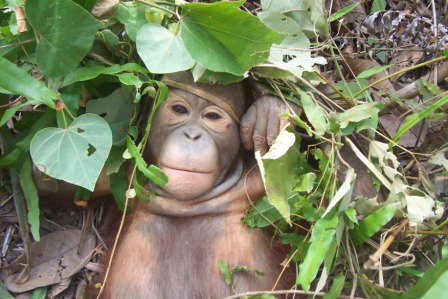
    Releases in Indonesia ahead

    PT Orangutan Habitat Restoration is a forest rehabilitation company established by BOSF for the purpose of creating a suitable area to release rehabilitated orangutans currently living in BOSF rehabilitation centers in Kalimantan.

    The release is the first step toward the release of all captive orangutans in Indonesia by 2015 as directed in December 2007 by the Indonesian government at Nusa Dua Bali. For the past 8 years BOSF has been unable to release rehabilitated orangutans back to the wild due to a lack of suitable habitat for the releases. The Forestry Ministry Decree has now, for the first time, opened the door for BOSF to begin releasing the formerly captive orangutans it has rehabilitated for survival in the wild.

    The release area was selected because of its conditions are near perfect for the survival process for newly released orangutans. It is an 86,450 hectare site in which there is a low density of wild orangutans living in that forest area. Generally, around 30,000 hectares are required to support 250 orangutans. The topographical conditions in the restored forest area are near perfect, with an altitude of 750 meters above sea level and well-stocked with tree species which provide shelter and food for wild orangutans. It is also safe from human threats as the local inhabitants are highly supportive of the release program.

    At the present time, BOSF has some 838 orangutans in its rehabilitation centers, with 612 in the Central Kalimantan Reintroduction Center in Nyaru Menteng and another 226 in the East Kalimantan Reintroduction Center in Samboja Lestari.

    The historical release process began during a courtesy call by the Board of Trustees and Board of Directors in April of this year to then forestry minister Zulkifli Hasan, who voiced his full support for the BOSF release program. The August 18 Ministerial Decree is a direct outcome of that visit.

    “Now we can begin to concentrate on the next step, the preparation of new habitats,” said BOSF CEO Togu Manurung. “There is still much that we have to do,” he added, “but at least this is a good start for all of us”, he concluded.

    Manurung further said that the issuance of the decree was did a great service to the BOSF as it will allow the organization to begin to realize its goals. The first priority, he said , was the release of Bornean Orangutans into their natural habitat with the help of local populations.

    “The government has now started the process of issuing permits for us to take control of suitable land for orangutan release,” said the BOSF Chairman of the Board of Trustees, Professor Bungaran Saragih, a former Minister of Forestry. “We must release all captive orangutans back into the wild. They have for too long been living in cages,” said Professor Saragih.

    Pressemitteilung von BOS Deutschland: Endlich frei!
    Nach 9 Jahren wildert die BOS Foundation den ersten rehabilitierten Orang-Utan im Regenwald Borneos aus: ein Dekret des indonesischen Forstministeriums macht den Weg frei für eine Auswilderung in einem wiederhergestellten Regenwaldstück, das früher Konzessionsgebiet eines Holzkonzerns war.

    Bogor, Indonesien, 20. August 2010: Die Borneo Orangutan Survival Foundation (BOSF) hat angekündigt, dass sie zum ersten Mal seit 9 Jahren einen rehabilitierten Orang-Utan auswildern wird. Die lange erwartete Freilassung wurde ermöglicht durch ein Dekret des Forstministeriums vom 18. August 2010, das als Zielgebiet ein wiederhergestelltes Regenwaldstück in Ost-Kutai, Ostkalimantan definiert. Bei dem Areal handelt es sich um das ehemalige Operationsgebiet eines Holzkonzerns, das von der BOS-eigenen Firma PT Orangutan Habitat Restoration (PT RHOI) in naturnahen Regenwald umgewandelt worden war.

    Endlich frei! Borneo Orang-Utan beim kraxeln

    „Die Regierung hat nun begonnen, uns Genehmigungen zu übertragen, die Kontrolle über geeignete Auswilderungsareale zu übernehmen“, sagte Professor Bungaran Saragih, Aufsichtsratvorsitzender der BOS Foundation und früherer indonesischer Forstminister. Das Auswilderungsgebiet weist nahezu perfekte Bedingungen für die Tiere auf. Es umfasst 86.450 Hektar, in denen nur wenige wildlebende Orang-Utans heimisch sind. Eine Population von 250 Orang-Utans benötigt ein Habitat von etwa 30.000 Hektar. Die topographischen Bedingungen in dem Gebiet sind exzellent; es liegt etwa 750 Meter über dem Meeresspiegel und verfügt über zahlreiche Baumarten, die Unterschlupf und Nahrung bieten. Eine Gefährdung durch Menschen besteht nicht – die heimische Bevölkerung zeigt große Sympathien für das Projekt und hat Unterstützung signalisiert.

    Den Anstoß zu diesem historischen Prozess gab ein Besuch des Aufsichtsrats und der Geschäftsführung der BOS Foundation im April diesen Jahres bei Forstminister Zulkifli Hasan. Der Minister sicherte zu, das Auswilderungsprogramm der BOS Foundation zu unterstützen. Das Dekret vom 18. August ist ein direktes Resultat dieses Treffens. „Der Beschluss des Ministeriums ist eine große Hilfe für die Arbeit der BOS Foundation“, so Togu Manurung, der Vorsitzende der BOS Foundation. „Wir können endlich unsere Ziele in Angriff nehmen. Das wichtigste davon ist, die Orang-Utan-Population Borneos in ihren angestammten Lebensraum auszuwildern – mit Hilfe der lokalen Bevölkerung.“

    PT RHOI ist ein Unternehmen, das Wälder regeneriert. Es wurde von der BOS Foundation geschaffen, um geeignete Gebiete zur Auswilderung jener Orang-Utans zu schaffen, die sich derzeit in der Obhut von BOS befinden. Von den 838 Orang-Utans in ihrem Rehabilitationsprogramm leben etwa 612 in der Rehabilitationsstation Nyaru Menteng in Zentralkalimantan und 226 in Samboja Lestari in Ostkalimantan.

    Die indonesische Regierung hat 2007 auf Nusa Dua, Bali, angekündigt, dass bis 2015 alle Orang-Utans, die sich momentan in Rehabilitationsstationen befinden, wieder im Regenwald leben sollen. In den vergangenen 8 Jahren konnte die BOS Foundation keine rehabilitierten Orang-Utans auswildern, weil die geeigneten Gebiete dazu nicht vorhanden waren. Mit dem Ministerialdekret hat Indonesien der BOS Foundation nun den Weg geebnet, die rehabilitierten Tiere in die Wildnis zu entlassen.

    „Wir werden uns nun auf den nächsten Schritt konzentrieren, nämlich neue Habitate zu gewinnen“, sagte Manurung. „Es gibt immer noch viel zu tun, aber dies ist zumindest ein guter Start für uns.“

  • Studie be- und entlastet Sinar Mas nach Rodungsvorwürfen

    Der Agrarkonzern habe zwar keinen Primärregenwald gerodet, Sekundärwälder und Torfmoore aber schon – Greenpeace hält Beschuldigungen aufrecht – Artikel auf www.bos-deutschland.de

    Mit lächelndem Kind sehen Ölpalmenplantagen gar nicht so tot aus, wie sie eigentlich sind – Eigenwerbung der PT Smart (Screenshot BOS Deutschland)

    Die PR-Schlacht zwischen Greenpeace und dem indonesischen Konzern Sinar Mas geht in die nächste Runde. Wie das Magazin Mongabay.com berichtet, hatten Umweltschützer der Sinar-Mas-Tochter PT Smart vorgeworfen, Primärregenwald und Orang-Utan-Habitat für den Anbau von Ölpalmenplantagen zu roden. Eine jüngst erschienene, unabhängige Studie entlastete den Konzern zwar in diesem Bereich, zeigte aber, dass er Torfmoore gerodet hatte. Beide Seiten erklärten sich zum Sieger – ehemalige Geschäftspartner von Sinar Mas zögern indes, die Beziehungen wieder aufzunehmen.

    „Die Studie bestätigt unsere Vorwürfe in großen Teilen“, sagte Bustar Maitar, Regenwaldcampaigner bei Greenpeace-Südostasien. „Es ging ganz klar daraus hervor, dass Sinar Mas Regenwälder und Torfmoore gerodet hat, und dies ohne die notwendigen Genehmigungen.“ Der Konzern habe erneut gezeigt, dass er etwas sage, und das genaue Gegenteil davon mache. Er zerstöre Torfmoore und nenne dies Wassermanagement. Er rode Wälder und nenne dies die Entwicklung von degradiertem Land, so Maitar.

    Bei PT Smart sieht man die Ergebnisse der Studie naturgemäß etwas anders. „Die Studie hat bewiesen, dass die Beschuldigungen größten Teils haltlos sind. Smart ist nicht verantwortlich für die Rodung von Orang-Utan-Lebensraum in Indonesien, wie Greenpeace behauptet hatte“, hieß es in einer Erklärung des Konzerns, die Reuters vorliegt.

    Ehemalige Geschäftspartner von PT Smart bleiben derweil skeptisch, zumal für die Studie lediglich 40 Prozent der Konzessionen des Konzerns untersucht wurden – die Plantagen in Neu Guinea etwa waren darin nicht berücksichtigt. Unilever erklärte, das Palmöl des Unternehmens nicht mehr zu kaufen, so lang der Konzern nicht das Siegel des Runden Tisches für Nachhaltiges Palmöl (RSPO) erhält.

    Quelle: Mongabay.com, Reuters, Lars Dittmer, BOS-Deutschland

  • „Pony“ – ein Orang-Utan im Bordell

    Die schlimme Geschichte des Orang-Utan-Weibchens Pony berichtet Michelle Desilets im englischen Interview mit dem Magazin „Vice“, Übersetzung für die Webseite von BOS Deutschland von Lars Dittmer

    Darf man vorstellen? Pony. Sie ist ein Orang-Utan-Weibchen aus einem kleinen Dorf auf Borneo, wo sie den gesamten Regenwald niedergeholzt haben, um Palmöl herzustellen, das ins Ausland verkauft wird, um zu Lippenbalsam, Speiseeis, Schokoladen und Käsekräcker verarbeitet zu werden.

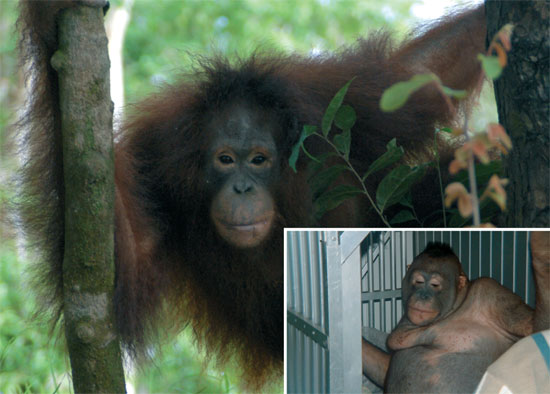
    Hat eine unbeschreibliche Horrorgeschichte hinter sich: Orang-Utan-Weibchen Pony

    Vice Magazin: Bitte erzählen Sie uns die Geschichte von Pony.

    Michelle Desilets (Begründerin von BOS UK und Vorstandsmitglied von BOS Deutschland):

    Pony ist ein Orang-Utan aus einem Prostituiertendorf in Borneo. Als wir sie fanden, lag sie auf einer Matratze und war an eine Mauer gekettet. Sie war am ganzen Körper rasiert.

    Ich möchte am liebsten heulen.

    Wenn sich ihr ein Mann näherte, drehte sie sich um, präsentierte sich und begann, sich rythmisch zu bewegen. Sie wurde als Sexsklavin gehalten. Eine ältere Dame hatte sie über viele Jahre in Gefangenschaft gehalten – als wir Pony fanden, war sie etwa sechs oder sieben Jahre alt. Die ältere Dame war aber absolut nicht bereit, das Tier frei zu geben, denn alle liebten Pony und war sie war fester Bestandteil ihres Einkommens. Sie waren außerdem der Meinung, dass Pony ein Glücksbringer sei, da sie bereits richtige Tipps in der Lotterie gegeben habe.

    Haben die Kunden denn realisiert, dass sie einen Orang-Utan bekamen?

    Na klar, extra deswegen sind sie gekommen. Wenn sie wollten, bekamen sie einen Menschen, aber für viele Männer war es etwas Neues, mit einem Orang-Utan Sex zu haben. Gelegentlich rasierten sie Pony, was dazu führte, dass ihre Haut mit Pickeln übersät und gereizt war. Obendrein bekam sie ein Problem mit den Moskitos – weil sie ständig an den Stichen kratzte, wurden diese septisch und entzündeten sich. Sie hatten ihr Ringe und Halsketten angezogen – es war ein absolut hässlicher Anblick.

    Wie habt Ihr sie da raus bekommen?

    Wir haben über ein Jahr benötigt. Jedes Mal, wenn wir mit der Forstpolizei und örtlichen Polizeibeamten dort ankamen, wurden wir überwältigt von den Dorfbewohnern, die sie einfach nicht freilassen wollten. Sie haben uns dann mit Pistolen und Messern mit vergifteten Spitzen bedroht. Letztlich bedurfte es 35 Polizisten bewaffnet mit AK-47-Sturmgewehren und anderen Waffen, die in das Bordell stürmten und die Herausgabe des Menschenaffen forderten. Der Einsatz wurde von einem Filmteam aus der Gegend gefilmt. In der Szene, in der wir Pony von ihren Ketten befreien, hört man die ältere Dame im Hintergrund hysterisch kreischen: „Sie nehmen mir mein Baby weg, das könnt Ihr nicht machen!“ Es gibt keine Strafverfolgung dafür in Indonesien, daher wurden diese Leute rechtlich nie belangt für ihre Taten.

    Das englische Original im Magazin Vice.

    Quelle: Vice Magazine, BOS-Deutschland

  • Does the President matter? Presidential environmental performance in the USA and its impact on green groups

    term paper, winter semester 2007/2008, Potsdam University by Lars Dittmer

    Preservation in all its facets in the United States stretches back over more than hundred years and over large parts of this period has enjoyed considerable support by public and politics. However, two decades after World War II, „as the nation shifted from an industrial to a postindustrial (or postmaterialist) society“ (Vig and Kraft: 9), national environmental groups have redefined their societal position. Organisations that had started as sometimes lose associations of anglers, hikers or birdwatchers, like the Sierra Club or the National Audobon Society, now formulated political stances taking into account a globalising world; after sometimes narrow-minded “Not in my backyard” projects and local initiatives of all kinds now consciousness for global issues like rain forest deforestation and climate warming arose. Preservation became environmentalism. (…) Also the scholar Rik Scarce reports skyrocketing membership figures in the environmental organisations during the Reagan years, a fact that will be highlighted later in this paper (22).

    flag of the militant environmental NGO "Sea Sheperd" (source: Wikipedia)

    It now could seem reasonable to argue that these new conditions were ideal for the movement – a clear enemy, topics that were neglected by the government and a seemingly consistent support from the public – but is that so easy? This term paper wants to find out if patterns of relationships between environmental groups and presidents in the United States exist. The points I will elaborate on in the body of my paper will include membership of the groups, foundation of new groups, radicalisation of the movement and public and financial support. I am basing my research on several assumptions – if a Presidency X fulfils the requirements Y, Z will happen to environmental groups. In the first part I will introduce some of the major organisations and their profiles, also some of the radical associations will be addressed. Also the presidencies and their environmental achievements will be part of my study, however only stretching back until the 1970s. Not all of the presidents will be scrutinised the same way; my focus will be especially on those administrations, whose elections marked clear turning points as to the environmental policies, politics and polities of the United States.

    1. General Introduction

    1.1 Introduction and problem identification

    1.2 Assumptions

    1.3 Other factors and influences

    2. The two variables ­ facts and backgrounds

    2.1 Green organisations in the states

    2.2 US-Presidencies and their green record

    3. Results: organisations and the presidencies

    3.1 Membership of the groups

    3.2 Number of groups

    3.3 Radicalisation of the groups

    3.4 Support and Green giving

    4. Conclusions

    5. Bibliography

    The movement feared for the worst, as Reagan’s victory could have indicated a falling sense for environmental topics in the society ­ the result could have been a slump in membership and financial support and finally the dissolution of many groups. Their fears proved to be unfounded. „Paradoxically, Reagan actually strengthened environmental forces in the nation. Through his lax enforcement of pollution laws and prodevelopment resource
    policies, he created political issues around which national and grassroots environmental groups could organize“ (Vig and Kraft: 14).
    Also the scholar Rik Scarce reports skyrocketing membership figures in the environmental organisations during the Reagan years, a fact that will be highlighted later in this paper (22). It now could seem reasonable to argue that these new conditions were ideal for the movement a clear enemy, topics that were neglected by the government and a seemingly consistent support from the public ­ but is that so easy?
    This term paper wants to find out if patterns of relationships between environmental groups and presidents in the United States exist. The points I will elaborate on in the body of my paper will include membership of the groups, foundation of new groups, radicalisation of the movement and public and financial support. I am basing my research on several assumptions if a Presidency X fulfils the requirements Y, Z will happen to environmental groups. In the first part I will introduce some of the major organisations and their profiles, also some of the radical associations will be addressed. Also the presidencies and their environmental
    achievements will be part of my study, however only stretching back until the 1970s. Not all of the presidents will be scrutinised the same way; my focus will be especially on those administrations, whose elections marked clear turning points as to the environmental policies, politics and polities of the United States.
    Continue reading on hausarbeiten.de