Schlagwort: USA

  • Erschütterung der Macht in Hollywood: Disney schluckt Lucasfilm

    George Lucas hat seine Ankündigung wahr gemacht – er tritt ab als alleiniger Herrscher über die „Star Wars“-Galaxie. Seine Firma Lucasfilm verkaufte er nun für über vier Milliarden US-Dollar an den Unterhaltungsgiganten Disney. Der Micky-Maus-Multi kündigte auch gleich an: Star Wars geht schon ab 2015 in die nächste Runde – und wird als Marke gnadenlos ausgeschlachtet.


    Horrorvision aller eingefleischten Star Wars-Fans. (Bild: UGC)
    Horrorvision aller eingefleischten Star Wars-Fans. (Bild: UGC)

    Das Imperium hat wieder einmal zugeschlagen. Nach dem Animationsstudio Pixar ( „Findet Nemo“) und dem Comic-Konzern Marvel („Iron Man“) hat Unterhaltungsmulti Disney seinen Einkaufszug durch die Medienwelt fortgesetzt. Das Objekt der Begierde hieß diesmal Lucasfilm – über vier Milliarden US-Dollar (rund drei Milliarden Euro) bezahlte Disney für die Firma des kalifornischen Filmemachers George Lucas – inklusive Spezialeffekte- und Sound-Studios sowie der Computerspiele-Schmiede LucasArts. George Lucas wird als alleiniger Eigentümer des Unternehmens bar und in frisch herausgegebenen Aktien ausbezahlt.

    Schon bei der Übernahme kündigte Disney an, das Weltraumdrama fortschreiben zu wollen. „Der letzte Star Wars-Film war ‚die Rache der Sith‘ im Jahre 2005. Wir glauben, dass erhebliche Nachfrage für neue Folgen besteht“, sagte Disney-Chef Bob Iger in Burbank bei Los Angeles. Laut Iger soll schon 2015 Star Wars-Episode 7 in die Kinos kommen, die Folgen acht und neun sind bereits in Planung. Alle zwei bis drei Jahre, versprach Iger, werde ab dann ein neues Abenteuer aus der Reihe – aller Voraussicht nach in 3D – über die Leinwände flimmern.

    Die bisherigen sechs Episoden der Reihe kamen in den Jahren 1977 bis 1983 sowie 1999 bis 2005 in die Kinos und waren ausnahmslos Kassenschlager. Rechnet man Einspielergebnisse mit Merchandise-Einnahmen zusammen, hat Lucasfilm laut eigenen Angaben insgesamt rund 20 Milliarden US-Dollar an der Reihe verdient. Damit wäre die Geschichte um Luke Skywalker, Prinzessin Leia und Darth Vader das erfolgreichste Kino-Epos aller Zeiten. An den anderen Produkten der Firma, etwa dem „Indiana Jones“-Franchise, bekundete Iger allerdings kein Interesse.

    George Lucas erklärte, dass er sich bereits auf die neuen Episoden freue und sich künftig als Fan der Reihe sehe. Bereits zu Beginn dieses Jahres hatte der 68-Jährige seinen Ausstieg aus Hollywood angekündigt: „Ich ziehe mich zurück“, hatte er der New York Times verraten. „Ich steige aus der Industrie und meinem Geschäft aus.“ Disney hatte ihm offenbar bereits im Laufe des Jahres 2011 ein Angebot für eine Übernahme gemacht, doch erst im Zuge seines Rückzuges aus der Arbeitswelt kam ein Deal mit dem Micky-Maus-Imperium zustande.

    Mit der Übernahme führt Disney laut dem „Handelsblatt“ seine über die vergangenen Jahre angewandte Geschäftsstrategie gekonnt fort: Bewährte, gut verkäufliche Marken werden aufgekauft und umfassend kommerzialisiert. So auch geschehen bei Marvel. Für die Comicschmiede bezahlte Disney 2009 rund  4,3 Milliarden US-Dollar. Auch hier baut der Konzern auf Altbewährtes statt auf eigene Ideen. Mit vertrauten Figuren und einer verstärkten Konzentration auf 3D, Spezialeffekte, Merchandise und Weiterverwertung in Themenparks möchte Disney familienfreundliches „Event-Kino“ bieten. Gelungen ist dem Megakonzern dies bei dem Animationsspektakel „The Avengers“, das im Frühjahr 2012 weltweit 1,5 Milliarden US-Dollar (rund 1,15 Milliarden Euro) einstreichen konnte und damit Skeptiker der Marvel-Übernahme besänftigte.

    Ähnliches wird wohl auch dem Weltraumdrama Star Wars verstärkt widerfahren. Der 1977 gedrehte erste Teil der Saga hatte Lucasfilm – damals eine unbekannte Independent-Klitsche aus San Franciso – gerade mal elf Millionen US-Dollar gekostet. Das ist nicht viel mehr als Ewan McGregors Gage für die Rolle des Obi-Wan Kenobi in „die Rache der Sith“. Doch für die immer weitergedrehte Kommerzialisierungsschraube hatte George Lucas viel Fanschelte bezogen. 

So hatten Fans schon in den späten Neunziger Jahren Lucas‘ überarbeitete Fassungen der ursprünglichen drei Star Wars-Filme kritisiert. Sie seien nicht nur digitalisiert, sondern auch inhaltlich nachträglich verändert worden, lautete das Urteil. Ähnlich durchwachsen waren die Reaktionen auf die drei neuen Filme, die zwischen 1999 und 2005 in den Kinos liefen. Erkennbar familienfreundliche Figuren wie Jar Jar Binks, der bei Episode 1: „Die dunkle Bedrohung“ erstmalig die Star Wars-Welt betrat, fielen bei eingefleischten Fans durch.

    Lucas selbst ließ das nicht kalt. „Warum sollte ich noch mehr Teile machen, wenn man ständig von allen Leuten angeschrien wird, was für eine schlimme Person man doch sei“, schmollte er gegenüber der New York Times Anfang 2012. Dies war wohl auch ein Grund für ihn, das Geschäft zu verkaufen. Er selbst werde allenfalls noch Independent-Filme machen, kündigte er an – wie damals als Film-Student in den Sechziger-Jahren. Ob dies angesichts des Disney-Deals die Fans beruhigen wird, darf jedoch bezweifelt werden.

    Erschienen auf Yahoo! Finance am 31. Oktober 2012


  • US-Justiz: 20-jähriger Räuber wird zu 162 Jahren Haft verurteilt

    Irrsinnig hohe Strafe: Fast 162 Jahre muss Quartavius Davis ins Gefängnis.
    Irrsinnig hohe Strafe: Fast 162 Jahre muss Quartavius Davis ins Gefängnis. (Bild: Sheriff Boward’s Office)

    Fast 162 Jahre Gefängnis – dieses Urteil zu einem Leben hinter Gittern erhielt ein 20-Jähriger im US-Staat Florida jüngst für eine Reihe von Raubüberfällen. Dabei war Quartavious Davis Ersttäter und er verletzte niemanden bei seinen Taten. Das Prinzip des „Stacking“ im US-Rechtssytem macht es möglich – dabei werden die Strafmaße für jedes seiner Verbrechen addiert. In den USA wird nun diskutiert ob das noch verhältnismäßig sei, auch angesichts berstend voller Gefängnisse.

    „Meine erste Straftat, und sie geben mir eine so lange Haftstrafe“, sagte der 20-jährige Afroamerikaner im Gespräch mit der Nachrichtenagentur Reuters. „Genauso könnte man jetzt sagen, ich sei tot.“ Der junge Mann ist immer noch geschockt von dem Strafmaß, das ein Gericht in Florida für seine Straftaten verhängte: Für sieben bewaffnete Überfälle erhielt er 1941 Monate, fast 162 Jahre – ohne Bewährung. Zu den Zielen seiner Überfälle zählten Fastfood-Restaurants, eine Apotheke und andere Geschäfte in der Region Miami, wie die Nachrichtenagentur berichtet.

    Als Anführer der Bande wurde Davis vor Gericht demnach nicht identifiziert – eher galt er als „odd man out“, als Außenseiter. Seine drei Komplizen haben gegen Davies ausgesagt und dafür verkürzte Strafsätze von neun bis 22 Jahren Haft erhalten – eine Möglichkeit der Strafmilderung, die Davies nach eigener Aussage nicht angeboten wurde. Die Beweislage ist schwierig: Wie Gerichtsdokumente laut reuters zeigen, basierte der Prozess gegen ihn in erster Linie auf den Aussagen seiner Komplizen. Denen zufolge habe Davies eine Waffe gehabt und diese auch bei zwei Überfällen eingesetzt: Einmal habe er auf einen Hund geschossen, der sie verfolgt habe. Das Tier blieb unbeschadet.

    Schüsse fielen auch vor einem Wendy’s-Fastfood-Restaurant in Miami. Als Davis nach dem Raub mit drei Komplizen zum Fluchtauto rannte, kam es zu einem Schusswechsel mit einem bewaffneten Kunden des Restaurants. Der Mann habe dabei einen von Davies‘ Komplizen in die linke Pobacke getroffen. Ob es Davies war, der auf ihn geschossen habe, konnte der Mann vor Gericht nicht genau sagen. Er wurde bei dem Gefecht nicht verletzt. Außer den Aussagen der Komplizen gibt es keine weiteren Berichte darüber, ob Davies eine Waffe eingesetzt hat.

    Stacking: Aus Ersttäter mach „Gewohnheitsverbrecher“

    Auch dass er Ersttäter ist und vorher nie mit dem Gesetz in Konflikt kam, hat dem jungen Afroamerikaner bei dem Prozess nicht geholfen. Denn bei der Urteilsfindung wurde das in den USA umstrittene Prinzip des „Stacking“ angewandt: Jede Straftat von Davies wurde einzeln gezählt, so dass er nicht als Ersttäter, sondern als Gewohnheitsverbrecher verurteilt wurde. Für sechs seiner Einbrüche erhielt er 25 Jahre, für einen zwölf Jahre.

    Auch das junge Alter des Kriminellen wurde nicht in Betracht gezogen. Erst jüngst hat das höchste Gericht in den USA, der US-Supreme Court, hier eine wegweisende Entscheidung getroffen: Lebenslange Haftstrafen für Jugendliche unter 18 ohne Bewährung seien verfassungswidrig. Pech für Davis: Ende 2010, als er seine Verbrechen beging, war er bereits über 18.

    Davies kommt aus Gould, einem der ärmsten Viertel von Süd-Miami – fast 80 Prozent der Einwohner sind Afroamerikaner, 15 Prozent hispanischer Herkunft, fünf Prozent Weiße, fast jeder zweite lebt unter der Armutsgrenze. Davis war ein High-School-Abgänger und arbeitslos, zur Zeit seiner Inhaftierung lebte er von 674 US-Dollar im Monat. Bei ihm wurden eine manisch-depressive Störung sowie eine Lernschwäche festgestellt.

    Nicht nur aufgrund des aktuellen Falls wird in den USA erneut die Frage der Verhältnismäßigkeit bei vielen Urteilen gestellt. Die USA haben die höchste Inhaftierungsquote der Welt: Fast ein Viertel der Weltbevölkerung hinter Gittern sitzt in den Staaten ein, die meisten unter ihnen Afro-Amerikaner. Florida hat den Ruf, besonders aggressiv zu verurteilen: So ist es etwa der US-Staat, in dem die meisten Minderjährigen eine lebenslange Haft verbüßen für Straftaten geringer als Mord. Jüngst wurde hier eine Afroamerikanerin zu 20 Jahren Haft verurteilt, die zwei Mal in die Luft geschossen hatte – weil sie sich gegen ihren gewalttätigen Mann wehren wollte.

    Seit den späten 1980er Jahren gibt es in den USA das Prinzip der „Mandatory Minimum Sentences“, das sind Mindeststrafen, die bei bestimmten Verbrechen verhängt werden müssen. Hierzu zählen Gewaltverbrechen wie Raubüberfälle mit Schusswaffen, auch wenn die Waffe nicht zum Einsatz kommt. Experten zufolge kam es seit der Einführung dieser Strafsätze zu einem 800-fachen Anstieg der inhaftierten Bevölkerung. Die „US-Sentencing-Commission“, ein Gremium das die Fairness und Angemessenheit der Strafsätze im US-Rechtssystem überprüft, kam jüngst zu der Auffassung, dass die Mandatory Minimum Sentences eine abschreckende Wirkung haben und die Bevölkerung vor künftigen Straftaten der Verbrecher schützen. Das Prinzip des Stacking kritisierte die Kommission jedoch: Es sei verantwortlich für „unverhältnismäßig schwere und ungerechte Strafmaße“.

    Erschienen auf Yahoo! Nachrichten am 4. Juli 2012

  • Mitt Romney – Kandidat ohne Rückenwind

    Kommentar
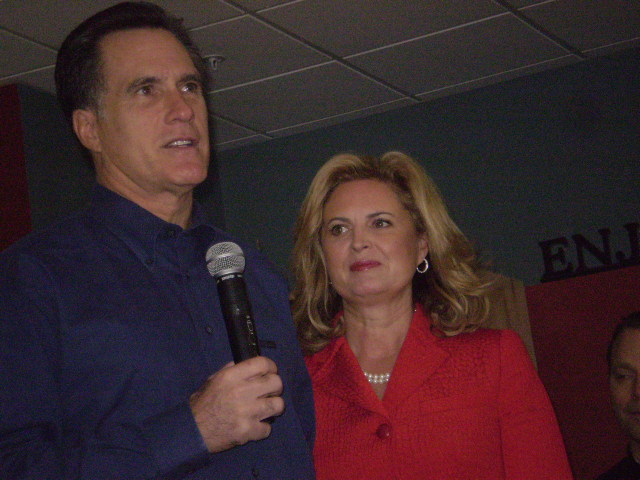
    Nun steht es fest: Der Herausforderer Obamas bei den US-Präsidentschaftswahlen im November heißt Mitt Romney. Sein zentrales Wahlkampfthema dürfte klar sein: die kränkelnde US-Wirtschaft  – ein Gebiet, für das der Multimilionär geradezu prädestiniert erscheint. Doch trotz dieser Steilvorlage dürften seine Wahlchancen am Ende nicht allzu gut sein – die Republikaner geben ein zerrissenes Bild ab, Romney ist nicht ihr Traumkandidat.

    Im konservativen Amerika umstritten: Mitt Romney (Bild: Gemeinfrei/Wikipedia)
    Im konservativen Amerika umstritten: Mitt Romney (Bild: Gemeinfrei/Wikipedia)

    Es klingt eigentlich nach paradiesischen Bedingungen für einen Herausforderer im Kampf um das höchste Amt in den USA: Wirtschaftsprognosen sehen das Wachstum bei lahmenden zwei Prozent, die Arbeitslosigkeit dümpelt bei mehr als acht Prozent dahin, die Verbraucher sind pessimistisch, kaum jemand möchte sein Geld ausgeben. Die Vereinigten Staaten sind über die Finanzkrise noch längst nicht hinweg. Und die Schuld dafür sieht jeder zweite US-Amerikaner bei Präsident Obama.

    Mitt Romney müsste sich eigentlich nur noch von der Welle der Unzufriedenheit tragen lassen. Seine Nominierung steht dank seines Vorwahlsieges in Texas fest, seiner offiziellen Kür steht nichts mehr im Wege. Die Umfragen sehen Romney dichtauf, 45 Prozent würden ihn derzeit wählen, nur ein Prozent mehr votiert für Obama. Gerade bei der Wirtschaftskompetenz sehen viele den Geschäftsmann Romney vorn. Bei einem guten Wahlkampf – den der Multimillionär sich leisten kann – sollte einem Sieg nur noch wenig entgegenstehen. Eigentlich. Doch zum großen Unglück für Romney steht eine große Hürde in seinem Weg: seine eigene Partei. Mit ihren Widersprüchlichkeiten, ihrer Zerstrittenheit und dem Dogmatismus des erzkonservativen Flügels könnten die Republikaner ihrem Kandidaten Romney, der ja nun auch die Mitte der Gesellschaft einfangen will, den Wahlsieg noch vereiteln.

    So dürfte etwa die Ankündigung des Immobilientycoons Donald Trump, einen riesigen Fundraiser für Romney diese Woche zu veranstalten, bei dem Kanidaten bestenfalls gemischte Gefühle auslösen. Trump hatte bis vor kurzem noch selbst Ambitionen auf die Kandidatur, macht sich jetzt aber durch sein Beharren, Obama sei nicht in den Staaten geboren, in der Öffentlichkeit lächerlich. Dass Obama seine Geburtsurkunde im vergangenen Jahr präsentiert hat, ficht Trump nicht an. Klar braucht Romney Trumps Geld. Doch derart mit einem „Birther“ (wie die fanatischen Zweifler an Obamas amerikanischem Geburtsort genannt werden) assoziiert zu werden, dürfte für ihn im Kampf um die Mitte unattraktiv sein. Und Trump ist nicht der einzige Verschwörungstheoretiker im rechten Lager. Solche Zwickmühlen werden Romney noch öfter blühen, in einer Partei die ihm merkwürdig fremd zu sein scheint.

    Auch außenpolitisch kann Romney keine Akzente setzen, ohne sich in Widersprüche mit der republikanischen Partei zu verwickeln. So wollte er jüngst Obama wegen dessen Syrien-Politik attackieren. Durch eine „Politik der Lähmung“ habe Obama dem syrischen Präsidenten Bashar al-Assad die Ermordung von 10,000 Zivilisten ermöglicht, sagte er. Man müsse stattdessen die Opposition aufrüsten. Dumm nur, dass seine eigene Partei das in großen Teilen nicht so sieht. Nach Afghanistan und dem Irak ist man kriegsmüde, ebenso wie die Bevölkerung. Doch die Republikaner wären nicht die Republikaner, gäbe es nicht in ihren Reihen Senatoren wie John McCain und Lindsey Graham aus South Carolina, die für Luftschläge gegen das Terror-Regime Assads sind. Von einer einheitlichen Position ist man an der Spitze der Republikaner weit entfernt. Romneys Positionen aber sind bestenfalls zahnlos.

    Doch es kommt noch ein weiteres Problem hinzu für den ehemaligen Gouverneur von Massachusetts: Ständig gibt es in den eigenen Reihen Leute, die meinen, es besser zu können. Im Vorwahlkampf konnte der Konservative Rick Santorum die Stimmen des bibeltreuen Amerikas gegen Romney holen. Der ultrarechten „Tea Party“-Bewegung wäre so gut wie jeder andere Kandidat lieber gewesen als Romney, der millionenschwere Wendehals, der vor nicht allzu langer Zeit noch für das Recht auf Abtreibung eintrat. Anders als Konsenskandidaten wie seinerzeit Ronald Reagan, der in nahezu allen Lagern beliebt war, könnte dieses Sperrfeuer Romney den Sieg kosten. Denn beim Kampf um die Mitte muss er von einigen der rechtskonservativen Positionen, die er sich während der Vorwahlen quasi über Nacht angeeignet hat, wieder abweichen. Damit aber wird er den rechten Flügel der Republikaner gegen sich aufbringen.

    Dies wird das zerstrittene Bild des rechten Lagers in der Öffentlichkeit noch verstärken. Und sollte die Wirtschaft dann auch noch zulegen, wird Romneys Kompetenz in diesem Feld nicht mehr benötigt. Als Geschäftsmann mag er ein gutes Händchen haben, als Präsidentschaftskandidat fehlt ihm der nötige Rückenwind.

    Erschienen auf Yahoo! Nachrichten

  • There’s no such thing as free icecream

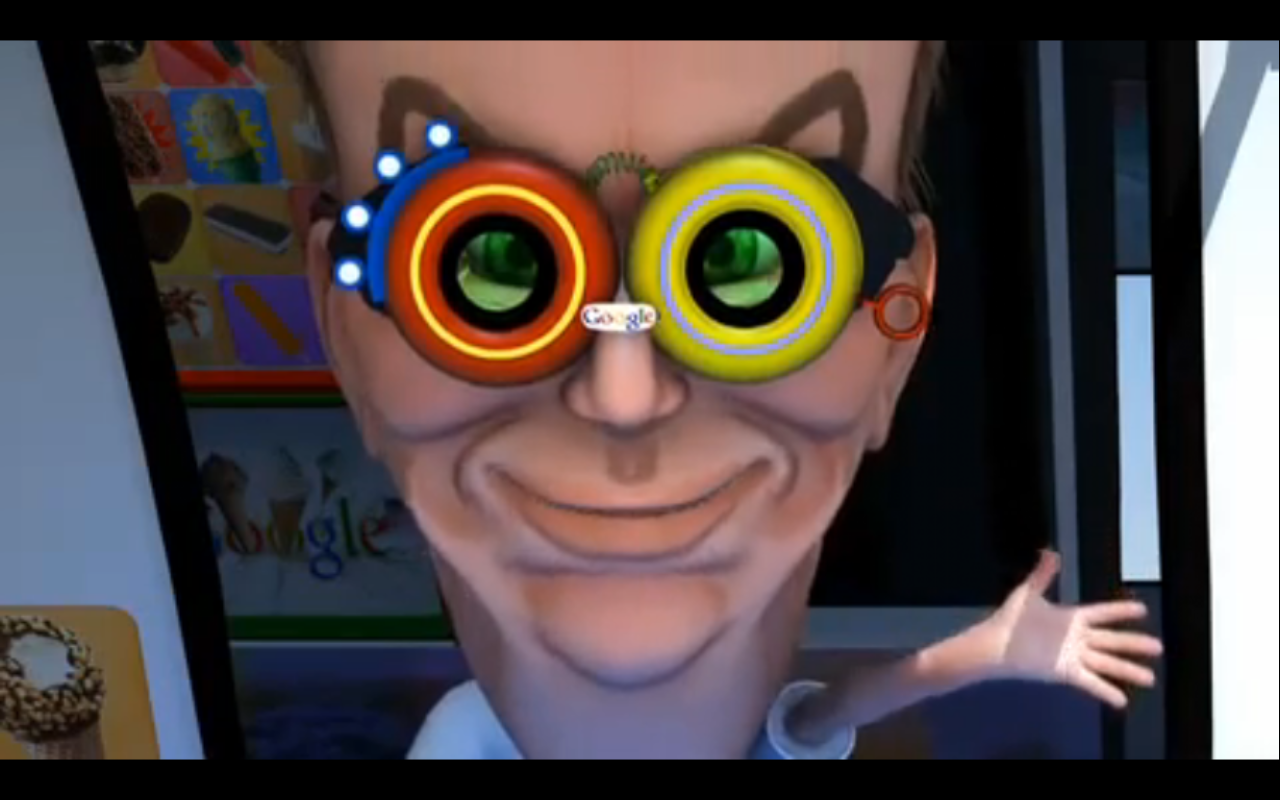
    In a youtube video clip in animation style, Insidegoogle.com presents us with the evil side of google

    „Hey Kids, get your free ice cream!“ the animated Google CEO Eric Schmidt shouts, luring the kids of an American suburb. They follow his colourful little bus, while Schmidt explains in an aside: „Of course there is no such thing as free ice cream“, ordering a colleague in the back of the vehicle to bodyscan the poor kids. Of course he already knows their favourite flavours. He then shocks them, revealing all kinds of private information about their parents. The clip capitalises on his notorious statement about online privacy from a CNBC interview: “If you have something that you don’t want anyone to know, maybe you shouldn’t be doing it in the first place.” Which of course means that one just needs to behave well, then there is no problem – so is that what Google tries to tell us with their slogan „Don’t be evil – (we will know it anyway)?

    Does some streetviewing – Google CEO Eric Schmidt

    Eric Schmidt probably would not like his animation alter ego, its a spooky caricature. The clips has been launched by Consumer Watchdog group, demanding the government to create a so-called “Do Not Track Me” list to prevent online companies from gathering private online details. At present, the clip is shown 36 times per day on a jumbotron in Times Square. And though many comments on Youtube ridiculed the video or blamed the insidegooglers to be paranoid, it can’t be denied that there is a growing awareness in the US about online privacy.

    httpv://www.youtube.com/watch?v=Ouof1OzhL8k

  • Wikileaks – Some Truth in the Jungle?

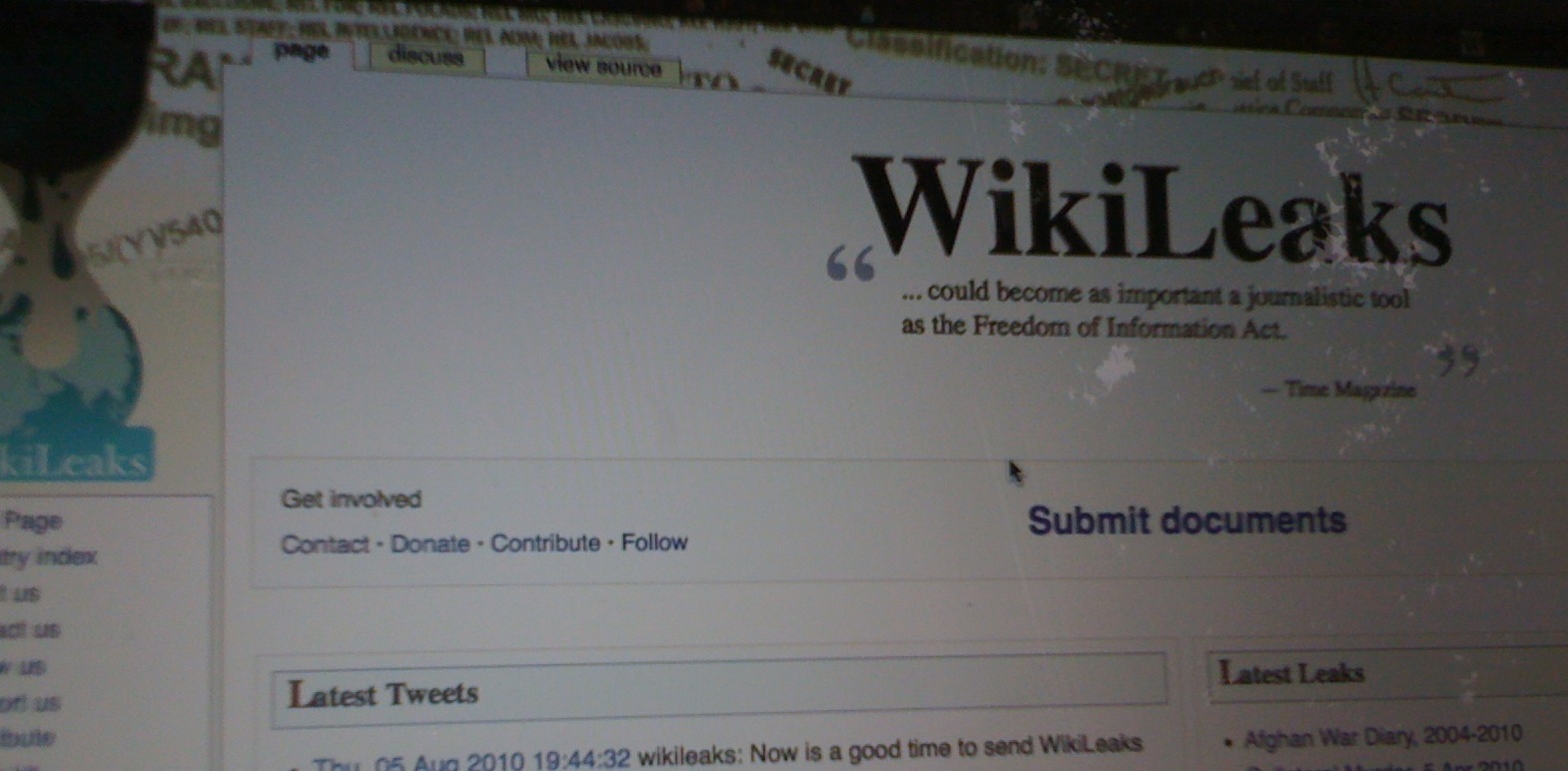
    As long as they are showing how evil the dictators of this world are, they are welcome. But as of recently, the whistleblower-website Wikileaks has been in the crosshairs of the US government. They have posted online around 76,000 secret documents on the war in Afghanistan, revealing immense security problems of the ISAF forces as well as brutal facts from the battlefield – and they announced the posting of another 15,000 reports. The US and other countries involved in the conflict have protested against what they call a „threat to national security“.  Wikileaks has – now to a broader public – shown what a powerful instrument it can be. This, however, does not come without risks.

    Everybody is free to upload documents – Wikileaks.org

    The „Afghan War Diary“ comprises documents dating between January 2004 and December 2009.  Most of the papers are reports from military officers – nobody knows, who has „leaked“ them. The internet platform Wikileaks offers to publish all official documents anonymously. The essence of the war logs is: this is a failing conflict. They establish a picture of massive civilian losses in the course of military operations, so-called „blue-on-white“ events,  a secret „black“ unit of special forces that hunts down Taliban leaders for „kill or capture“ without trial, and they tell us from Pakistani and Iranian involvment in the conflict – for the Taliban, of course. Also bleak news for Germany: the security situation in the Afghan north around Kundus, where the German troops operate, has deterioriated.

    In around 144 accounts, assaults on civilians are reported – with an admitted death toll of 195 persons and almost the same numer of people injured. But, as the Guardian points out, this number might be underestimated, as many incidents do not show in official documents, and often the exact numer of casualties is not known. Besides high collateral damages in airstrikes, the newspaper reports:

    The bulk of the „blue-white“ file consists of a relentless catalogue of civilian shootings on nearly 100 occasions by jumpy troops at checkpoints, near bases or on convoys. Unco-operative drivers and motorcyclists are frequent targets.

    Most civilians, nevertheless, were killed by the Talibans, who have managed to step up their roadside bombing campaign, which has killed at least 2,000 persons to date. Also some evidence linking the Pakistani secret service ISI to Taliban operations has popped up, accusations that high-ranking officers have financed, trained and supported the Taliban insurgency – vague material, hard to interpret. The Guardian admits:

    If anything, the jumble of allegations highlights the perils of collecting accurate intelligence in a complex arena where all sides have an interest in distorting the truth.

    What role can the Wikileaks dossier play in this messy situation? The documents were classified „secret“ at the time, but are no longer militarily sensitive. The danger that Taliban commanders get information about current war strategies is excluded by Leaks-founder Julian Assange. The documents, as stated, were issued between 2004 and 2009, therefore cannot bear „timely“ details of military tactics by the Allied troops, as he states.

    httpv://www.youtube.com/watch?v=-E5nrTRHSck

    The people behind Wikileaks have high-level goals. Indeed, one is not completely on the wrong track to say: They are on a mission. Their website states:

    Principled leaking has changed the course of history for the better; it can alter the course of history in the present; it can lead us to a better future.

    As an example for a possible positive result of „leaking“ they name Daniel Ellsberg, who disseminated the Pentagon Papers in the early 1970s, a 7,000 page study by the US-government about the countries involvment in Vietnam. One of the biggest „leaks“ in US history:

    Among other things, the Papers revealed that the United States government deliberately expanded its role in the war with airstrikes against Laos, raids of the coast of North Vietnam, and U.S. Marine Corps attacks before the American public was told of them, while President Lyndon B. Johnson was promising not to expand the war. The document widened the credibility gap between the U.S. government and the American people, hurting the Richard Nixon administration’s war effort.

    It turned out well in the early 1970s. However, for such complex situations such as in Afghanistan there can be no „one size fits all“- solution. And though the Wikileakers are absolutely right in their endeavour for more transparent governance and responsible information policy, providing the stone-age Islamists with valuable information around the allied forces certainly can neither be the wish of the Leakers nor the Wikileaks-staff – whether they were for or against this intervention. By the way: the current Obama government wasn’t – therefore, ousting it now would not make sense.

    US ISAF Troops in Kapisa – Some Truth in the Jungle?

    Indeed, there is room for abuse and misinterpretation: After all, with todays possibilities of retouching images and documents, reports might be found one day in the emailaccounts of the Wikileaks staff „evidencing“ all kinds of events – also data that might severely strenghten authoritarian and undemocratic regimes. The fact that also internal loyalties and internet accesses are not distributed equally among the countries might again result in biased pictures. Through the Afghan War Diaries we are delivered a relentlessly realistic bit of the „truth“ – but again only a bit. In other words:  We are more than lucky if a Taliban-whistleblower uploads internal war logs of the same value and the same size on the platform. Up to now it can be taken for granted the Islamists were delighted to read about the leaked documents.

    In addition: to interpret these documents, with the supposed outcome to correct undemocratic tendencies, it needs able and intelligent analysts and journalists. Not only in the office(s) of Wikileaks, as it can be supposed that most readers will read in newspapers about Wikileaks, not in Wikileaks itself. As indicated before – as to the outcome of the publication of secret documents, there is no automatism. If you ask me: Seeing and reading on Julian Assange, he gives an able, intelligent and honest impression. Nevertheless, besides him and his German colleague Daniel Schmitt, noone knows who is responsible for the interpretation of the material. And Assange assured that there are no details in the Afghan warlogs „endangering local informants or giving away genuine military secrets“. The newspapers Guardian, the NYTimes and the magazine Der Spiegel however deny this. We don’t know. Judged from my perspective, nevertheless, Wikileaks has the power to do a lot of good – let’s hope they do this with utmost care and responsibility.

  • Lügen für die Liebe

    Im Kino: die Komödie „I love you Phillip Morris“//Im Jahr 1998 war Steven Jay Russell tot, eine Zeitlang. Aids. Über Monate war der Häftling des Houstoner County Jail immer schwächer geworden, und dann teilt der Gefängnisarzt den Behörden sein Ableben mit. Der Clou: Der Doktor, der die ganze Zeit die Krankenakte fütterte, ist Russel selbst – kerngesund, bloß liebeskrank. Raus aus dem Knast will er, um seinen Zellengenossen Phillip Morris wiederzusehen, in den er sich unsterblich verliebt hat. Artikel im Tagesspiegel vom 3. Mai 2010

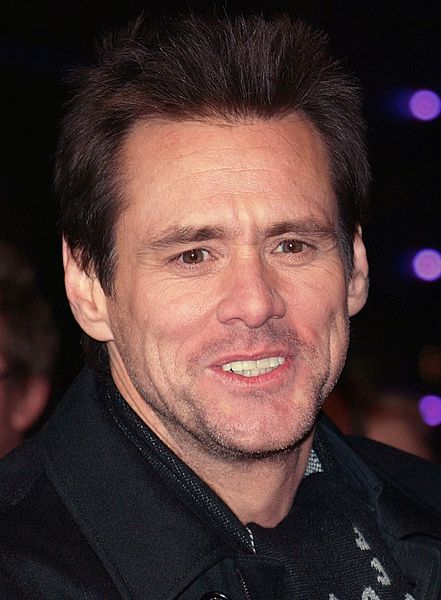
    „I love you Phillip Morris“ beginnt mit Russell (Jim Carrey) auf dem „Totenbett“: Er will sein Hochstaplerleben erzählen, eine Summe von Lügen. Früher hat er es mal bürgerlich versucht, lebte in Georgia als Ehemann, Vater, guter Amerikaner. Doch er ist schwul – und verlässt seine Frau für einen Freund (Rodrigo Santoro), und seine Accessoires heißen fortan Hawaiihemd, Hündchen und Rolex. Das Leben in Miamis Schwulen-Schickeria ist allerdings teuer: Nach Versicherungsbetrügereien landet Russell im Gefängnis, wo er den schüchternen Phillip Morris (Ewan McGregor) kennenlernt.

    Schwer verliebt: Carrey ist Steven Jay Russel in "I love you Phillip Morris"
    Schwer verliebt: Carrey ist Steven Jay Russel in „I love you Phillip Morris“

    Als die Regisseure John Requa und Glenn Ficarra sich an das Buch wagten, waren die Probleme absehbar. Ein Homosexueller, der aus Liebe zum Betrugs- und Ausbruchskünstler wird? Das gruselt die Konservativen in den USA. Pikant obendrein: Der Film beruht auf einer realen Geschichte. Der echte Russel sitzt derzeit eine Strafe von 144 Jahren ab, in Texas.

    „I love you Phillip Morris“ nimmt die Sache demonstrativ von der leichten Seite. Russel ist ein charmanter, zudem gewaltlos operierender Gauner – tragisch bloß, dass er sich an gesellschaftlichen Konventionen aufreiben muss. Wobei die Homosexualität der Protagonisten kaum eine Rolle spielt. Anders als etwa in „Milk“ oder „Brokeback Mountain“ bleibt dem Zuschauer der Kraftakt erspart, sich für die Intoleranz der Gesellschaft fremdzuschämen. Es wird ganz einfach geliebt: so entzückend wie verzückend.

  • Das Wunder der Stereoskopie

    „Avatar“, „Alice“ und die Folgen: Die Berliner Kinos rüsten auf 3 D um. Auch die Produktionsfirmen hoffen auf einen neuen Markt.

    Marianne Peinert, Rentnerin aus Hohenschönhausen, schaut sich „Avatar“ wegen 3 D an. Dafür lohnt sich, sagt sie, der Weg in die UCI-Kinowelt in Berlin-Friedrichshain an der Landsberger Allee. Rund 40 Zuschauer haben an diesem Mittwochnachmittag im 3-D-Saal Platz genommen, um sich das Weltraumindianer-Epos anzusehen. Mehr als 9,6 Millionen haben den Film in ganz Deutschland gesehen. Artikel im Tagesspiegel vom 9. März 2010 von Lars Dittmer

    Zwar ist „Avatar“ mit nur drei Auszeichnungen der Verlierer der Oscar-Nacht. Aber er hat einen Trend losgetreten, von dem nun auch seine Nachfolger profitieren. Tim Burtons 3-D-Märchen „Alice im Wunderland“ hat am ersten Wochenende 116 Millionen Euro eingespielt, Avatar spielte seinerzeit „nur“ 77 Millionen Euro ein. Der Erfolg von „Alice“ hat jedoch auch damit zu tun, dass immer mehr Kinos umgerüstet werden und so neue Zuschauer erreicht werden.

    „Viele ältere Leute schauen Avatar“, sagt UCI-Mitarbeiter Johannes Wagner. Dem letzten Herbst auf 3D umgerüsteten Kinosaal mit 298 Sitzplätzen soll daher ein zweiter folgen. Die Technik ist teuer: 120 000 Euro kosten Abspieltechnologie plus Silberleinwand, erfährt man beim Hauptverband Deutscher Filmtheater.

    Rund 20 derart ausgestattete Kinos gibt es in Berlin und Brandenburg, Tendenz steigend. Für die Betreiber können sich die Kosten schnell amortisieren – siehe „Avatar“ und „Alice“. Außerdem nimmt etwa die UCI-Kette für 3-D-Filme einen Aufpreis von 3 Euro. Zwar führen derzeit primär die großen Kinoketten die neue Technik ein, doch kleinere Kinobetreiber ziehen nach.

    Was die Produktion von 3-D-Filmen in Deutschland angeht, ist man allerdings zurückhaltend. „Deutschlandweit dürfte es rund hundert schwer Interessierte geben“, schätzt Wolf Bosse von der Berliner Postproduktionsfirma Pictorion/Das Werk. Dazu gehört auch die kleine Produktionsfirma Movie Brats in Friedrichshain, die im Frühjahr den 3-D-Animationsfilm „Water Soul“ herausbringt. Für 2012 avisiert man einen 3-D-Dokumentarfilm an: „Außerhalb der Imax-Kinos gab es bisher keine 3-D-Dokus“, sagt Alex Weimer, einer der drei Independentfilmer von Movie Brats. „Man fühlt sich wie ein Pionier.“

    3 D ermöglicht eine besondere Art des visuellen Erzählens mit langen Schnitten und imposanten Landschaftsaufnahmen. Für ihr Projekt mit dem Titel „American Backroom“ wollen die drei alle 50 US-Bundesstaaten bereisen, um eine Momentaufnahme von Amerika, rechtzeitig zu den nächsten Präsidentenwahlen, zu machen.

    Warum man in Deutschland bislang eher vorsichtig mit 3-D-Filmen ist, erklären sich die drei auch anhand der Sujets. Bislang ist der Sektor dominiert von Tier- und Landschaftsdokus sowie von Animationsfilmen wie „Ice Age 3“ und „Oben“, etwas Horror á la „Resident Evil“, und Action wie bei „Final Destination 4“. „Stoffe, die in Deutschland nur wenig produziert werden“, sagt Esther Friedrich von Movie Brats. „Man müsste hierzulande erst merken, dass auch Drama auf 3D geht.“

    Primär ist es aber natürlich die Geldfrage, die Filmemacher und Investoren abwarten lässt. Rund 1,8 Millionen Euro Kosten kalkulieren die Movie-Brat-Produzenten für „American Backroom“. Das ist zwar für Deutschland eine hohe Summe, aber Camerons „Avatar“ kostete 175 Millionen Euro.

    Rund ein Viertel teurer wird ein Film, wenn er stereoskopisch, sprich in 3D, gefilmt wird. Man benötigt zwei Kameras, für jedes Auge eine, so dass die Illusion von Räumlichkeit entsteht. Die zwei Linsen müssen während der Dreharbeiten konstant in zwei Zentimetern Abstand geführt werden (das ist der Augenabstand), was aufgrund der Breite der Geräte eigentlich unmöglich ist. Deshalb drapiert man die Kameras fast aufeinander und arbeitet mit Spiegeln. Während der Dreharbeiten justieren Spezialisten ständig nach. Die „Stereographer“ sind zumeist gelernte Ingenieure, die sich ihr Spezialwissen derzeit mit Gold aufwiegen lassen.

    „Für unser Projekt mussten wir zwei Jahre Investoren abklappern“, sagt Holger Hage, Filmproduzent und Regisseur von European Motion Pictures. Sein Mistery-Thriller „The Forbidden Girl“, ein von Edgar Wallace inspirierter 3-D-Film, soll in Berlin und Umgebung gedreht werden. Weitere „Berliner“ Projekte: Wim Wenders arbeitet derzeit an „Pina“, einem 3-D-Film über die 2009 gestorbene Wuppertaler Choreografin Pina Bausch. Gedreht wird in Wuppertal in Kooperation mit dem Berliner Büro von Das Werk und finanziell unterstützt vom Medienboard Berlin-Brandenburg. Und auch die Potsdamer Filmhochschule HFF stürzt sich mit dem Film-Projekt „Topper gibt nicht auf“ ins stereoskopische Getümmel.

    Neben Berlin mischen auch Städte wie Köln und München bei 3 D ganz vorne mit. So wird mit „Konferenz der Tiere“ in diesem Herbst ein Animationsfilm der Münchner Constantin in die Kinos kommen, 2011 legt Michael „Bully“ Herbig mit „Wickie 2“ nach. Von dem Boom kann Berlin nur profitieren, sagt Hage: „Hier gibt es viele Kreative, man bekommt leicht Drehgenehmigungen. Auch die Industrie könnte das auf kurz oder lang hierherlocken.“

    Die Kinoleinwand ist nur das erste Kapitel. An Weihnachten könnte 3 D verstärkt in Privathaushalte Einzug halten – durch neuartige Fernsehgeräte. Auch im Videospielbereich deutet sich 3 D als Trend bereits an. Das dürfte den Boom füttern, steigert aber auch die Gefahr illegaler Downloads. Unschön für Hollywood: Nach Jahren der Verluste durch Raubkopierer sorgen „Avatar“ und „Alice“ dank des 3-D-Alleinstellungsmerkmals weltweit für steigende Umsätze. Damit ist womöglich schon bald wieder Schluss.

  • New Evil – The Joker in „The Dark Knight“ as a Prototype of the Post-September 11-Villain

    Thesis, Wintersemester 2008/2009, grade 1,3 („very good“), Potsdam University by Lars Dittmer

    … some men aren’t looking for anything logical, like money…they can’t be bought, bullied, reasoned or negotiated with. Some men just want to watch the world burn. (Alfred Pennyworth, Butler of Bruce Wayne, assessing the Joker)

    All you care about is money. This town deserves a better class of criminals. I m going to give it to them. Tell your men they work for me now. This is my city. (The Joker to the Chechen, a Gotham city gangster boss)

    Why so serious? (The Joker to Rachel Dawes, telling the assumed story of his scarred face)

    My thesis „New Evil. The Joker in The Dark Knight as a Post-September 11-Villain“ establishes a picture of Gotham City that is more „realistic“ than in previous Batman films. The population of this city is realised in three parts: the mob consists of African Americans and other „Ethnic“-Americans, the Jetset is almost completely light-skinned. In between one finds Gotham’s police, mixed Ethnic/black and white, but also known to be corrupt. Indeed, the film follows subtle anti-state-sentiments in making the three highest officers in Gotham „Ethnic“-Americans: Garcia, Loeb and Surrillo. Only a disfunctional state makes the nightly operations of a vigilante like Batman – a person, who decides for himself what is good and what is bad – necessary.

    The predecessors of the Joker are the great villains of film- and culture history, starting with Shakespeares Iago up to slashers like Freddy Krueger. The Joker clearly does not fit into the three-part pattern in the first part of my paper. His malice is sourced by four different strands: references to Satan references to femininity references to disability and references to a terrorism clearly related to the one of Al-Qaeda and its supporter groups. In establishing a villain along these lines, the producers of the film address a mainstream which is in their view reactionary, latently racist and anti-emancipatory. Though the film makes exceptional statements (eg. Morgan Freeman), evil in their eyes is either black, disabled or feminin. In its displayed reaction to the new threat of the Joker – Batman sets up a surveillance systems that monitors all citizens of Gotham – the film can be interpreted as a defense of the Bush policies after 9/11.


    Table of Contents

    1. General Introduction 1

    1.1 Introduction: A Diabolic Laughter

    1.2 Some facts about The Dark Knight

    1.3 Changing Concepts of Evil ­ Problem Identification and Approach

    1.4 Otherness Constructions ­ a Short How-To

    1.5 How Does Hollywood Deliver to New Trends?

    1.6 Central Assumption of My Paper and Preview

    1.7 Synopsis of the Film

    2. Setting and Framework of the Film ­ A Structural Analysis 18

    2.1 Gotham City ­ Between Postmodernity and Grand Narrative

    2.2 Identity and the Mirroring of Images in Postmodern Spaces

    2.3 Is There Anybody Here We Can Trust?

    2.4 Law-Abiding Citizens Versus Scum

    2.5 Hollywood and Representations of Minorities

    2.6 Mobs, Cops, Money ­ The Racialised Hierarchy in The Dark Knight

    2.7 Interlinkage of Race and Other Dimensions in the Film

    3. The Joker and His Otherness 38

    3.1 From the Bank-Robbing Harlequin to the Psychopathic Terrorist

    3.2 Influences and Lines of Tradition

    3.3 A State Inside the State ­ the Jokers Terrorist Organisation

    3.4 Scope and Means of Killing

    4. References to the Satan 47

    4.1 Evil and Its Personifications

    4.2 The Joker as a Satanically-Coded Being

    4.3 And Lead Us Not Into Temptation ­ the Role as Seducer and Accuser

    4.4 Pan and Beelzebub ­ Figures from the Underworld

    5. References to Femininity 57

    5.1 Misfit to the System: ­ the Joker

    5.2 The „Vamp“ ­ a Cross-Gender Threat


    5.3 Male Order Versus Female Chaos

    5.4 Mulveys Gaze Revisited ­ the Interrogation of the Joker

    5.5 Restoring the Order ­ Batman and His High-Tech Equipment

    6. References to Sickness, Disability and Further „Otherness“-Determinants 66

    6.1 Physical Deformity ­ Visible Evil(?)

    6.2 This City Needs a Hero With a Face

    6.3 Both Clown and Monster: ­ Gotham’s Chief Evildoer

    7. References to an Al-Qaeda Version of Terrorism 72

    7.1 The Joker as an Islamist Terrorist? Obvious Differences and Subtle Similarities

    7.2 The Joker’s Men and Al Qaeda: Myth or Truth?

    7.3 New Aims, New Cruelty

    7.4 The Forces of Reaction and the Response

    8. In Lieu of a Conclusion 80

    8.1 A Great Need for Scapegoating

    8.2 The Role of Batman ­ Allusions and References

    8.3 The Dark Knight and Its Stance

    9. Works Cited 89

    Annex 94/95

    If there ever was a stylistic element determining the evildoer in fiction that featured in Hollywood fiction with a relative constancy over the years, it was his/her proverbial diabolic laughter. It gives the person who laughs the air of a lunatic but at the same time often raises the audiences` awareness to a possible mono-dimensional or burlesque figural profile. It is an indicator that good and evil are clearly allocated within the story and is therefore often found in the realms of science fiction, fantasy or comic adaptations. For the audience it is then obvious that this villain has fun in doing wrong; the character is not robbing a bank out of financial problems or is killing as a last resort but because he/she enjoys it. This dislocates the character from a complicated reality in which an infinite number of reasons and contexts exist that could lead to a criminal “career” – it seems that pure evil steers him/her. Criminal acts here become an activity that determines the very essence of the character in question.

    These characters tend to have a restricted functional profile in the story line, i.e. they tend to be what German literary scholar Manfred Pfister calls abstract personifications (244), usually defined by a a small set of information. It may also imply that they are not going to evolve or change for better. This begins with Disney’s harmless Beagle Boys with their seemingly endless grinning, who try to become law-abiding citizens every now and then but constantly fail. It is simply not in their nature. It is much more subtle in the self-righteous smiles of James Bond’s adversaries, who in the final part of the story traditionally get hold of 007 and before they announce they are going to kill him in a complicated, nonetheless cruel way, they explain every detail of their genius plans and why it was vital to get rid of him now.

    The laughter in its mad form could be heard in several fantasy and science- fiction stories within the last ten years as well. It echoes through the hall of the intergalactic parliament where the disfigured Emperor fights the Jedi Master Yoda in Star Wars episode III. Formerly a corrupt Senator with a slight tendency to the Dark Side, the evil force now has completely infested the Emperor and destroyed his face, and at the same time, his soul. Again much more moderate the laughter figures in the Tolkien Adaptation The Lord of the Rings. Here it comes in the form of an arrogant sneer by the evil wizard Saruman, who shares the Emperor’s fate in so far, that he used to be good but has been conquered by an evil force that now determines his actions.

    This kind of laughter figures prominently especially in comic adaptations, of which several have been brought into cinema during the last decade by Hollywood. So it was the case in the latest Spiderman films, which were released during the first five years of the 00-decade. In the first episode (Spiderman, 2002) the supervillain was the terrorist-like Green Goblin, the father of Peter Parker (Spidermans real ego) best friend. In an experiment tested on himself, Mr. Osborn becomes this Devilish creature, who combines the scientific abilities of his real ego with superhuman strength – there is hardly a moment this Dr. Jekyll-and-Mr.Hyde-inspired character does not openly show his pleasure in destruction. And the diabolic laughter of course came back in 2008. In Christopher Nolan’s Batman adaptation The Dark Knight, Heath Ledger in his final role, fills the figure of the Joker with an unprecedented nihilistic morbidity. The majority of commentators agreed that ledger in The Dark Knight is not only the best Joker there ever was, but also one of the gloomiest villains in the history of film. It will be my task in this paper to address how this evil Otherness is constructed and embed this structure in a contemporary cultural context.

    The Joker’s laughter in this context is not a trivial extra feature but one of his essential characteristics. After all it is inscribed in his face and thereby contributes to a full-fledged deconstruction of the classic clown image, a figure that is generically a “comic figure that induces laughter” (Tobias 37) and is meant to give people pleasure (especially if it is called “Joker”), but never to inflict death and destruction. In one of his early scenes the Joker meets Gotham City’s underworld, i.e. two of the most dangerous gangs of criminals which hold a meeting in a secret place. The mobsters, momentarily engaged in conversation, listen up as this shabby clown-like appearance enters the room with a laugh. But it is no diabolic laughter let alone a hearty one, it is a bored and mechanistic laughter, almost spoken: “Ha, ha, ha, he, ho, haaa.” The Joker then slowly approaches, looking at the mobsters and says: “I thought my jokes were bad” (23min). In this early scene the figure establishes that he is not going to fulfil prefigured expectations. Though it is clear to the audience that the Joker is supposed to be the bad guy – and he has killed in the opening scene – here the possibility of an ironic twist or an untypical negotiation – a possible re-negotiation – of good and evil is indicated. His laughter is the caricature of a laughter; one that comes because he knows people expect him to laugh.

    1.2 Some Facts About The Dark Knight

    The Dark Knight has been one of the major box office successes in years. Images and iconographics of the film were dispersed in a unique viral marketing strategy all over the United States. Image teasers and trailers were made accessible on the internet months before the film was released. Efforts to keep its shooting secret – major parts of The Dark Knight are set in Chicago – failed. The sad news of the death of Heath Ledger in January 2008 as a result of a overdose of sleeping pills provided a further boost to the commercial machinery of The Dark Knight. Some critics suggested that the death of one of the most talented Hollywood young stars, having starred in films such as „I’m Not There“ and „Brokeback Mountain“, was not only one but the factor that had the box office figures skyrocketing – the film was legendary before it was even released. According to the Internet Movie Database (IMDb) the Dark Knight grossed US$158,41 million during its first weekend, the highest result in the history of US cinema (Box Office Mojo 2009). While film scholar Neil Bather reports that “US$100 million at the North American domestic box office… roughly delineates success from failure in the marketplace” (38), it is probably important to know that The Dark Knight hit the US$500 million margin within 45 days; 53 days faster than James Cameron’s 1997 major success Titanic (Box Office Mojo 2009).

    Reception of the film was overwhelmingly positive (Metacritic 2009). Most commentators highlighted fast and ambitious action scenes and the performance of ledger, which in the opinion of many writers not only dwarfed Christian Bale as Batman, but also all other actors – nonetheless the film boasted a first-class Hollywood ensemble including Aaron Eckhart, Maggie Gyllenhaal, Gary Oldman, Morgan Freeman, and Michael Caine. A negative point for many commentators were the story, which, though in its basic structures rather shallow, to many viewers was hard to follow
    due to very condensed dialogues and rapid sequencing. As Dirk Honeycutt writes for the Hollywood Reporter: “That adrenaline rush comes at a cost: With the film’s race-car pace, noise levels, throbbing music and density of stratagems, no one will follow all the plot points at first glance” (2008).

    Opinions on the acting were ambivalent. Some commentators opined that most figures were kept flat and therefore visibly did not present great challenges to the actors; so, aside from the Joker, brilliant acting simply did not follow from the screenplay. Richard Corliss notes, on www.time.com, with regards to the other actors: “Actually, they’re just diversions from the epochal face-off of Bruce and the Joker” (2008). Author opinions were also divided on the film’s discussion of its central topic as well: morality. Indeed, the film leaves the watcher with ambiguous and contestable messages about why Batman and the Joker fight at all. Is it necessary to follow laws? Is it good to follow laws which are after all, man-made and therefore error-prone? Equals democracy goodness or is there a superior goodness or morality? The film disperses some rather small nuggets into these discourses; to be a real contribution in these fundamental conflicts, however, cannot be the task of a Hollywood blockbuster.

    1.3 Changing Concepts of Evil – Problem Identification and Approach

    Open questions and contestable meanings are no accidents in modern Hollywood cinema, as Neil Bather reports, rather they are mere intention. Basing his observation on Tom Gunning’s 1990 essay “cinema of attractions”, he states: “Through the 1970s on, spectacle has emerged from a mere excessive visual to a conflation of image, ideological function and contestable meaning” (41). Though Gunning in his essay elaborates on films before 1906, a phase in the history of cinema he calls “cinema of attractions”, many of his statements hold true for modern blockbusters:

    It is the direct address of the audience, in which attraction is offered to the spectator by a cinema showman, that defines this approach to film making. Theatrical display dominates over narrative absorption, emphasising the direct stimulation of shock or surprise at the expense of unfolding a story or creating a diegetic universe.The cinema of attractions expends little energy creating characters with psychological motivations or individual personality. (59) Though films like The Dark Knight also of course base themselves on a narrative editing style, the intricacy of the film’s structuredness – as mentioned – allow for the statement that spectators cannot be expected to follow the plot at once. They are expected to follow the action, that is, the “attractions”.

    The Trend to ever increasing amounts of “attractions” certainly continued during the 1990s, during which many of the blockbuster action films were produced that form major part of today’s cultural knowledge. In other words, meaning that is produced in Hollywood cinema is not based on narration but largely emerges within often fast and breathtaking action scenes – character treats such as intelligence, wit, fairness, etc. as well as story lines are now completely constructed through mimetic display. This observation builds up on Julia Kristeva’s theory of intertextuality that decentres the author of a story and transfers the process of producing meaning to the recipient.

    New here is the extent of intentionality – Hollywood blockbusters are, as Bather describes in a different context (53), designed to reach large audiences. One of their foremost aims, after all, is making money. Thus they are designed to attract a diverse audience with an almost endless variety of different experiences and expectations – what is therefore needed is the broadest ideological catch-all approach conceivable to not alienate parts of the potential customer base.

    Nevertheless it is my contention that interpretations of Hollywood blockbusters are possible and important. The most successful Hollywood producers and playwrights are often quite sensitive and sophisticated observers of current societal trends and developments. The above mentioned catch-all approach is therefore capable of giving a vital picture of US society and delineates a broad set of current common attitudes, ideological mind-sets, and fears. An assumed mutual reflexivity between societal trends and cinema has been the topic of scholarly work since the beginnings of silent cinema. Especially after September 11 the dividing line of Hollywood and Washington – entertainment and politics – has been blurred again.

    After all, the United States is at war. New enemy images inform politics and film. Martin Norden reports:
    Though it might be tempting to regard national political rhetoric and film/TV entertainment as mutually exclusive areas, the construct of good and evil – or, more accurately, good v. evil – clearly undergirds both. In the public’s mind, they cannot help but be linked. (xii) Hollywood on its part has no other option but to adapt to these new circumstances. A possible analysis is capable of carving out what might be called the mainstream attitude – in the case of The Dark Knight, the film’s amazing monetary success has the potential to deliver a vital confirmation to such a claim.

    Yet the concept of mainstream in this context should not be understood as a generalisation or even the effort of a stereotypical characterisation. There is no such thing as a fixed national character – nevertheless the examination of Hollywood blockbusters allows for certain movements and tendencies within the society with the potential to have influence on other Western countries. Also the monetary aspect of delivering to the needs of the US- society by Hollywood is addressed by Neil Bather very bluntly: “The Lords of Kitsch, in short, exploit the cultural needs of the masses in order to make a profit and/or to maintain their class rule” (41). Naturally, a medium confirming long-held biases and beliefs is more comfortably consumable than a piece that challenges and contests one’s attitudes and taste. Even if the story of a film is long-forgotten there will be a pleasant aftertaste felt by most of the spectators – an advantage the sequel of a film makes use of. As mentioned above, the success of The Dark Knight is also consequence of Ledger’s early decease – to which degree however cannot be satisfactorily clarified and could only be speculated on.

    It is especially on current societal fears that I will concentrate on in this paper as they most vocally address the current state of a society; the United States are here, as in other fields, the spearhead and avant-garde in the countries of the “West”. As a matter of fact, Hollywood does not only pick up on these trends, it shapes fear discourses and contributes to them as well. In the case of larger-than-life villains such as Heath Ledger’s Joker, there are grounds to believe that their public “success” – the term here is based on box office figures and euphoric critical reception – is a product of the thorough and exact societal analysis of a playwright and the respective producer of the film project. Such a figure therefore has the potential to be the filmic incarnation of the fears of a society.

    Continue reading on Hausarbeiten.de or contact me (there are many typos online which are not in the original paper)


  • Does the President matter? Presidential environmental performance in the USA and its impact on green groups

    term paper, winter semester 2007/2008, Potsdam University by Lars Dittmer

    Preservation in all its facets in the United States stretches back over more than hundred years and over large parts of this period has enjoyed considerable support by public and politics. However, two decades after World War II, „as the nation shifted from an industrial to a postindustrial (or postmaterialist) society“ (Vig and Kraft: 9), national environmental groups have redefined their societal position. Organisations that had started as sometimes lose associations of anglers, hikers or birdwatchers, like the Sierra Club or the National Audobon Society, now formulated political stances taking into account a globalising world; after sometimes narrow-minded “Not in my backyard” projects and local initiatives of all kinds now consciousness for global issues like rain forest deforestation and climate warming arose. Preservation became environmentalism. (…) Also the scholar Rik Scarce reports skyrocketing membership figures in the environmental organisations during the Reagan years, a fact that will be highlighted later in this paper (22).

    flag of the militant environmental NGO "Sea Sheperd" (source: Wikipedia)

    It now could seem reasonable to argue that these new conditions were ideal for the movement – a clear enemy, topics that were neglected by the government and a seemingly consistent support from the public – but is that so easy? This term paper wants to find out if patterns of relationships between environmental groups and presidents in the United States exist. The points I will elaborate on in the body of my paper will include membership of the groups, foundation of new groups, radicalisation of the movement and public and financial support. I am basing my research on several assumptions – if a Presidency X fulfils the requirements Y, Z will happen to environmental groups. In the first part I will introduce some of the major organisations and their profiles, also some of the radical associations will be addressed. Also the presidencies and their environmental achievements will be part of my study, however only stretching back until the 1970s. Not all of the presidents will be scrutinised the same way; my focus will be especially on those administrations, whose elections marked clear turning points as to the environmental policies, politics and polities of the United States.

    1. General Introduction

    1.1 Introduction and problem identification

    1.2 Assumptions

    1.3 Other factors and influences

    2. The two variables ­ facts and backgrounds

    2.1 Green organisations in the states

    2.2 US-Presidencies and their green record

    3. Results: organisations and the presidencies

    3.1 Membership of the groups

    3.2 Number of groups

    3.3 Radicalisation of the groups

    3.4 Support and Green giving

    4. Conclusions

    5. Bibliography

    The movement feared for the worst, as Reagan’s victory could have indicated a falling sense for environmental topics in the society ­ the result could have been a slump in membership and financial support and finally the dissolution of many groups. Their fears proved to be unfounded. „Paradoxically, Reagan actually strengthened environmental forces in the nation. Through his lax enforcement of pollution laws and prodevelopment resource
    policies, he created political issues around which national and grassroots environmental groups could organize“ (Vig and Kraft: 14).
    Also the scholar Rik Scarce reports skyrocketing membership figures in the environmental organisations during the Reagan years, a fact that will be highlighted later in this paper (22). It now could seem reasonable to argue that these new conditions were ideal for the movement a clear enemy, topics that were neglected by the government and a seemingly consistent support from the public ­ but is that so easy?
    This term paper wants to find out if patterns of relationships between environmental groups and presidents in the United States exist. The points I will elaborate on in the body of my paper will include membership of the groups, foundation of new groups, radicalisation of the movement and public and financial support. I am basing my research on several assumptions if a Presidency X fulfils the requirements Y, Z will happen to environmental groups. In the first part I will introduce some of the major organisations and their profiles, also some of the radical associations will be addressed. Also the presidencies and their environmental
    achievements will be part of my study, however only stretching back until the 1970s. Not all of the presidents will be scrutinised the same way; my focus will be especially on those administrations, whose elections marked clear turning points as to the environmental policies, politics and polities of the United States.
    Continue reading on hausarbeiten.de
  • The United Kingdom as an outsider to the EU

    term paper abstract, winter semester 2007/2007, Potsdam University by Lisanne Dorn and Lars Dittmer

    „Britain has had the same foreign policy objective for at least five hundred years – to create a disunited Europe. (…)It was necessary for us to break up the EEC,(…) now that we’re in, we were able to make a pig’s breakfast out of it.“ (The Complete Yes Minister, qtd. In Otte 1)

    The essence that this sarcastic quotation transports, brushing away all party politics, great leaders and platform commitments, suggests that Euro-scepticism has always been in Great Britain’s political culture and it is here to stay. Intrinsic motifs and reasons for the British Euroscepticism will be dealt with in part I of this paper and indeed, they constitute strong evidence that the rejection of Europe – not only of the EU as a political instrument – is firmly entrenched in major parts of the UK’s society. To assume however that this sentiment has been equally present in all the political phases and parties in post WWII Great Britain is scientifically unsustainable. It becomes obvious especially if one considers the pro-European mood in the devolved Scottish Parliament and the parties represented in it, eg. The Scottish National Party and the Liberal Democrats (Watts/Pilkington 222, 243).

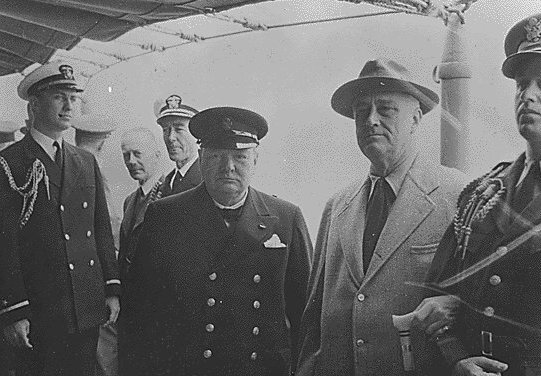
    Roosevelt and Churchill aboard the U.S. S. Augusta, off the coast of Newfoundland, August 1941

    Also on UK level the political approach towards the EU and its institutions has changed with the political personal in charge, intergovernmental relations and constellations; it is true especially in regard of the UK that the lines of approval and rejection of the EU are not congruent with party loyalities. t is therefore the task of this paper to distil ideological determinants and mind-sets and the crucial phases in British policies towards the European Union after World War II. Focus in part one lies on Britishness and its surrounding ideological patterns; part two at its core examines the last three governments of the United Kingdom, that is the administrations of Margaret Thatcher, John Major and Tony Blair.

    It will be one of the statements of this work that both of the subsequent governments in many respects can be seen in the tradition of the first mentioned, although it was then indicated in another way and hoped by many pro-Europeans that this would not be the case. Furthermore one aim will be to isolate a tendency that enables the percipients of this academic work to venture an outlook on the future relations between Europe and the UK, which is especially vital in regard of the sustainability of the Union: It has now enlarged to 27 members with some more countries in the waiting loop and its constitution is still on hold. It must be emphasized that the UK is a major player in European politics and by no means just a by-stander.

    2
    Table of Contents
    1
    General Introduction………………………………………………………………………………………………….. 3
    1.1
    Introduction and approach of this paper………………………………………………………….. 3
    2
    Britishness …………………………………………………………………………………………………………………….. 4
    2.1
    Cultural identity…………………………………………………………………………………………….. 4
    2.2
    Britain and the EMU ……………………………………………………………………………………… 5
    2.3
    Britain and the European Constitution ……………………………………………………………. 6
    3
    Special Relationship………………………………………………………………………………………………….. 7
    4
    The Euro-sceptic Press in Great Britain …………………………………………………………. 10
    5
    The „Awkward Partner“ enters the union ……………………………………………………….. 12
    6
    Margaret Thatcher: Alone against the Superstate ……………………………………………. 15
    6.1
    Margaret Thatcher and the BBQ ……………………………………………………………………. 15
    6.2
    The Late 1980s ­ Struggle Over Europe …………………………………………………………….. 17
    7
    John Major: A phase of transition …………………………………………………………………………………………………………………… 18
    8
    New Labour: Old Wine in New Bottles? …………………………………………………………………………………………………………………… 21
    8.1
    Hopes for a pro-European approach………………………………………………………………. 21
    8.2
    New Labour and the Euro…………………………………………………………………………….. 22
    9
    Evaluation and outlook………………………………………………………………………………………………………… 24
    10
    Works Cited…………………………………………………………………………………………………………….26

    To support the above-mentioned

    tendency this paper will repeatedly recur on figures of surveys among the UK’s people and

    Seite 5

    4
    examine if Euroscepticism was shared on both levels, in the governments and in the population or if classical patterns of bottom up or top down politics can be established. As Julie Smith and Mariana Tsatsas in their work The New Bilateralism point out,
    there are many factors that determine bilateral relations (5). This term paper is incorporating the points that are important in the examination of the topic; it names the treaties that shape
    the European interactions on a transnational level and provides the necessary terminology in the respective historical contexts. It is however also determined to not neglect the relations
    between the people who govern the countries; it is thus not only party platforms, bi- and multilateral treaties and assumed political alliances within the political left/right pattern that
    shape European relations, but also the chemistry between the leaders: „…good personal relations are extremely important in building effective bilateral relations between states
    (Smith/Tsatsas 7).
    These relations often do not adjust to political affiliations; for example although Tony Blair was usually associated with a „catch-all“ politics slightly tending to the left, however
    with the former conservative Prime Minister of Spain, Jose Maria Aznar, he got warmer than with many of „his fellow European Social Democrats“ (Smith/Tsatsas 31). Margaret Thatcher
    however could not conceal her disliking for her conservative counterpart in Germany: „she thought (Helmut) Kohl boring, clumsy and provincial…: „My God, that man is so German“
    (Campbell 304). It has become common to declare Margaret Thatcher the greatest anti-European in British history after WWII – it is however necessary to take a look back into the early years of the community to understand that also the Iron Lady’s policies were in some measure in line with those of her predecessors.
    2 Britishness
    2.1 Cultural identity
    Britain’s sense of itself is a strongly encouraged self-perception by its imperial past and its geographical and linguistic isolation of the rest of Europe. As in most western democracies, a strong sense of cultural identity and a concept of what Britain means is deeply rooted in Great Britain. Here Robbins offers a traditional view of cultural identification:“ identification is constructed on the back of a recognition of some common origin or shared characteristic with
    another person or group, or with an ideal, and with a natural closure of solidarity and allegiance established on this foundation“ (Robbins 282). Thus there are two factors: identification – here clearly seen as a construct – is based on either some common origin
    and/or shared characteristics; this could be historical events from the shared imperial past or, as stated above, the geographical and linguistic isolation from continental Europe.
    The second and most likely more vital factor stated by Robbins is „the natural closure of solidarity“. This concept of closure is strongly associated with the topic of cultural/group identity by many
    socialists. It describes the unconscious intention of a specific social group to not only form this group for reasons of shared origins and characteristics, but to then defend it and its perceived status from an external threat. This external threat is often referred to as „the
    Other“, which shows that it can appear in various forms and always starts as an imagined or at least perceived threat, long before it can be grasped and named factually. In the beginning the only thing that the specific social group might be certain of, is that there is a difference between their supposedly homogenous group and the external other. The manifestation of this difference rapidly turns „the Other“ into an external threat against which the shared traditions and values of the group have to be defended. Thus according to contemporary social theory, it could be plausibly argued, that one element at least of recent expressions of Euro-scepticism in Britain „stems from the presence of and perceived threat from an external „Other“, namely continental Europe“ (Robbins 285).
    Continue readin on hausarbeiten.de or contact me