Autor: admin

  • Facebook`s „Happening Now“ – privacy breach caused by bug?

    Test users of Facebook’s most recent tool, a real-time implementation called „Happening Now“, have reported that the service breaks their privacy settings – possibly caused by a bug. Facebook has reacted and denied that the reported feature is a bug, but rather says it is intentional. Facebook watchbloggers recommend a further tightening of user’s privacy settings.

    „The new feature is strongly reminiscent of Twitter and shows what the users‘ friends are „liking“ and commenting on as these actions happen“, writes a blogger. It is shown in a sidebar on the right and it reads for example: „user A posted a link“, „user B likes group C“, „user D commented on a link“. It duplicates much of the content in the main news feed, while refreshing it gives users the possibility to pull up even more information.

    However, some of the test users have reported via Twitter about a bug on „Happening Now“ that violates their privacy settings. The service is apparently able to bypass the settings of users that have restricted the visibility of their images to „friends only“ or an even smaller circle. As soon as user B, a friend of user A, comments user A’s pictures, they pop up in B’s „Happening Now“ and are thus available to B’s friends – if they are befriended to A or not.
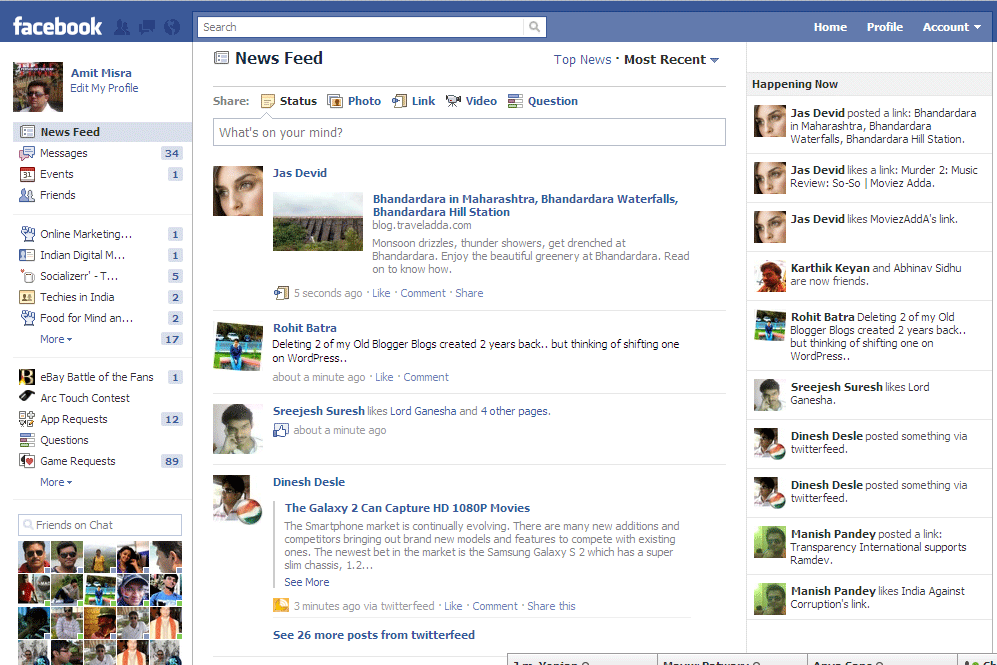
    „It’s still unknown whether the bug carries over to other features as well, such as status updates or, perhaps, places“, reports the blogger. Facebook, confronted with this problem, stated that it was not a bug, but intended: „When a person tags their friend in a photo, the photo is posted to their friend’s Wall where their friends can see it“, a spokesperson said.

    „Happening Now“ is currently only tested with the Facebook accounts of a small percentage of its currently around 670 million users – this is not an unusual procedure at Facebook. It has apparently not been decided when and in what form the feature will be rolled out to all users. Facebook watchdogs strongly recommend making pictures and other private files only available to as few people as necessary and to uncheck the „Let friends of people tagged in my photos and posts see them“ option in the privacy settings tab.
  • Facebook fights child abuse pics – with Microsoft’s help

    Facebook is taking action against the possible circulation of child abuse images in its network through Microsoft’s PhotoDNA tool. Microsoft successfully uses this programme in its services Bing and Skydrive. After the introduction of a “digital fingerprint” last year, which serves to prevent users from uploading these pictures, Facebook now takes a further step in the fight against online child abuse.


    „Many of these images recirculate on the internet time and time again, even many years after the original crime occurred and the abuser has been brought to justice,“ Ernie Allen, president and CEO of the National Center for Missing and Exploited Children (NCMEC), wrote on Microsoft’s blog. Microsoft developed the tool in 2009 and made it available to the NCMEC network. Facebook has recently joined forces with this organisation as well.

    Allen adds: „And every time these crime scene images are viewed, the children in the images are re-victimized. PhotoDNA aims to break this cycle, so the images of abuse need not haunt these children online forever.“

    The PhotoDNA technology scans the respective images and searches the websites for matches. It is able to find images that have been edited or resized – and therefore totally changed their „fingerprint“ or DNA. The tool has been used to examine around 2 billion images within the Microsoft services. Around 2,500 matches have been found – apparently with a reliability of 100 per cent. According to NCMEC, many of them were from the United States, Great Britain and Brazil.

    But not only the Microsoft services were searched. Since 2002, the NCMEC network has examined almost 49 million images, 13 million of them in 2010. During these years, the victims have steadily become younger. Among the 3,500 children who have been identified from the most popular images circulated online, 10 per cent are infants and 67 per cent are well under 13.

  • Konferenz: Ressourcenzugang für Arme sicherstellen

    Ein besseres Management von natürlichen Ressourcen könnte der Schlüssel zur Armutsbekämpfung sein, erklärten Aktivisten und Experten auf der „Business for the Environment (B4E)“-Tagung, die vom 27. bis zum 29. April 2011 in Jakarta stattfand. Dies bedürfe allerdings einer stärkeren Unterstützung der Regierungen.

    „Der momentane Ansatz zur Verminderung der Armut in den Ländern des Südens erfüllt seinen Zweck nicht“, sagte Pavan Sukhdev, der ehemalige Chefberater der Green Economy Initiative der Vereinten Nationen, der Jakarta Globe. Die meisten Entwicklungsländer wollten eigentlich das Leben der Armen verbessern, tatsächlich verbesserten sie aber fast ausschließlich das Leben der Reichen.

    Sukhdev weiter: „Die Regierungen konzentrieren sich darauf, die Profite ihrer Unternehmen zu vergrößern.“ Dies geschehe in der Hoffnung, dass die Gewinne zu den weniger wohlhabenden Schichten durchsickern – in Fachkreisen „Trickle-Down“-Effekt genannt. In Pavans Heimatland Indien sei der Trickle-Down-Effekt allerdings nicht erkennbar: „Es wundert mich, dass nach wie vor so viele Länder darauf setzen.“

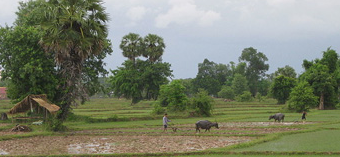
    Laos -Reisernte – das Hauptnahrungsmittel der armen Bevölkerung

    Ein echter Schlüssel zur Linderung von Armut hingegen sei es, sicherzustellen, dass die Armen in den Ländern ebenso von dem Reichtum natürlicher Ressourcen profitieren wie die Wohlhabenden. „Der Zugang der Armen zu kostenlosen Ressourcen wie Holz, Wasser und Öl zum kochen muss gewährleistet sein und bleiben. Ein besseres Management kann hier die dringend benötigten Arbeitsplätze bringen.“

    Ohne die Steuerungseffekte der Regierungen werde dies nicht machbar sein, so Sukhdev. „Private Firmen haben an Armutslinderung kein Interesse. Es ist ihr Job, Profit zu generieren.“

    Der indonesische Umweltminister Gusti Muhammad Hatta pflichtete bei: „Eine grüne Wirtschaft sollte zum Ziel haben, für die Armen, für die Umwelt, für Jobs und für Wachstum gleichermaßen zu sorgen.“ Indonesien habe daher das „Green Economy Concept“ in seinen nationalen Entwicklungsplan für den Zeitraum 2005 bis 2025 eingearbeitet, der das Ziel eines grünen und nachhaltigen Indonesiens verfolge.

    Die „B4E“-Konferenz vereint namhafte Umweltschutzgruppen sowie Wirtschaftsakteure und Regierungsvertreter. Ziel ist es, grüne Investitionen zu erörtern und zu fördern sowie gleichermaßen die Entwicklung der armen Länder des Südens voranzutreiben.

    Foto: Reisernte in Laos

  • Re:publica – German digital rights society announced

    Following countries such as Netherlands and France, also in Germany plans for the foundation of a digital rights organisation have been made public. Markus Beckedahl, one of the organisators of the blogger conference re:publica, will announce its establishment this Wednesday on the opening of the conference in Berlin. The issue of online rights and censorship has been discussed recently – only last week, the German government has withdrawn from a policy of blocking child online abuse websites.

    „We would like to offer a kind of construction kit for online campaigning“, tells Beckedahl the magazine Der Spiegel. Other fields of interest of the organisation comprise copyright issues, open data, internet blockades, lobbying transparence and net neutrality. „We want to create an open and free digital society“ says the text on their domain – their website is scheduled to go live this Wednesday as well.

    Also the European dimension is important to Beckedahl: „I could imagine to work together with the Dutch organisation „Bits of Freedom“ and „Quadrature de Net“ from France.“ Both organisations have been dealing with digital citizenship for quite a while. But also in other European countries digital rights organisations are active.

    Only last week, the German government has withdrawn its policy to block websites containing online child abuse material. After fears of spreading censorship on the internet and an alleged lacking efficiency – the blockades could be easily doged – the government has now announced to delete these websites. The move has met with satisfaction among many digital rights activists, nevertheless many still fear an ongoing erosion of web freedom by political parties.

    image: timtim.com free non-commercial use

  • UN – Nur Ökolandbau zukunftstauglich

    Nicht die konventionelle Landwirtschaft kann den Hunger einer wachsenden Weltgemeinschaft stillen, sondern der Ökolandbau. Dies weisen die Vereinten Nationen in einem kürzlich erschienen Bericht nach, der sich auf aktuelle Studien beruft. Binnen zehn Jahren, so das Papier, kann die Nahrungsproduktion verdoppelt werden – und dies nachhaltig und mit durchweg positiven Effekten speziell in den ärmsten Ländern.

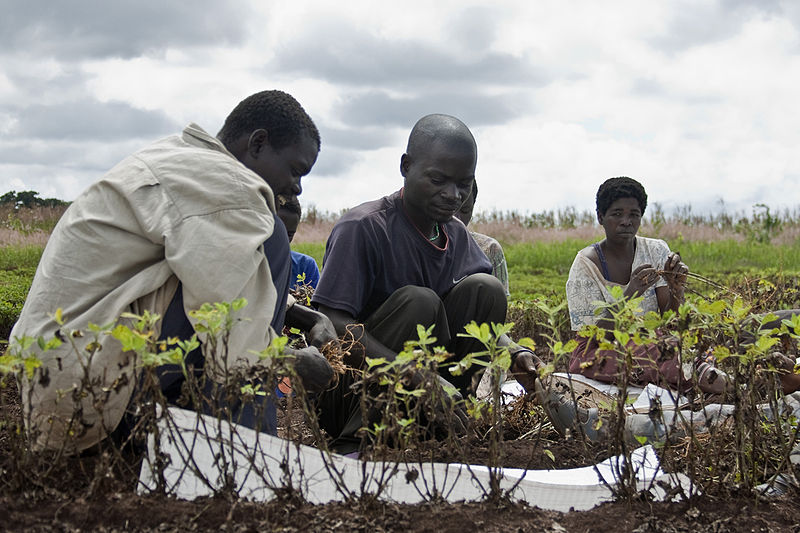
    Erdnussernte in Malawi
    “Die konventionelle Landwirtschaft bedarf teurer Energiezufuhr, heizt die Erderwärmung an und ist anfällig für Klimaschocks”, sagte Olivier De Schutter, UN-Sonderbeauftragter für das Recht auf Ernährung und Autor des Berichts. Neue wissenschaftliche Studien zeigten, dass ökolandwirtschaftliche Methoden dem Einsatz von chemischen Düngern in jeder Hinsicht überlegen seien, speziell in ungünstigen klimatischen Lagen und Terrains.

    „So zeigten Ökolandbauprojekte in 57 Entwicklungsländern einen durchschnittlichen Anstieg der Ernteerträge um 80 Prozent, in Afrika allein sogar um 116 Prozent“, so De Schutter. In 20 afrikanischen Ländern konnten die Erträge sogar binnen lediglich 3 bis 10 Jahren verdoppelt werden.

    Malawi etwa hatte vor einigen Jahren noch ein gewaltiges Subventionsprogramm für chemische Dünger auf den Weg gebracht. Nun wird verstärkt in den Ökolandbau investiert. Ergebnis: Die Maisernten sind von 1 Tonne auf 2 bis 3 Tonnen pro Hektar gestiegen – rund 1,3 Millionen bitterarme Menschen profitieren.

    Je mehr in das Wissen der Farmer investiert wird, desto mehr verzichten sie auf Pestizide, heißt es in dem Papier. So haben eine Reihe von Ländern den Einsatz von Pflanzengiften in Reis- und Baumwollplantagen massiv zurück gefahren. Mit verheißungsvollen Resultaten: China, Indien und Pakistan verzeichneten 4 bis 14 Prozent höhere Erträge in der Produktion von Baumwolle.

    Durch den Einsatz von natürlichen Mitteln – geeigneten Bäumen, Pflanzen und Insekten – kann auf Pflanzengifte und chemische Dünger im Anbau komplett verzichtet werden. Die Böden werden so geschont und können mehr produzieren. Doch auch die Ressourcen des Farmers werden geschont. Natürliche Dünger werden auf der Farm produziert, ein teurer Zukauf von chemischen Zusätzen ist überflüssig. Entscheidend sei das Know-How: „Ökolandbau ist wissensintensiv“, sagte De Schutter.

    So sei es besonders an Staaten und Multiplikatoren, das Wissen im Ökolandbau an die Farmer zu vermitteln und durch geeignete Politiken zu fördern. „Die Unterstützung lässt derweil noch zu wünschen übrig“, beklagt De Schutter. „Dabei werden wir im Jahr 2050 9 Milliarden Menschen ernähren müssen. Spätestens bis dahin müssen wir die effizientesten Landbaumethoden massentauglich gemacht haben.“

    Foto: Erdnussernte in einem Studienprojekt in Malawi. (Foto: Wikipedia, creative common license)

    Quelle: Lars Dittmer, BOS-Deutschland

  • Should teachers add their pupils on Facebook?

    „Add“ or „ignore“ ones pupils on Facebook – this is the question the Austrian newspaper „Die Presse“ currently deals with in its online presence. Experts recommend an organic, nevertheless consistent approach that takes aims and personality of the respective teacher into account. They point out that teachers are often anxious of social media.

    “Teacher should use Facebook following their pedagogical philosophy”, says Barbara Buchegger of the Austrian Initiative “Safer Internet”. It is however highly recommendable to stay consistent: Either you add all your pupils who send you a request or you ignore them all.

    Buchegger adds that teachers should not mix their professional sphere and their personal sphere. Some use Facebook as a tool to provide consultation to their pupils – some consider Facebook a part of their private lives. It is also on Facebook possible to divide information flows and keep both spheres separate: people can be added to lists to receive more information or less.

    According to a study Buchegger has conducted, 35 percent of the Austrian teachers use Facebook, 37 percent of those are “friends” with their pupils. Most teachers however are too anxious of social media. However: “If you don’t post embarrassing messages, nothing can be used against you“, says Buchegger, reassuringly.

  • New research project tackles grooming

    The process of grooming – online sexual abuse – is being further investigated through a two-year research project called ROBERT: Risktaking Online Behaviour Empowerment through Research and Training. Nine European research institutions and NGOs work together to clarify what makes young people vulnerable to digital harassment. The innovative approach will not only include interviews with victims of grooming, but also with perpetrators.

    httpv://www.youtube.com/watch?v=s3XKmKvw2gQ

    „At first we collect existing research from different languages and try to figure out why there is such diverging data on this topic across Europe,“ says Lars Lööf, from the expert group Cooperation of Children at Risk, which is also coordinating the project. The next steps of the project will include a set of interviews, in a trusted environment, with young people who have experienced online abuse. „We want to determine what the conditions were under which the young people became victims of grooming,“ says Lööf.

    Focus group interviews will then be conducted afterwards to further elaborate the conditions for online sexual abuse. They will concentrate on young people who are said to be particularly vulnerable to grooming, e.g., youngsters who live in alternative care, in institutions or with foster families, as well as young people with a disability or with same-sex preference or transgender identity. „We want to find out how they manage the challenges modern technology puts on them and where vulnerabilities in their online conduct arise,“ explains Lööf. Overall, around two hundred people between the ages of fourteen and eighteen years will be interviewed.

    The ROBERT project will also conduct interviews with the perpetrators themselves. Around twenty people will be questioned who have already been convicted of online offences- again in a trusted environment. The aim is to find out if there are any specific characteristics in the online conduct of young people that make them particularly susceptible to sex offenders. By uncovering strategy patterns of perpetrators, the researchers hope that clear protection recommendations can be formulated.

    „The project is designed to bring more light to the process of grooming and will serve to empower the victims of online sexual abuse,“ confirms Lööf. ROBERT was launched in June 2010 and its first results are already available through an online database. A final report and a conference are scheduled for May 2012 in Berlin.

    ROBERT is funded by the European Commission’s Safer Internet Programme. It is managed and coordinated by the Expert Group for Cooperation on Children at Risk (EGCC) in partnership with the University of Tartu (Estonia), Linköping University (Sweden), the University of Edinburgh (UK), Kingston University (UK), Save the Children Denmark, Save the Children Italia, Innocence in Danger in Germany, and Stellit International in The Netherlands and Russia.

    Find more info on ROBERT in this pdf

  • one in seven Greek youths tends to use the internet excessively

    Around 12 percent of the Greek adolescent population is using the internet excessively, 1 percent even shows addictive behaviors. This was one of the central finding of a series of studies on internet safety conducted by scientists from Athens university. Other fields of research included the use of pornographic websites and online gambling. All of the studies clearly show negative consequences arising from unrestricted internet use.

    httpv://www.youtube.com/watch?v=uf9cFGwLfzU

    „Excessive use impairs on the emotions, peer relationships, hobbies, activities, the whole psychosocial life of a youth in general,“ says Artemis Tsitsika, a leading researcher of the series. Examined were around 900 young people between 11 and 18 via questionnaires – those who said they go online longer for more than two hours daily, were considered at risk of addictive behaviors, those who surf the internet for more than 20 hours per week were considered excessive users.

    Certain aspects boost or lower this tendency – while for example youths who surf the internet in a school environment, usually restrict themselves to a low use of 1-3 hours per week, the regular internet café visitor usually goes online for more than 10 hours a week. Particularly internet game players tend to be online excessively: Many stay for more than 20 hours per week in their virtual reality.

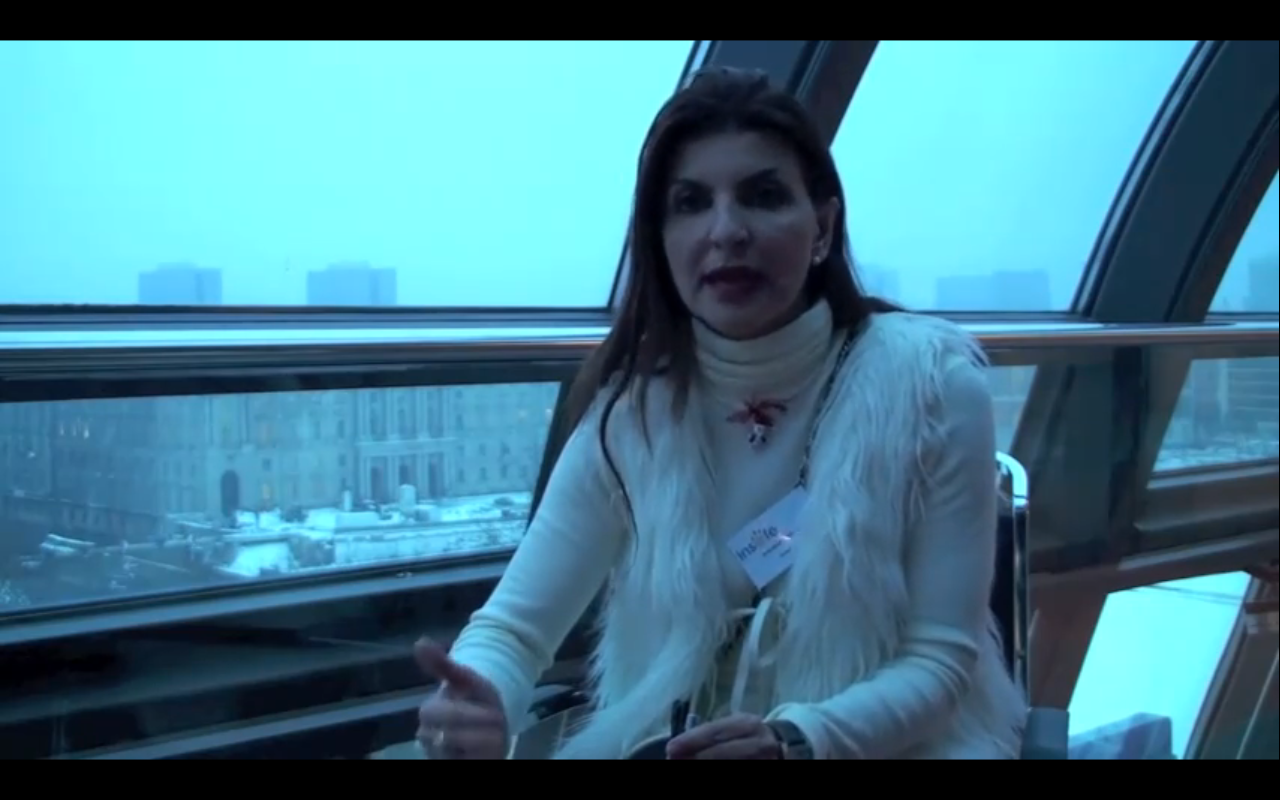
    Artemis Tsitsika, Hotel Radisson Berlin

    An especially damaging online hobby is unrestricted gambling – this is what another study by the Greek team suggests. „Psychosocial maladjustment“, „Abnormal Conduct Problems“ and „Borderline Peer Problems“ are looming especially to those who excessively try their luck online. Questioned about gambling practices, internet use characteristics and Strengths and Difficulties were around 500 Greek adolesents. They also had to fill in the „Young Internet addiction test“. The result: 15 percent of the Greek adolescents have had experience with gambling, 1 in 20 in a problematic way.

    Also a frequent use of internet pornographic pages can have negative impact on young internet users. Compared to non-users, infrequent consumers of such content are twice as likely to have abnormal conduct problems, frequent users are „significantly“ more likely to show abnormal conduct. „95 percent of them are young men, and say they watch it for educational reasons,“ says Artemis Tstsika, as doubtful as it seems. Yet the use of pornography is quite common – among 529 greek high school students, 1 in 5 surfs pages with pornographic content, one in ten frequently.

    More information about the studies:

    – Abstract of the general study on internet misuse among Greek youths

    – Abstract of the study on the use of online pornography

    – Abstract of the study on internet gambling

    – Go to the homepage of the Adolescent Health Unit of Athens University

  • Filtering Tools do not live up to their promise

    The most filtering tools for harmful online content on the market have a very low effectiveness – given five pages of harmful content, most tools block less than four. This is the key result of a study called SIP Bench II – „Benchmarking of parental control tools for the online protection of children“. Among the 31 tested programs – 26 for PC, 2 for mobile phones and 3 for game consoles – there was no tool that achieved the overall top score of 4 points. The test results have been made available in an online database.

    httpv://www.youtube.com/watch?v=p-52IB9Ilfg

    „I would only use the tools as additional means, but not completely rely on them“, says Jérôme Valette, a scientist who works for the SIP-Bench study. His team has examined filtering tools since 2009 and has now published the first results. Besides the effectiveness of the tools, the researchers checked their functionality, their usability and their security – that is, if a youth can easily undo or get around the online barriers erected by the tools.

    There are several factors that boost or reduce the impact of the tools. For instance, the language used by the system – the English spoken tools are more effective than those that are run on Polish, German, French, Italian or Spanish machines. Also the type of content and its form has an effect: Porn and adult content are filtered more effectively than racist content or pages related to self damage, anorexism or mutilation. „Traditional“ websites are more likely to be found and blocked accordingly than web 2.0 content such as blogs or Facebook posts.

    For the other categories, the programs achieved better marks than for their effectiveness. As to their functionality, the report states, all the tools allowed for blocking content according to categories and setting up profiles for users with different needs. As to their usability, most tools seemed to be either to complicated to configure or very reduced, which partly has an impact on the success of the filtering. The report points out that the configuration „is key to the product“.

    „Tools are ok, raising awareness is better“, reports Jérôme Valette. „Still, parents need to negotiate with their children what is harmful content and how they treat it“. For those who think a tool might be useful, more results are yet to come: SIP-Bench 2 will be finalised in 2012 and further findings will be published in six months-intervals. The study was commissioned by the European Commission, DG Information Society and Media, in the framework of the Safer Internet Programme, to Cybion Srl and Stiftung Digitale Chancen, under the coordination of INNOVA Europe S.à.r.l.

    The database of the project can be found HERE

    More information on SIP-Bench is available HERE

  • What Teenagers think of Social Networks

    „Privacy and social networks do not sit easily together“: this was an opinion expressed in a series of video interviews with young people at the Safer Internet Forum 2010 in Luxembourg. The youngsters questioned, Europeans aged between 14 and 17, reported that they use different social networks for various purposes. They are also aware of possible problems arising from their usage. //blog article on saferinternet.org

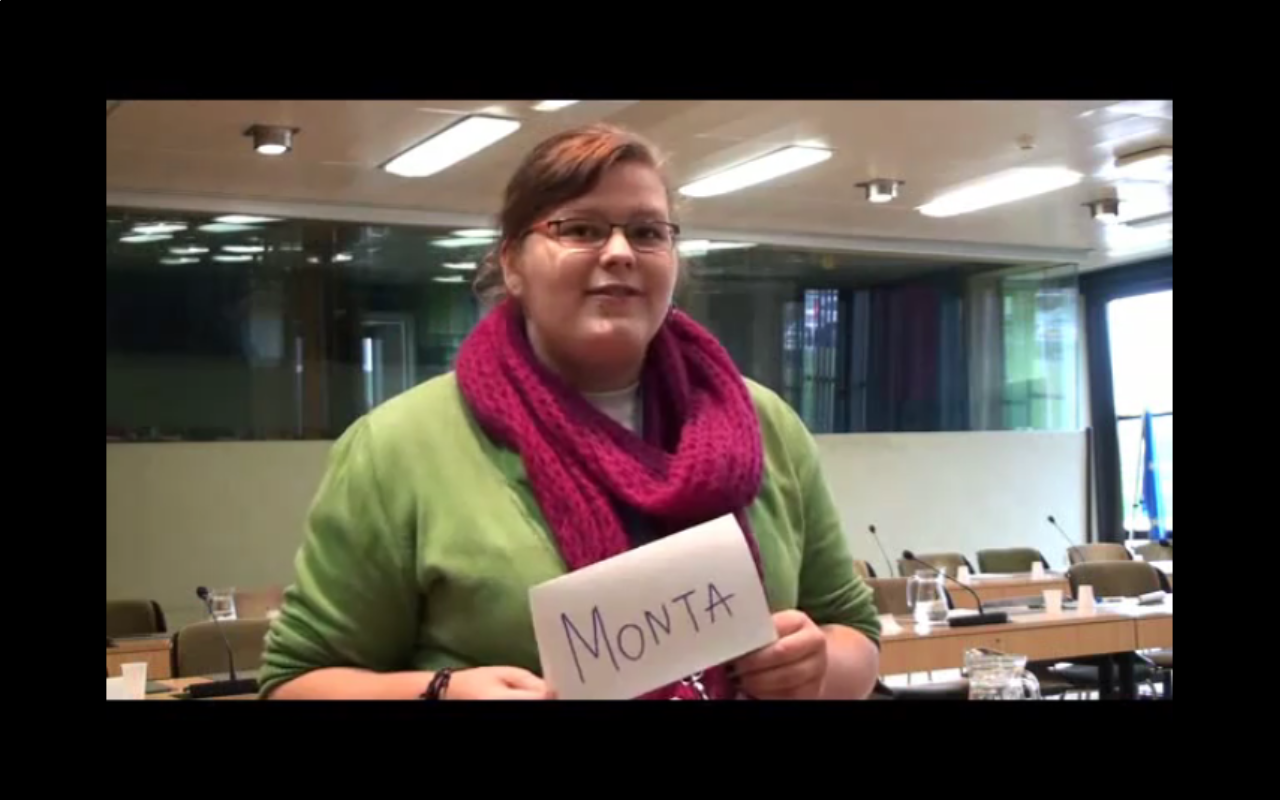
    An insight into how teenagers use SNS – Monta from Latvia

    “Messaging, emails, it takes a pretty long time”, says Monta from Latvia. Using nine different social network sites however, she is rather an exception. Most youngsters name Facebook as their favorite social network, being the platform with the most users worldwide. But also networks with strong national penetration are popular with young people, such as HI5 in Portugal. “Everybody in Portugal has an account there”, reports Francisca.

    httpv://www.youtube.com/watch?v=xcKyFQS_8vA&feature=player_embedded

    Most of the youths use social networks to keep in touch with their friends. But social networks also serve other purposes – Monta for example uses them for school and education, Konstantinos from Greece for online gaming. When it comes to the topic of privacy, the youngsters close in on a definition: “privacy is something that is only mine, it is something that nobody else can touch”, states Petr from Czech Republic.

    But is it possible to have privacy in social networks? When you’re smart, you can use them and still keep your privacy, suggests Petr. Linus from Sweden, however, is more skeptical. “When you really want something to be private, you shouldn’t post it online”, he suggests.