Schlagwort: Wissenschaft/Science

  • Kosmisches Rätsel: Sonnen-Staubwolke verschwand mit rasender Geschwindigkeit

    Wie kann eine riesige galaktische Staubwolke verschwinden – und das auch noch innerhalb eines Jahres? Dieses Rätsel gibt US-Astronomen derzeit der junge Stern TYC 8241 2652 auf, dessen riesiger Staubkranz sich „in Luft“ auflöste. „Es ist ein bisschen so, als würde der Ring um den Saturn verschwinden“, sagte der US-Physiker Benjamin Zuckerman über die Studie, die im Fachmagazin „Nature“ erschien. Die Forscher überlegen nun, ob die Entstehung junger Galaxien doch anders verläuft, als bislang gedacht.

    TYC 8241 2652 – so sah der Stern mit Staubwolke vielleicht aus. (Bild: Nasa)

    „Es erinnert ein wenig an einen Zaubertrick.  Mal ist etwas da – dann plötzlich weg“, sagte der Astronom Carl Melis, der das Phänomen studiert hat. „Nur sprechen wir hier über genug Staub, um das Innere eines Sonnensystems zu füllen, und er ist tatsächlich verschwunden!“, zitiert die Nasa den Wissenschaftler auf der Website der Raumfahrtbehörde. Wäre sie in unserem Sonnensystem gewesen, ergänzte sein Kollege Zuckerman, hätte die Staub-Scheibe um den Stern die halbe Fläche von unserer Sonne bis zur Erde eingenommen, fast bis zum Merkur.

    Der betroffene Stern TYC 8241 2652 ist laut den Forschern, die für die University of California und die Nasa arbeiten, mit einem geschätzten Alter von zehn Millionen Jahren ein galaktischer Novize. Unserer Sonne ähnlich, liegt der Jungstern 450 Lichtjahre entfernt von unserer Erde in Richtung des Sternbilds Zentaur.

    Vor wenigen Jahren sah es noch ganz so aus, als würde sich um die junge Sonne ein Planetensystem entwickeln. „Da hat sich so viel Staub im Orbit bewegt, dass es sehr wahrscheinlich war, dass sich dort Planeten formen“, sagte Zuckerman. Entstanden war der Staubkranz ursprünglich wohl durch eine gewaltige Kollision in dem System.

    Entdeckt wurde der Stern im Jahr 1983 durch Infrarot – damals hatte er die Staubwolke noch. Rund 25 Jahre konnte das Leuchten der Wolke über das Infrarot unverändert beobachtet werden. Wie auch die Erde, absorbiert warmer Staub die Energie von Sonnenlicht und spiegelt sie als Infrarotstrahlung wider. Im Jahr 2009 fing die Strahlung an, schwächer zu werden. Im Jahr darauf war der Prozess weit fortgeschritten. Die jüngste Aufnahme des Gemini- Teleskops in Chile von diesem Jahr bestätigte dann das rätselhafte Phänomen: Die Staubwolke war nahezu komplett verschwunden.

    Auch in unserem Sonnensystem gibt es große Staubwolken, etwa den Asteroidengürtel zwischen Mars und Jupiter. „Astronomen haben schon hunderte von Sternen aufgrund ihrer Staubwolke untersucht, aber derartiges wurde noch nie gesehen“, wundert sich Zuckerman. „Das alles passierte nach menschlichen Maßstäben unglaublich schnell, aber erst recht nach astronomischen. Zuerst dachte ich, mit unseren Untersuchungen müsste auf seltsame Art und Weise etwas nicht stimmen.“

    Die Wissenschaftler räumen ein, dass sie zwar einige Theorien zu dem Phänomen hätten, aber keine davon wirklich zwingend sei. „Der Prozess schien unabhängig von dem Stern selbst zu sein, es gibt keine Hinweise darauf, dass eine Riesenflamme oder irgendeine andere Form der Gewalteinwirkung den Kranz vernichtete.“ Eine Möglichkeit ist, dass Gas bei der ersten Kollision entstanden ist das nun den Staub in die Sonne gezogen hat. Oder große, freischwebende Gesteinsbrocken haben weitere Staubpartikel freigesetzt, die mit den bereits vorhandenen kollidierten und die einzelnen Bestandteile immer kleiner werden liessen.

    Die Wissenschaftler überlegen jetzt, ob nicht der gesamte Prozess der Entstehung von Planetensytemen überdacht werden muss. Gerade zufällig entdeckte Vorgänge wie dieses können sicher geglaubte Denkweisen infrage stellen. „Wir können uns glücklich schätzen, dass wir dieses Phänomen miterleben durften“, sagte Zuckerman. „Solche Events könnten häufig sein – ohne dass wir davon wüssten.“

    Erschienen auf Yahoo! Nachrichten am 6. Juli 2012

  • Experteninterview: „Breivik eher nicht schuldfähig“

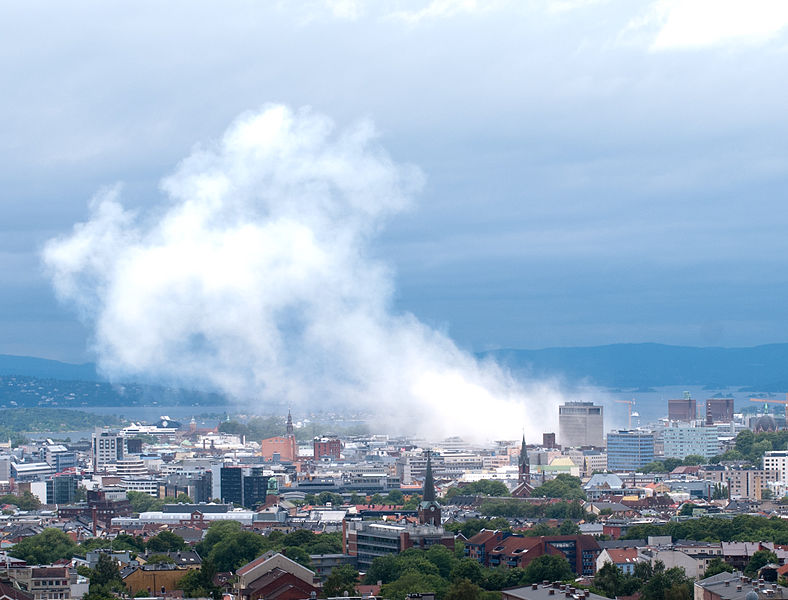
    Oslo am Tag des Anschlags (Bild: lizenzfrei/Wikipedia)
    Oslo am Tag des Anschlags (Bild: lizenzfrei/Wikipedia)

    Schuldig oder nicht? Für das Osloer Gericht, das diese Woche den Massenmord von Anders Behring Breivik verhandeln soll, stellt sich diese Frage nicht. Der Norweger hat alle Morde zugegeben. Angesichts der kalten Brutalität, mit der der Rechtsextremist  77 Menschen hinrichtete, steht vielmehr die Frage „schuldfähig oder nicht?“ im Vordergrund – zu wahnsinnig erscheint seine Tat. Bisherige Gutachten waren jedoch uneins:  im vergangenen Jahr attestierten ihm Psychiater Schizophrenie und damit Schuldunfähigkeit. Ein jüngst erschienenes Gutachten hingegen sieht Breivik als schuldfähig an. Gemeinsam mit dem Berliner Psychologie-Professor Peter Walschburger versucht Yahoo! Nachrichten, die Frage zu ergründen.

    Yahoo! Nachrichten: Herr Professor Walschburger, Anders Behring Breivik hat 77 Menschen umgebracht. Was könnte dieser Mensch anderes sein als wahnsinnig?

    Professor Peter Walschburger: Gute Frage. Das ist eines der größten Probleme bei der Frage nach Schuldfähigkeit oder nicht. Breivik ist aus allen menschlichen Vernunftsmaßstäben und Gesetzen der Menschlichkeit ausgebrochen. Es gibt genug Anhaltspunkte, ihn als verrückt zu bezeichnen. Vor Gericht reicht dies natürlich nicht aus.

    Breivik sah sich selbst als Tempelritter, wollte „Zuchtzentren“ für „reinrassige Norweger“.

    Ja, weitab aller menschlicher Vernunft. Er ist jetzt bestrebt, nicht als „Irrer“ abgestempelt zu werden, sondern er möchte beweisen, dass er Recht hatte. Sein Beharren auf seiner Position, seine Unvermögen, das menschliche Leid, das er verursacht, zu begreifen, spricht dafür, dass er sehr schwer gestört ist. Ein deutscher Psychiater, der zu Breivik befragt wurde, war eher der Überzeugung, dass er eine massive psychotische Störung hat, die planvolles Handeln erlaubt – und nicht schizophren ist. Er wäre dann besessen von einer sogenannten überwertigen Idee, die er bis zum Wahn und komplett abseits von menschlicher Moral verfolgt. Er ist aber durchaus fähig dazu, geplant zu handeln, also etwa hier, massenhaft Menschen umzubringen. Aufgrund seiner intelligenten Planungsleistung fiel es den Gutachtern jüngst schwer, ihn schlicht als verrückt oder schizophren zu bezeichnen.

    Lesen Sie auch: Breivik: „Ja, ich würde es wieder tun“

    Können Schizophrene diese Planungen denn nicht leisten?

    Nein, das ist äußerst selten. Schizophrene fühlen sich einer äußeren Macht verpflichtet, folgen einer höheren Eingebung, hören Stimmen und halluzinieren. Sie wehren sich gegen erdachte fremde Mächte oder Spione oder derartiges, Dinge die es für die Außenwelt nicht gibt, sie aber tatsächlich vor ihrem geistigen Auge sehen. Zu solch logistischen Anstrengungen wie Breivik sie geleistet hat, sind sie normalerweise nicht in der Lage.

    Das klingt, als gäbe es harte Kriterien für Schizophrenie. Im November 2011 urteilte ein Gutachten allerdings doch, Breivik sei schizophren und daher schuldunfähig. Wird denn eine paranoide Schizophrenie mal so ganz ohne Not attestiert?

    Nein, das natürlich nicht. Die Psychiater suchen nach Anzeichen für Krankheiten, die in einem allgemein akzeptierten Diagnosesystem klassifiziert sind. In der Psychopathologie gibt es sehr viele Möglichkeiten, wie eine Idee „überwertig“ werden kann, also zum alles dominierenden Lebensmotiv. Sogar die Liebe zu einer Person kann derart übersteigert gelebt werden – bis hin zum Stalking oder zum Mord. Da allerdings besteht oft nach der Tat Reue, die es bei Breivik nicht gibt. Das spricht eher für eine Schizophrenie. Dazu passt auch, dass er nicht von Fanatikern seiner Couleur umgeben war – er war Einzeltäter, hat isoliert von anderen Menschen planhaft und massenhaft gemordet.Ich möchte nur sagen: Die Psychiater haben es nicht leicht, die Anzeichen sind nicht eindeutig.

    Aber war das mit den Gutachten nicht dennoch ein wenig seltsam? Es gab ein erstes Gutachten, das Breivik Schuldunfähigkeit attestiert – und das dann umgehend von den Angehörigen der Opfer kritisiert wurde. Dann gab es eben ein Zweites, das etwas anderes festgestellt hat.

    Nun ja: Es ist mit Sicherheit theoretisch wünschenswert, dass Gutachter gesellschaftlich abgeschottet und ohne Einfluss der Öffentlichkeit urteilen. Aber in Realität funktioniert es nicht – die Gutachter spüren auch den Druck der Gesellschaft und der Angehörigen, die leiden und völlig am Boden zerstört sind. Und die wollen natürlich die Person auch schuldig sehen, die ja auch Ursache für ihr Leid ist. So etwas fließt natürlich auch mit ein.

    Interessant ist an dem Fall, dass Breivik sich selbst auch als schuldfähig ansieht. Der Täter und die Angehörigen der Opfer wollen diesbezüglich tatsächlich dasselbe.

    Ja, ein bemerkenswerter Sonderfall. Ändern wird es de facto nichts – ob Breivik in die geschlossene Psychiatrie kommt oder für 21 Jahre ins Gefängnis mit Sicherungsverwahrung danach, er wird aller Voraussicht nach nicht mehr in Freiheit leben können. Läuterung ist bei ihm nicht abzusehen.

    Sehen Sie Breivik als schuldfähig an?

    Eher nicht. Sein Beharren auf seiner Position und sein Mangel an Einsicht sprechen eher für seine Nichtschuldfähigkeit. Der Mann hat eine massive Störung, einen Fehler im Erkenntnisapparat. Es gibt ja Personen, die zu Emotionen nicht in der Lage sind – kaltblütige, emotionsarme Killer. Das ist Breivik aber nicht – er hat nach der Tat gegrinst. Er ist so abseits jeden menschlichen Einfühlungsvermögens, dass ich ihn nahe an der Schizophrenie sehe.

    Prof. Dr. Peter Walschburger lehrt am Fachbereich Erziehungswissenschaft und Psychologie, Institut für Biopsychologie, der Freien Universität Berlin (Bild: Freie Universität Berlin)


    Erschienen auf Yahoo! Nachrichten

  • Satellit entdeckt vorzeitliche Siedlungen

    Wie lebten die Menschen vor 10.000 Jahren? Wissenschaftler kommen der Antwort zu dieser Frage immer näher. Zwei Forscher aus Harvard und dem Massachusetts Institute of Technology (MIT) haben im heutigen Syrien die Spuren tausender antiker Wohnstätten gefunden – mittels Satellitenbildern. Bestimmte Bodenformationen lassen teils detailgenau damalige Siedlungsstrukturen nachvollziehen.

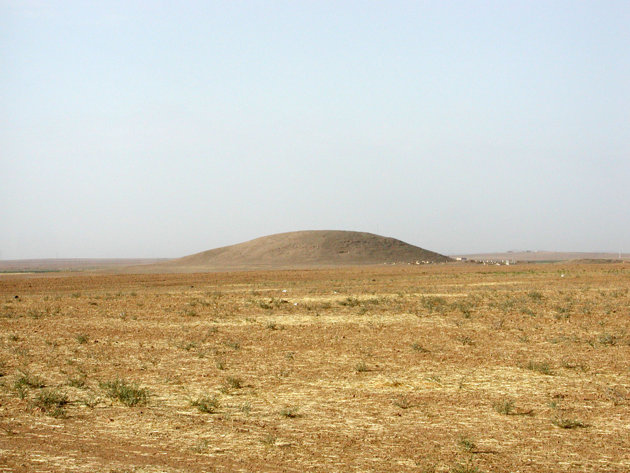
    Ein Tell - hier lebten vorzeitliche Menschen. (Bild: Menze/Ur)
    Ein Tell – hier lebten vorzeitliche Menschen. (Bild: Menze/Ur)

    Mesopotamien, das Zweistromland zwischen Euphrat und Tigris, gilt als eine der ersten Hochkulturen der Menschheitsgeschichte. Schon 8.000 Jahre vor Christus betrieben die Menschen in dieser Gegend, die auch „fruchtbarer Halbmond“ genannt wird –  der heutige Irak, der Südosten der Türkei, Teile des Irans und Syriens – Ackerbau und wurden sesshaft. Ab 3.000 Jahre vor Christus wurde hier bereits mit der Keilschrift über Handel und Alltag kommuniziert.

    Dazu bauten sie rege Siedlungen, wie jetzt Forscher herausfanden. Fast 10.000 mögliche ehemalige Wohnstätten im heutigen Norden Syriens identifizierten die Anthropologen Jason Ur und Björn Menze auf rund 23.000 Quadratkilometern. „Es handelt sich nach unserem Wissen um die größte Satellitenbild-gestützte Studie in der Geschichte der Archäologie“, schreiben sie in ihrem Bericht, der jüngst im wissenschaftlichen Journal „Proceedings of the National Academy of Science“ erschien.

    Dabei stützten sie sich auf zwei Merkmale, die bei vorzeitlichen Siedlungen in dieser Region typisch sind: So genannte Anthrosole – das sind Erden, bei denen sich erkennen lässt, dass sie durch Menschen verändert wurden und die „Tells“ – kleine Hügel, die nach der Erstbesiedelung immer größer wurden, weil Menschen auf ältere Strukturen aufbauten. Aus der Kombination dieser beiden Faktoren können die Forscher auf den Satellitenbildern erkennen, wo sich Menschen aufgrund günstiger Bedingungen über längere Zeiträume niederließen – etwa weil es Wasser vor Ort gab.

    Wie lässt sich an Erden herausfinden, dass sie durch Menschen verändert wurden? Sie sind dann leichter, feiner und bestehen aus mehr organischen Komponenten als die Böden um die Siedlungsstrukturen, schreiben die Wissenschaftler. Auch Lehmrückstände lassen sich dort nachweisen – Lehm war über Jahrtausende der Hauptbaustoff in dieser Region. Rund 14.000 Stellen mit hohen Vorkommen an Anthrosolen fanden sie, von denen rund 9.500 entsprechende Tells, also Erdhügel, aufwiesen. Für die Forscher ein sicheres Zeichen menschlicher Besiedlung.

    Von ihrer Studie erhoffen sich die Anthropologen, mehr Einsicht in die Lebensbedingungen vorzeitlicher Völker zu gewinnen. Wo ließ sich Ackerbau betreiben, wo waren Wälder? Auch über die klimatischen Bedingungen menschlicher Entwicklung soll die Forschungsarbeit aufklären.

    Erschienen auf Yahoo! Nachrichten am 21. März

  • Nasa filmt erdgroßen Tornado auf der Sonne

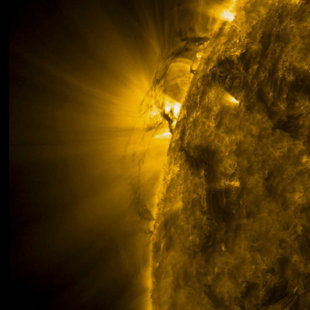
    Mit bloßem Auge nicht erkennbar – die Sonne ist derzeit sehr aktiv. (Bild: NASA/SDO)Aktuelle Nasa-Aufnahmen von der Sonnenoberfläche zeigen die gewaltigen Kräfte, die dort wüten. Der Forschungssatellit SDO (Solar Dynamics Observatory) hat Anfang Februar einen Plasmasturm von der Größe der Erde gefilmt, der länger als einen Tag über den Stern donnerte. Der Sonnen-Twister erinnerte zwar optisch stark an irdische Wirbelstürme, hatte jedoch ganz andere Ursachen, wie die Forscher der Weltraumorganisation erklären.

    Mit bloßem Auge nicht erkennbar – die Sonne ist derzeit sehr aktiv. (Bild: NASA/SDO)

    Auf den Bildern ist das dunklere, kühlere Plasma zu sehen, wie es immer wieder von helleren, aktiven Regionen durchzogen und durchbrochen wird. Plasma wird die gasförmige Materie genannt, aus der die Sonne besteht – darin befinden sich geladene Teilchen.

    Auf der Oberfläche herrschte eine rege Aktivität. „Es ist fast als könnte sich das Plasma nicht entscheiden, in welche Richtung es will“, schreiben die Astronomen auf der Webseite des Projekts. „Die Partikel werden durch rivalisierende magnetische Kräfte hin- und hergezogen.“ Daher die optische Ähnlichkeit mit einem Wirbelsturm.

    Rund 30 Stunden zog der gewaltige Tornado über unser Zentralgestirn, mit einer geschätzten Geschwindigkeit von fast 500 Stundenkilometern. Die Flammen sollen dabei mehrere hunderttausend Kilometer in das All hinausgeschossen sein. Das aktuelle Material wurde von dem Forschungssatelliten in ultravioletter Strahlung aufgenommen, das heißt, für das bloße menschliche Auge wäre das Phänomen nicht zu erkennen gewesen. Derartige Aufnahmen waren der amerikanischen Weltraumorganisation noch nie zuvor gelungen.

    Das SDO-Projekt feiert gerade sein zweijähriges Jubiläum: Der Satellit wurde im Februar 2010 ins All geschossen und soll bis 2015 die Aktivitäten auf unserer Sonne untersuchen. Ziel der Mission „LWS – Living with a Star – „Leben mit einem Stern“-“ ist es, die Einflüsse unserer Sonne auf das Leben auf der Erde zu untersuchen. Die Sonnenaktivität wird in Zyklen gemessen – in der aktuellen Phase, genannt Solarzyklus 24, stellen Wissenschaftler eine besonders rege Aktivität auf dem Stern fest.

    Erschienen auf Yahoo! Nachrichten am 20. Februar 2012

  • UN – Nur Ökolandbau zukunftstauglich

    Nicht die konventionelle Landwirtschaft kann den Hunger einer wachsenden Weltgemeinschaft stillen, sondern der Ökolandbau. Dies weisen die Vereinten Nationen in einem kürzlich erschienen Bericht nach, der sich auf aktuelle Studien beruft. Binnen zehn Jahren, so das Papier, kann die Nahrungsproduktion verdoppelt werden – und dies nachhaltig und mit durchweg positiven Effekten speziell in den ärmsten Ländern.

    Erdnussernte in Malawi
    “Die konventionelle Landwirtschaft bedarf teurer Energiezufuhr, heizt die Erderwärmung an und ist anfällig für Klimaschocks”, sagte Olivier De Schutter, UN-Sonderbeauftragter für das Recht auf Ernährung und Autor des Berichts. Neue wissenschaftliche Studien zeigten, dass ökolandwirtschaftliche Methoden dem Einsatz von chemischen Düngern in jeder Hinsicht überlegen seien, speziell in ungünstigen klimatischen Lagen und Terrains.

    „So zeigten Ökolandbauprojekte in 57 Entwicklungsländern einen durchschnittlichen Anstieg der Ernteerträge um 80 Prozent, in Afrika allein sogar um 116 Prozent“, so De Schutter. In 20 afrikanischen Ländern konnten die Erträge sogar binnen lediglich 3 bis 10 Jahren verdoppelt werden.

    Malawi etwa hatte vor einigen Jahren noch ein gewaltiges Subventionsprogramm für chemische Dünger auf den Weg gebracht. Nun wird verstärkt in den Ökolandbau investiert. Ergebnis: Die Maisernten sind von 1 Tonne auf 2 bis 3 Tonnen pro Hektar gestiegen – rund 1,3 Millionen bitterarme Menschen profitieren.

    Je mehr in das Wissen der Farmer investiert wird, desto mehr verzichten sie auf Pestizide, heißt es in dem Papier. So haben eine Reihe von Ländern den Einsatz von Pflanzengiften in Reis- und Baumwollplantagen massiv zurück gefahren. Mit verheißungsvollen Resultaten: China, Indien und Pakistan verzeichneten 4 bis 14 Prozent höhere Erträge in der Produktion von Baumwolle.

    Durch den Einsatz von natürlichen Mitteln – geeigneten Bäumen, Pflanzen und Insekten – kann auf Pflanzengifte und chemische Dünger im Anbau komplett verzichtet werden. Die Böden werden so geschont und können mehr produzieren. Doch auch die Ressourcen des Farmers werden geschont. Natürliche Dünger werden auf der Farm produziert, ein teurer Zukauf von chemischen Zusätzen ist überflüssig. Entscheidend sei das Know-How: „Ökolandbau ist wissensintensiv“, sagte De Schutter.

    So sei es besonders an Staaten und Multiplikatoren, das Wissen im Ökolandbau an die Farmer zu vermitteln und durch geeignete Politiken zu fördern. „Die Unterstützung lässt derweil noch zu wünschen übrig“, beklagt De Schutter. „Dabei werden wir im Jahr 2050 9 Milliarden Menschen ernähren müssen. Spätestens bis dahin müssen wir die effizientesten Landbaumethoden massentauglich gemacht haben.“

    Foto: Erdnussernte in einem Studienprojekt in Malawi. (Foto: Wikipedia, creative common license)

    Quelle: Lars Dittmer, BOS-Deutschland

  • Studie: Jedes vierte Säugetier ist vom Aussterben bedroht

    Ein Viertel aller Säugetierarten ist vom Aussterben bedroht, 200 Arten darunter unmittelbar. Ursächlich dafür sind die Zerstörung ihrer Habitate und die Jagd. Zu diesem traurigen Ergebnis kommt die Weltnaturschutzunion (IUCN) in einer Studie, die sie am Montag, dem 6. Oktober 2008 auf dem Weltnaturschutzkongress in Barcelona vorlegte. Artikel im Newsbereich von BOS Deutschland vom 8. Oktober 2008, von Lars Dittmer

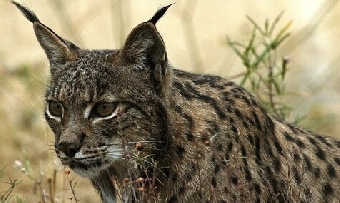
    Der Pardellluchs, die gefährdetste Raubkatze der Welt

    Mehr als 1700 Forscher zeigen in dieser umfassenden Arbeit dass die Hälfte aller 5487 Säugetierarten derzeit zurückgehen. Betroffen sind Tiere aller Größenordnungen – sowohl der Blauwal als auch die insektengroße Schweinsnasenfledermaus finden sich auf der roten Liste. Mindestens 76 Säugetierarten sind verloren gegangen seit 1500.

    “Der Rückgang bei den Säugetieren geht schneller voran als wir gedacht hatten – schon jetzt ist jede vierte Spezies vom Aussterben bedroht”, beklagt Jan Schipper von der Organisation Conservation International. Von den mehr als 4500 Säugetieren für die Daten vorlagen waren über 1100 vom Aussterben bedroht. “Unser Datenmaterial ist dieses Mal umfangreicher als in früheren Studien”, sagte Jan Schipper. Dennoch seien manche Tierarten nur wenig dokumentiert – was auch zum Teil dem Umstand geschuldet ist, dass sie kaum noch gesichtet werden. Weitergehende Informationen könnten ergeben dass noch weit mehr Arten vom Rückgang betroffen sind.

    Dramatisch seien die Rückgänge zum Beispiel beim tasmanischen Teufel, einem australischen Beutelnager, dem kaspischen Seehund und der asiatischen Fischkatze – all diese Arten wurden von der Kategorie “vulnerable” (gefährdet) herabgestuft zu “endangered” (bedroht). “Noch zu unseren Lebzeiten werden hunderte Arten aufgrund menschlichen Handelns verloren gehen”, warnte Julia Marton-Lefevre, die Generaldirektorin des IUCN.

    Die Liste weist 188 Arten als “critically endangered” (unmittelbar vom Aussterben bedroht) aus; auf diese Kategorie folgt nur noch “extinct” – ausgestorben. Ganz oben findet sich hier beispielsweise der in Spanien beheimatete Pardelluchs, von dem nur noch zwischen 84 und 143 ausgewachsene Tiere übrig sind. Der kubanische Zwerhutia, ein Nager aus der Familie der Baumratten, wurde seit 40 Jahren nicht gesehen. Auch der Klimawandel verlangt hier verschiedentlich seine Opfer – so dezimiert der Rückgang des arktischen Eises dort ansässige Arten wie den Eisbären.

    Ganz schlecht bestellt ist es auch um unseren nächsten Verwandten, den Orang-Utan. So ist die auf Borneo beheimatete Art “bedroht” und die auf Sumatra “unmittelbar vom Aussterben bedroht”. „Die Säugetiere sind in einer weltweiten Krise. Der Artenexodus schreitet ungebremst voran“, sagte Volker Homes, Artenschutzexperte beim WWF Deutschland.

    Dennoch vermeldete der Bericht auch einige wenige Hoffnungsschimmer. So erholt sich der Bestand verschiedener Arten – der Bericht geht hier von 5% aus – auch aufgrund von Tier- und Umweltschutzbemühungen. Erwähnenswert hier das europäische Bison und der nordamerikanische Schwarzfußiltis. Offenbar sind auch die afrikanischen Elefantenbestände gefestigt. Die Art stieg im Status von “gefährdet” auf “beeinträchtigt” (“near threatened”).

    Zudem wurden 349 Arten seit 1992 entdeckt, wie zum Beispiel der tansanische Rüsselspringer, ein kleiner afrikanischer Insektenfresser. “Dennoch werden vermutlich einige Arten verschwinden bevor wir dazu kommen sie zu beschreiben”, sagte Jan Schipper.
    Während sich die Studie auf Säugetiere konzentriert, sieht es für andere Arten von Tieren und Pflanzen noch düsterer aus, berichtet die Weltnaturschutzunion. So sieht eine aktualisierte “Rote Liste” mehr als 16,000 von 44,000 Arten bedroht, besonders betroffen darunter: Amphibien wie Frösche und Schildkröten.

    Julia Marton-Lefèvre resummierte: “Wir müssen uns jetzt klare Artenschutzziele setzen. Wenn wir den Trend nicht umdrehen, können wir mit einiger Sicherheit davon ausgehen, dass eine unserer bleibenden Hinterlassenschaften das Ausrotten einer Reihe unserer nächsten Verwandten sein wird.”

    Foto: Programa de Conservación Ex-situ del Lince Ibérico, www.lynxexsitu.es

  • New Evil – The Joker in „The Dark Knight“ as a Prototype of the Post-September 11-Villain

    Thesis, Wintersemester 2008/2009, grade 1,3 („very good“), Potsdam University by Lars Dittmer

    … some men aren’t looking for anything logical, like money…they can’t be bought, bullied, reasoned or negotiated with. Some men just want to watch the world burn. (Alfred Pennyworth, Butler of Bruce Wayne, assessing the Joker)

    All you care about is money. This town deserves a better class of criminals. I m going to give it to them. Tell your men they work for me now. This is my city. (The Joker to the Chechen, a Gotham city gangster boss)

    Why so serious? (The Joker to Rachel Dawes, telling the assumed story of his scarred face)

    My thesis „New Evil. The Joker in The Dark Knight as a Post-September 11-Villain“ establishes a picture of Gotham City that is more „realistic“ than in previous Batman films. The population of this city is realised in three parts: the mob consists of African Americans and other „Ethnic“-Americans, the Jetset is almost completely light-skinned. In between one finds Gotham’s police, mixed Ethnic/black and white, but also known to be corrupt. Indeed, the film follows subtle anti-state-sentiments in making the three highest officers in Gotham „Ethnic“-Americans: Garcia, Loeb and Surrillo. Only a disfunctional state makes the nightly operations of a vigilante like Batman – a person, who decides for himself what is good and what is bad – necessary.

    The predecessors of the Joker are the great villains of film- and culture history, starting with Shakespeares Iago up to slashers like Freddy Krueger. The Joker clearly does not fit into the three-part pattern in the first part of my paper. His malice is sourced by four different strands: references to Satan references to femininity references to disability and references to a terrorism clearly related to the one of Al-Qaeda and its supporter groups. In establishing a villain along these lines, the producers of the film address a mainstream which is in their view reactionary, latently racist and anti-emancipatory. Though the film makes exceptional statements (eg. Morgan Freeman), evil in their eyes is either black, disabled or feminin. In its displayed reaction to the new threat of the Joker – Batman sets up a surveillance systems that monitors all citizens of Gotham – the film can be interpreted as a defense of the Bush policies after 9/11.


    Table of Contents

    1. General Introduction 1

    1.1 Introduction: A Diabolic Laughter

    1.2 Some facts about The Dark Knight

    1.3 Changing Concepts of Evil ­ Problem Identification and Approach

    1.4 Otherness Constructions ­ a Short How-To

    1.5 How Does Hollywood Deliver to New Trends?

    1.6 Central Assumption of My Paper and Preview

    1.7 Synopsis of the Film

    2. Setting and Framework of the Film ­ A Structural Analysis 18

    2.1 Gotham City ­ Between Postmodernity and Grand Narrative

    2.2 Identity and the Mirroring of Images in Postmodern Spaces

    2.3 Is There Anybody Here We Can Trust?

    2.4 Law-Abiding Citizens Versus Scum

    2.5 Hollywood and Representations of Minorities

    2.6 Mobs, Cops, Money ­ The Racialised Hierarchy in The Dark Knight

    2.7 Interlinkage of Race and Other Dimensions in the Film

    3. The Joker and His Otherness 38

    3.1 From the Bank-Robbing Harlequin to the Psychopathic Terrorist

    3.2 Influences and Lines of Tradition

    3.3 A State Inside the State ­ the Jokers Terrorist Organisation

    3.4 Scope and Means of Killing

    4. References to the Satan 47

    4.1 Evil and Its Personifications

    4.2 The Joker as a Satanically-Coded Being

    4.3 And Lead Us Not Into Temptation ­ the Role as Seducer and Accuser

    4.4 Pan and Beelzebub ­ Figures from the Underworld

    5. References to Femininity 57

    5.1 Misfit to the System: ­ the Joker

    5.2 The „Vamp“ ­ a Cross-Gender Threat


    5.3 Male Order Versus Female Chaos

    5.4 Mulveys Gaze Revisited ­ the Interrogation of the Joker

    5.5 Restoring the Order ­ Batman and His High-Tech Equipment

    6. References to Sickness, Disability and Further „Otherness“-Determinants 66

    6.1 Physical Deformity ­ Visible Evil(?)

    6.2 This City Needs a Hero With a Face

    6.3 Both Clown and Monster: ­ Gotham’s Chief Evildoer

    7. References to an Al-Qaeda Version of Terrorism 72

    7.1 The Joker as an Islamist Terrorist? Obvious Differences and Subtle Similarities

    7.2 The Joker’s Men and Al Qaeda: Myth or Truth?

    7.3 New Aims, New Cruelty

    7.4 The Forces of Reaction and the Response

    8. In Lieu of a Conclusion 80

    8.1 A Great Need for Scapegoating

    8.2 The Role of Batman ­ Allusions and References

    8.3 The Dark Knight and Its Stance

    9. Works Cited 89

    Annex 94/95

    If there ever was a stylistic element determining the evildoer in fiction that featured in Hollywood fiction with a relative constancy over the years, it was his/her proverbial diabolic laughter. It gives the person who laughs the air of a lunatic but at the same time often raises the audiences` awareness to a possible mono-dimensional or burlesque figural profile. It is an indicator that good and evil are clearly allocated within the story and is therefore often found in the realms of science fiction, fantasy or comic adaptations. For the audience it is then obvious that this villain has fun in doing wrong; the character is not robbing a bank out of financial problems or is killing as a last resort but because he/she enjoys it. This dislocates the character from a complicated reality in which an infinite number of reasons and contexts exist that could lead to a criminal “career” – it seems that pure evil steers him/her. Criminal acts here become an activity that determines the very essence of the character in question.

    These characters tend to have a restricted functional profile in the story line, i.e. they tend to be what German literary scholar Manfred Pfister calls abstract personifications (244), usually defined by a a small set of information. It may also imply that they are not going to evolve or change for better. This begins with Disney’s harmless Beagle Boys with their seemingly endless grinning, who try to become law-abiding citizens every now and then but constantly fail. It is simply not in their nature. It is much more subtle in the self-righteous smiles of James Bond’s adversaries, who in the final part of the story traditionally get hold of 007 and before they announce they are going to kill him in a complicated, nonetheless cruel way, they explain every detail of their genius plans and why it was vital to get rid of him now.

    The laughter in its mad form could be heard in several fantasy and science- fiction stories within the last ten years as well. It echoes through the hall of the intergalactic parliament where the disfigured Emperor fights the Jedi Master Yoda in Star Wars episode III. Formerly a corrupt Senator with a slight tendency to the Dark Side, the evil force now has completely infested the Emperor and destroyed his face, and at the same time, his soul. Again much more moderate the laughter figures in the Tolkien Adaptation The Lord of the Rings. Here it comes in the form of an arrogant sneer by the evil wizard Saruman, who shares the Emperor’s fate in so far, that he used to be good but has been conquered by an evil force that now determines his actions.

    This kind of laughter figures prominently especially in comic adaptations, of which several have been brought into cinema during the last decade by Hollywood. So it was the case in the latest Spiderman films, which were released during the first five years of the 00-decade. In the first episode (Spiderman, 2002) the supervillain was the terrorist-like Green Goblin, the father of Peter Parker (Spidermans real ego) best friend. In an experiment tested on himself, Mr. Osborn becomes this Devilish creature, who combines the scientific abilities of his real ego with superhuman strength – there is hardly a moment this Dr. Jekyll-and-Mr.Hyde-inspired character does not openly show his pleasure in destruction. And the diabolic laughter of course came back in 2008. In Christopher Nolan’s Batman adaptation The Dark Knight, Heath Ledger in his final role, fills the figure of the Joker with an unprecedented nihilistic morbidity. The majority of commentators agreed that ledger in The Dark Knight is not only the best Joker there ever was, but also one of the gloomiest villains in the history of film. It will be my task in this paper to address how this evil Otherness is constructed and embed this structure in a contemporary cultural context.

    The Joker’s laughter in this context is not a trivial extra feature but one of his essential characteristics. After all it is inscribed in his face and thereby contributes to a full-fledged deconstruction of the classic clown image, a figure that is generically a “comic figure that induces laughter” (Tobias 37) and is meant to give people pleasure (especially if it is called “Joker”), but never to inflict death and destruction. In one of his early scenes the Joker meets Gotham City’s underworld, i.e. two of the most dangerous gangs of criminals which hold a meeting in a secret place. The mobsters, momentarily engaged in conversation, listen up as this shabby clown-like appearance enters the room with a laugh. But it is no diabolic laughter let alone a hearty one, it is a bored and mechanistic laughter, almost spoken: “Ha, ha, ha, he, ho, haaa.” The Joker then slowly approaches, looking at the mobsters and says: “I thought my jokes were bad” (23min). In this early scene the figure establishes that he is not going to fulfil prefigured expectations. Though it is clear to the audience that the Joker is supposed to be the bad guy – and he has killed in the opening scene – here the possibility of an ironic twist or an untypical negotiation – a possible re-negotiation – of good and evil is indicated. His laughter is the caricature of a laughter; one that comes because he knows people expect him to laugh.

    1.2 Some Facts About The Dark Knight

    The Dark Knight has been one of the major box office successes in years. Images and iconographics of the film were dispersed in a unique viral marketing strategy all over the United States. Image teasers and trailers were made accessible on the internet months before the film was released. Efforts to keep its shooting secret – major parts of The Dark Knight are set in Chicago – failed. The sad news of the death of Heath Ledger in January 2008 as a result of a overdose of sleeping pills provided a further boost to the commercial machinery of The Dark Knight. Some critics suggested that the death of one of the most talented Hollywood young stars, having starred in films such as „I’m Not There“ and „Brokeback Mountain“, was not only one but the factor that had the box office figures skyrocketing – the film was legendary before it was even released. According to the Internet Movie Database (IMDb) the Dark Knight grossed US$158,41 million during its first weekend, the highest result in the history of US cinema (Box Office Mojo 2009). While film scholar Neil Bather reports that “US$100 million at the North American domestic box office… roughly delineates success from failure in the marketplace” (38), it is probably important to know that The Dark Knight hit the US$500 million margin within 45 days; 53 days faster than James Cameron’s 1997 major success Titanic (Box Office Mojo 2009).

    Reception of the film was overwhelmingly positive (Metacritic 2009). Most commentators highlighted fast and ambitious action scenes and the performance of ledger, which in the opinion of many writers not only dwarfed Christian Bale as Batman, but also all other actors – nonetheless the film boasted a first-class Hollywood ensemble including Aaron Eckhart, Maggie Gyllenhaal, Gary Oldman, Morgan Freeman, and Michael Caine. A negative point for many commentators were the story, which, though in its basic structures rather shallow, to many viewers was hard to follow
    due to very condensed dialogues and rapid sequencing. As Dirk Honeycutt writes for the Hollywood Reporter: “That adrenaline rush comes at a cost: With the film’s race-car pace, noise levels, throbbing music and density of stratagems, no one will follow all the plot points at first glance” (2008).

    Opinions on the acting were ambivalent. Some commentators opined that most figures were kept flat and therefore visibly did not present great challenges to the actors; so, aside from the Joker, brilliant acting simply did not follow from the screenplay. Richard Corliss notes, on www.time.com, with regards to the other actors: “Actually, they’re just diversions from the epochal face-off of Bruce and the Joker” (2008). Author opinions were also divided on the film’s discussion of its central topic as well: morality. Indeed, the film leaves the watcher with ambiguous and contestable messages about why Batman and the Joker fight at all. Is it necessary to follow laws? Is it good to follow laws which are after all, man-made and therefore error-prone? Equals democracy goodness or is there a superior goodness or morality? The film disperses some rather small nuggets into these discourses; to be a real contribution in these fundamental conflicts, however, cannot be the task of a Hollywood blockbuster.

    1.3 Changing Concepts of Evil – Problem Identification and Approach

    Open questions and contestable meanings are no accidents in modern Hollywood cinema, as Neil Bather reports, rather they are mere intention. Basing his observation on Tom Gunning’s 1990 essay “cinema of attractions”, he states: “Through the 1970s on, spectacle has emerged from a mere excessive visual to a conflation of image, ideological function and contestable meaning” (41). Though Gunning in his essay elaborates on films before 1906, a phase in the history of cinema he calls “cinema of attractions”, many of his statements hold true for modern blockbusters:

    It is the direct address of the audience, in which attraction is offered to the spectator by a cinema showman, that defines this approach to film making. Theatrical display dominates over narrative absorption, emphasising the direct stimulation of shock or surprise at the expense of unfolding a story or creating a diegetic universe.The cinema of attractions expends little energy creating characters with psychological motivations or individual personality. (59) Though films like The Dark Knight also of course base themselves on a narrative editing style, the intricacy of the film’s structuredness – as mentioned – allow for the statement that spectators cannot be expected to follow the plot at once. They are expected to follow the action, that is, the “attractions”.

    The Trend to ever increasing amounts of “attractions” certainly continued during the 1990s, during which many of the blockbuster action films were produced that form major part of today’s cultural knowledge. In other words, meaning that is produced in Hollywood cinema is not based on narration but largely emerges within often fast and breathtaking action scenes – character treats such as intelligence, wit, fairness, etc. as well as story lines are now completely constructed through mimetic display. This observation builds up on Julia Kristeva’s theory of intertextuality that decentres the author of a story and transfers the process of producing meaning to the recipient.

    New here is the extent of intentionality – Hollywood blockbusters are, as Bather describes in a different context (53), designed to reach large audiences. One of their foremost aims, after all, is making money. Thus they are designed to attract a diverse audience with an almost endless variety of different experiences and expectations – what is therefore needed is the broadest ideological catch-all approach conceivable to not alienate parts of the potential customer base.

    Nevertheless it is my contention that interpretations of Hollywood blockbusters are possible and important. The most successful Hollywood producers and playwrights are often quite sensitive and sophisticated observers of current societal trends and developments. The above mentioned catch-all approach is therefore capable of giving a vital picture of US society and delineates a broad set of current common attitudes, ideological mind-sets, and fears. An assumed mutual reflexivity between societal trends and cinema has been the topic of scholarly work since the beginnings of silent cinema. Especially after September 11 the dividing line of Hollywood and Washington – entertainment and politics – has been blurred again.

    After all, the United States is at war. New enemy images inform politics and film. Martin Norden reports:
    Though it might be tempting to regard national political rhetoric and film/TV entertainment as mutually exclusive areas, the construct of good and evil – or, more accurately, good v. evil – clearly undergirds both. In the public’s mind, they cannot help but be linked. (xii) Hollywood on its part has no other option but to adapt to these new circumstances. A possible analysis is capable of carving out what might be called the mainstream attitude – in the case of The Dark Knight, the film’s amazing monetary success has the potential to deliver a vital confirmation to such a claim.

    Yet the concept of mainstream in this context should not be understood as a generalisation or even the effort of a stereotypical characterisation. There is no such thing as a fixed national character – nevertheless the examination of Hollywood blockbusters allows for certain movements and tendencies within the society with the potential to have influence on other Western countries. Also the monetary aspect of delivering to the needs of the US- society by Hollywood is addressed by Neil Bather very bluntly: “The Lords of Kitsch, in short, exploit the cultural needs of the masses in order to make a profit and/or to maintain their class rule” (41). Naturally, a medium confirming long-held biases and beliefs is more comfortably consumable than a piece that challenges and contests one’s attitudes and taste. Even if the story of a film is long-forgotten there will be a pleasant aftertaste felt by most of the spectators – an advantage the sequel of a film makes use of. As mentioned above, the success of The Dark Knight is also consequence of Ledger’s early decease – to which degree however cannot be satisfactorily clarified and could only be speculated on.

    It is especially on current societal fears that I will concentrate on in this paper as they most vocally address the current state of a society; the United States are here, as in other fields, the spearhead and avant-garde in the countries of the “West”. As a matter of fact, Hollywood does not only pick up on these trends, it shapes fear discourses and contributes to them as well. In the case of larger-than-life villains such as Heath Ledger’s Joker, there are grounds to believe that their public “success” – the term here is based on box office figures and euphoric critical reception – is a product of the thorough and exact societal analysis of a playwright and the respective producer of the film project. Such a figure therefore has the potential to be the filmic incarnation of the fears of a society.

    Continue reading on Hausarbeiten.de or contact me (there are many typos online which are not in the original paper)

  • Does the President matter? Presidential environmental performance in the USA and its impact on green groups

    term paper, winter semester 2007/2008, Potsdam University by Lars Dittmer

    Preservation in all its facets in the United States stretches back over more than hundred years and over large parts of this period has enjoyed considerable support by public and politics. However, two decades after World War II, „as the nation shifted from an industrial to a postindustrial (or postmaterialist) society“ (Vig and Kraft: 9), national environmental groups have redefined their societal position. Organisations that had started as sometimes lose associations of anglers, hikers or birdwatchers, like the Sierra Club or the National Audobon Society, now formulated political stances taking into account a globalising world; after sometimes narrow-minded “Not in my backyard” projects and local initiatives of all kinds now consciousness for global issues like rain forest deforestation and climate warming arose. Preservation became environmentalism. (…) Also the scholar Rik Scarce reports skyrocketing membership figures in the environmental organisations during the Reagan years, a fact that will be highlighted later in this paper (22).

    flag of the militant environmental NGO "Sea Sheperd" (source: Wikipedia)

    It now could seem reasonable to argue that these new conditions were ideal for the movement – a clear enemy, topics that were neglected by the government and a seemingly consistent support from the public – but is that so easy? This term paper wants to find out if patterns of relationships between environmental groups and presidents in the United States exist. The points I will elaborate on in the body of my paper will include membership of the groups, foundation of new groups, radicalisation of the movement and public and financial support. I am basing my research on several assumptions – if a Presidency X fulfils the requirements Y, Z will happen to environmental groups. In the first part I will introduce some of the major organisations and their profiles, also some of the radical associations will be addressed. Also the presidencies and their environmental achievements will be part of my study, however only stretching back until the 1970s. Not all of the presidents will be scrutinised the same way; my focus will be especially on those administrations, whose elections marked clear turning points as to the environmental policies, politics and polities of the United States.

    1. General Introduction

    1.1 Introduction and problem identification

    1.2 Assumptions

    1.3 Other factors and influences

    2. The two variables ­ facts and backgrounds

    2.1 Green organisations in the states

    2.2 US-Presidencies and their green record

    3. Results: organisations and the presidencies

    3.1 Membership of the groups

    3.2 Number of groups

    3.3 Radicalisation of the groups

    3.4 Support and Green giving

    4. Conclusions

    5. Bibliography

    The movement feared for the worst, as Reagan’s victory could have indicated a falling sense for environmental topics in the society ­ the result could have been a slump in membership and financial support and finally the dissolution of many groups. Their fears proved to be unfounded. „Paradoxically, Reagan actually strengthened environmental forces in the nation. Through his lax enforcement of pollution laws and prodevelopment resource
    policies, he created political issues around which national and grassroots environmental groups could organize“ (Vig and Kraft: 14).
    Also the scholar Rik Scarce reports skyrocketing membership figures in the environmental organisations during the Reagan years, a fact that will be highlighted later in this paper (22). It now could seem reasonable to argue that these new conditions were ideal for the movement a clear enemy, topics that were neglected by the government and a seemingly consistent support from the public ­ but is that so easy?
    This term paper wants to find out if patterns of relationships between environmental groups and presidents in the United States exist. The points I will elaborate on in the body of my paper will include membership of the groups, foundation of new groups, radicalisation of the movement and public and financial support. I am basing my research on several assumptions if a Presidency X fulfils the requirements Y, Z will happen to environmental groups. In the first part I will introduce some of the major organisations and their profiles, also some of the radical associations will be addressed. Also the presidencies and their environmental
    achievements will be part of my study, however only stretching back until the 1970s. Not all of the presidents will be scrutinised the same way; my focus will be especially on those administrations, whose elections marked clear turning points as to the environmental policies, politics and polities of the United States.
    Continue reading on hausarbeiten.de
  • The United Kingdom as an outsider to the EU

    term paper abstract, winter semester 2007/2007, Potsdam University by Lisanne Dorn and Lars Dittmer

    „Britain has had the same foreign policy objective for at least five hundred years – to create a disunited Europe. (…)It was necessary for us to break up the EEC,(…) now that we’re in, we were able to make a pig’s breakfast out of it.“ (The Complete Yes Minister, qtd. In Otte 1)

    The essence that this sarcastic quotation transports, brushing away all party politics, great leaders and platform commitments, suggests that Euro-scepticism has always been in Great Britain’s political culture and it is here to stay. Intrinsic motifs and reasons for the British Euroscepticism will be dealt with in part I of this paper and indeed, they constitute strong evidence that the rejection of Europe – not only of the EU as a political instrument – is firmly entrenched in major parts of the UK’s society. To assume however that this sentiment has been equally present in all the political phases and parties in post WWII Great Britain is scientifically unsustainable. It becomes obvious especially if one considers the pro-European mood in the devolved Scottish Parliament and the parties represented in it, eg. The Scottish National Party and the Liberal Democrats (Watts/Pilkington 222, 243).

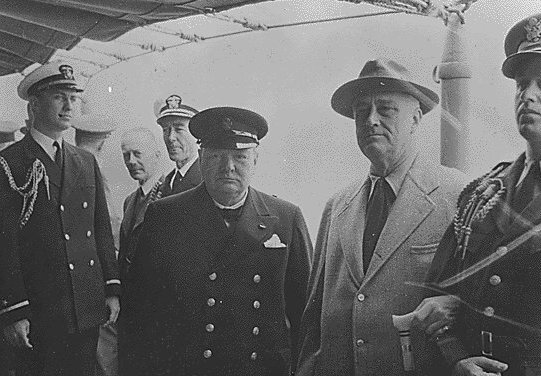
    Roosevelt and Churchill aboard the U.S. S. Augusta, off the coast of Newfoundland, August 1941

    Also on UK level the political approach towards the EU and its institutions has changed with the political personal in charge, intergovernmental relations and constellations; it is true especially in regard of the UK that the lines of approval and rejection of the EU are not congruent with party loyalities. t is therefore the task of this paper to distil ideological determinants and mind-sets and the crucial phases in British policies towards the European Union after World War II. Focus in part one lies on Britishness and its surrounding ideological patterns; part two at its core examines the last three governments of the United Kingdom, that is the administrations of Margaret Thatcher, John Major and Tony Blair.

    It will be one of the statements of this work that both of the subsequent governments in many respects can be seen in the tradition of the first mentioned, although it was then indicated in another way and hoped by many pro-Europeans that this would not be the case. Furthermore one aim will be to isolate a tendency that enables the percipients of this academic work to venture an outlook on the future relations between Europe and the UK, which is especially vital in regard of the sustainability of the Union: It has now enlarged to 27 members with some more countries in the waiting loop and its constitution is still on hold. It must be emphasized that the UK is a major player in European politics and by no means just a by-stander.

    2
    Table of Contents
    1
    General Introduction………………………………………………………………………………………………….. 3
    1.1
    Introduction and approach of this paper………………………………………………………….. 3
    2
    Britishness …………………………………………………………………………………………………………………….. 4
    2.1
    Cultural identity…………………………………………………………………………………………….. 4
    2.2
    Britain and the EMU ……………………………………………………………………………………… 5
    2.3
    Britain and the European Constitution ……………………………………………………………. 6
    3
    Special Relationship………………………………………………………………………………………………….. 7
    4
    The Euro-sceptic Press in Great Britain …………………………………………………………. 10
    5
    The „Awkward Partner“ enters the union ……………………………………………………….. 12
    6
    Margaret Thatcher: Alone against the Superstate ……………………………………………. 15
    6.1
    Margaret Thatcher and the BBQ ……………………………………………………………………. 15
    6.2
    The Late 1980s ­ Struggle Over Europe …………………………………………………………….. 17
    7
    John Major: A phase of transition …………………………………………………………………………………………………………………… 18
    8
    New Labour: Old Wine in New Bottles? …………………………………………………………………………………………………………………… 21
    8.1
    Hopes for a pro-European approach………………………………………………………………. 21
    8.2
    New Labour and the Euro…………………………………………………………………………….. 22
    9
    Evaluation and outlook………………………………………………………………………………………………………… 24
    10
    Works Cited…………………………………………………………………………………………………………….26

    To support the above-mentioned

    tendency this paper will repeatedly recur on figures of surveys among the UK’s people and

    Seite 5

    4
    examine if Euroscepticism was shared on both levels, in the governments and in the population or if classical patterns of bottom up or top down politics can be established. As Julie Smith and Mariana Tsatsas in their work The New Bilateralism point out,
    there are many factors that determine bilateral relations (5). This term paper is incorporating the points that are important in the examination of the topic; it names the treaties that shape
    the European interactions on a transnational level and provides the necessary terminology in the respective historical contexts. It is however also determined to not neglect the relations
    between the people who govern the countries; it is thus not only party platforms, bi- and multilateral treaties and assumed political alliances within the political left/right pattern that
    shape European relations, but also the chemistry between the leaders: „…good personal relations are extremely important in building effective bilateral relations between states
    (Smith/Tsatsas 7).
    These relations often do not adjust to political affiliations; for example although Tony Blair was usually associated with a „catch-all“ politics slightly tending to the left, however
    with the former conservative Prime Minister of Spain, Jose Maria Aznar, he got warmer than with many of „his fellow European Social Democrats“ (Smith/Tsatsas 31). Margaret Thatcher
    however could not conceal her disliking for her conservative counterpart in Germany: „she thought (Helmut) Kohl boring, clumsy and provincial…: „My God, that man is so German“
    (Campbell 304). It has become common to declare Margaret Thatcher the greatest anti-European in British history after WWII – it is however necessary to take a look back into the early years of the community to understand that also the Iron Lady’s policies were in some measure in line with those of her predecessors.
    2 Britishness
    2.1 Cultural identity
    Britain’s sense of itself is a strongly encouraged self-perception by its imperial past and its geographical and linguistic isolation of the rest of Europe. As in most western democracies, a strong sense of cultural identity and a concept of what Britain means is deeply rooted in Great Britain. Here Robbins offers a traditional view of cultural identification:“ identification is constructed on the back of a recognition of some common origin or shared characteristic with
    another person or group, or with an ideal, and with a natural closure of solidarity and allegiance established on this foundation“ (Robbins 282). Thus there are two factors: identification – here clearly seen as a construct – is based on either some common origin
    and/or shared characteristics; this could be historical events from the shared imperial past or, as stated above, the geographical and linguistic isolation from continental Europe.
    The second and most likely more vital factor stated by Robbins is „the natural closure of solidarity“. This concept of closure is strongly associated with the topic of cultural/group identity by many
    socialists. It describes the unconscious intention of a specific social group to not only form this group for reasons of shared origins and characteristics, but to then defend it and its perceived status from an external threat. This external threat is often referred to as „the
    Other“, which shows that it can appear in various forms and always starts as an imagined or at least perceived threat, long before it can be grasped and named factually. In the beginning the only thing that the specific social group might be certain of, is that there is a difference between their supposedly homogenous group and the external other. The manifestation of this difference rapidly turns „the Other“ into an external threat against which the shared traditions and values of the group have to be defended. Thus according to contemporary social theory, it could be plausibly argued, that one element at least of recent expressions of Euro-scepticism in Britain „stems from the presence of and perceived threat from an external „Other“, namely continental Europe“ (Robbins 285).
    Continue readin on hausarbeiten.de or contact me
  • Living in Dsytopa? Digital (non-) places in postmodern films and in the internet

    term paper abstract, Wintersemester 2006/2007, Potsdam University by Lars Dittmer

    online gaming has become a standard feature of most games that are put on the market. As a result, online communities and new „social relations“ – the phrase is put in quotation marks with a clear intent here – are established on a permanent basis in these realms with after-effects that seem to be barely controllable by the societies. The people who participate in such games, mostly boys and men between 13 and 25, are confronted with a completely new type of social pressure – online obligations. They are grouped in online „guilds“ that meet and play at certain times of the day, there are special events in which they are expected to join, and if they are not investing a certain span of time daily into their online-characters – which need to be advanced – they are outdone by other guilds or members of their own groups.

    Indeed they are spending days of their lives in these realms, which allows for the statement that these places have become anthropospheres, spaces that are filled with human life and everything it entails. The potential to lose contact with real life (rl as it is called among players) is massive. Early the culture industry has been fascinated with living in alternative or simulated realities and its „perpetual oscillation between utopia and dystopia“ (Durham 5). Many visions, as I shall point out in this term paper, presage today’s developments to an astonishing degree – sure enough the ones I deal with are rather dystopian. Notably, the most prominent in recent years has been the 1999 film „Matrix“ by the Wachowski brothers, which has been extended to a trilogy. Also science has come up with certain models that can be employed to conceptualize these spaces – I will outline some of these and try to put them in the context that serves my problem.

    It is, in my view, necessary to view today’s colonisation of and living in these spaces that I have outlined above and will further detail in the course of this paper, in front of a background of media production of the period since WWII. The idea that informs this undertaking is, that there have been numerous accounts who predict what is being made accessible to computer users at the moment – Cyberspace is no longer a room that can be inhabited in the future, but it is right now open to everyone; the Cyborg has come into existence.

    Table of Contents

    1. Introduction and problem identification. 3

    2. approach of this term paper 6

    3. Welt am Draht and its derivates. 7

    4. Stephen Lisbergers „Tron“. 10

    5.  Peter Weirs „The Truman Show“. 12

    6. Early cyberspaces and their spatiality. 14

    7. Entering cyberspaces by avatars. 16

    8. Structures in cyberspaces – non-places or simulacra. 19

    9. Power in imaginary spaces. 22

    10. Second Life et alie: my personal Dystopia?. 24

    Works Cited. 27

    1. Introduction and problem identification

    After a relatively noiseless online-launch in 2003, the computer Game Second Life has seen an incredible increase in users within the last few months and therefore has attracted the attention of international media. The game provides for an online-world in which numerous activities –chatting, flirting, shopping etc. are being made possible to the users. The players take part in the form of  avatars, pixel-figures that can be created and designed according to the wishes of the members.

    While in October 2006 the one millionth avatar has seen the light of the virtual world, by now (early April 2007) more than 5 million users roam the places and spaces of the alternative realm of Second Life. The idea behind the game is by no means new and merely marks the latest step in a development that can be traced back to early primitive computer games like flight and sports simulators.

    Whereas in most simulation games however only parts of „reality“ where isolated and converted into programs that were mostly played alone, in the late 1990s and the early years of the first decade after 2000 a whole new generation of games flooded the shelves of the games retailers which came as a result of spreading fast broadband internet connections and the possibility of real-time chatting. In Massive Multiplayer Online (Role-Playing) Games (MMO(RP)Gs) like World of Warcraft (WOW), in some aspects a predecessor to Second Life, a confined fantasy realm which is permanently online waits for the young players to be liberated of evil or good forces – depending on the side one aligns with.

    Here it becomes real what many authors tend to call „the end of geography“  and „the triumph of technology over space“ (Mosco 38). Heros from all countries in these games are thanks to the internet able to team up in Guilds and Clans and share „valuable“ items like swords and armours that can be found throughout these worlds and thereby improve their avatars. They are of course able to choose their identity – inter alia dwarves, humans, night elves and other races and classes can be deployed in the online-battles that are waged in the game twenty four hours a day.

    Second Life is not informed by a fantasy story like WOW –  it however addressed itself to the task to deliver its users a complete living space with a broad variety of possible actions and, what is even more important, social interactions designed to attract more and more users. Both games – Second Life will be dealt with in detail later in this term paper – are just the most successful top of the iceberg; online gaming has become a standard feature of most games that are put on the market. As a result, online communities  and new „social relations“ – the phrase is put in quotation marks with a clear intent here – are established on a permanent basis in these realms with after-effects that seem to be barely controllable by the societies.

    The people who participate in such games, mostly boys and men between 13 and 25, are confronted with a completely new type of social pressure – online obligations. They are grouped in online „guilds“ that meet and play at certain times of the day, there are special events in which they are expected to join, and if they are not investing a certain span of time daily into their online-characters – which need to be advanced – they are outdone by other guilds or members of their own groups.  Indeed they are spending days of their lives in these realms, which allows for the statement that these places have become anthropospheres, spaces that are filled with human life and everything it entails.  The potential to lose contact with real life (rl as it is called among players) is massive; China has due the rising amount of highly addicted young players reduced the runtime of the servers, there have been even reports about deaths in front of the screen due to dehydration and lack of nutrition (Wikipedia, the free Encyclopaedia). If actually true, online worlds are not only places to live, but also to die.

    Continue reading on Hausarbeiten.de